
Smart thermostats can feel complex, but they’re simpler than they seem when paired with a Trane HVAC system. These thermostats communicate with variable-speed compressors, multi-stage furnaces, and built-in diagnostics to optimize comfort, reduce energy costs, and provide real-time control.
This guide explains how Trane systems interact with smart thermostats, what setup and features matter, and practical tips to maximize performance.
Key Takeaways
|
Understanding Why Smart Thermostats and Trane Systems Work Well Together
Trane HVAC units already use advanced features like variable-speed compressors and multi-stage heating to run efficiently and quietly. Adding a smart thermostat completes the system by providing real-time control, adaptive learning, and remote management.
Together, they create a feedback loop: the thermostat learns household patterns, and Trane equipment adjusts in precise increments rather than simple on/off cycles. This leads to steadier indoor temperatures, reduced wear, and lower energy bills.
Even basic programmable thermostats can save about10% on annual heating and cooling costs, and smart models can push that further by learning minute-by-minute patterns.


What Makes a Thermostat “Smart”?
A smart thermostat offers three core capabilities:
- Connectivity: Wi-Fi or Ethernet allows app control, remote adjustments, and automatic updates.
- Sensors and Learning: Occupancy, weather, and runtime data inform algorithms that optimize comfort and efficiency.
- Integration: Protocols such as Z-Wave, Zigbee, or open APIs allow communication with HVAC equipment and other smart home devices.
ENERGY STAR-certified thermostats provide verified savings, typically reducing heating runtime by at least8% and cooling runtime by10%, which equates to around$50 per year, with higher savings in extreme climates. Smart does not mean complicated: interfaces are simple, while still allowing manual overrides in seconds.
Understanding Your Trane System’s Key Features
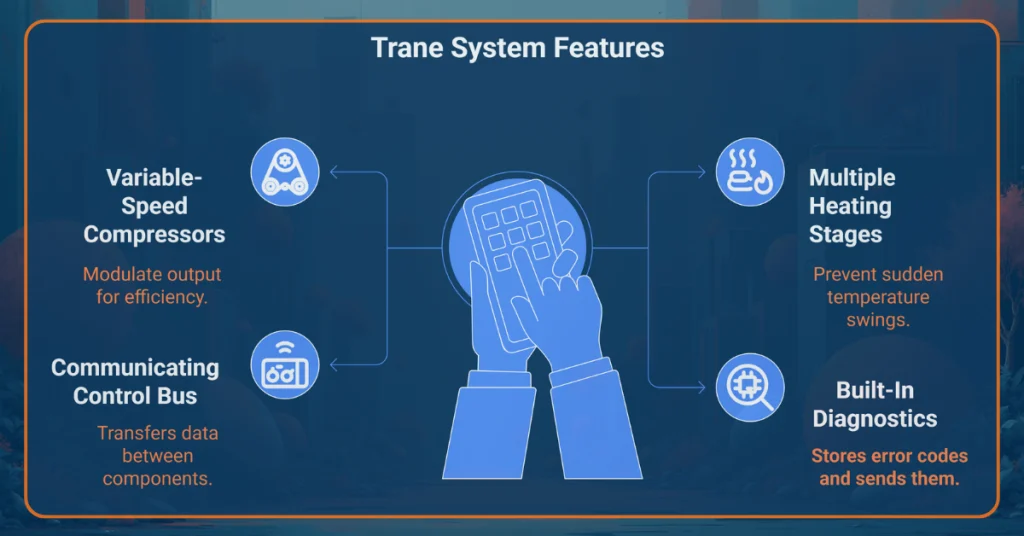
Trane systems come ready for smart control, but knowing the internal components helps understand the benefits:
- Variable-Speed Compressors and Blowers: Modulate output in fine increments for efficiency.
- Multiple Heating Stages: Furnaces fire in multiple stages to prevent sudden temperature swings.
- Communicating Control Bus (ComfortLink): Transfers data and fault codes between thermostat, air handler, and outdoor unit.
- Built-In Diagnostics: Stores error codes and sends them to mobile apps or contractor portals.
Smart thermostats unlock these features fully, allowing precise energy management, humidity control, and predictive maintenance.


How Smart Thermostats Communicate with Trane Equipment
Smart thermostats connect to Trane systems in several ways:
- Low-Voltage Terminals (24 V): Handles basic on/off commands using standard terminals (R, C, Y, G, W).
- ComfortLink II Digital Bus: Trane thermostats like theComfortLink II XL1050 send data over a two-wire bus for precise staging, fault reporting, and remote diagnostics.
- Z-Wave or Wi-Fi Bridges: Third-party smart thermostats use open protocols to translate commands to the system. Some can modulate equipment speed, though finer control is limited compared to native Trane units.
Choosing a thermostat designed for Trane, such as the XL1050 or XL824/850 series, ensures access to all features, including humidity balancing and advanced diagnostics. Third-party units still offer energy savings but may lose some precision.
Real-World Savings You Can Expect
Energy savings depend on climate, equipment type, and user behavior. Studies show:
- U.S. Department of Energy: Daily 7-10°F setbacks via programmable thermostats save roughly 10% on annual HVAC costs.
- ENERGY STAR Field Data: Certified smart thermostats cut total heating and cooling spend by about 8% or $50/year.
- Better Homes & Gardens Survey: Long-term savings range from 10-15%, especially when learning and remote features are fully utilized.
Trane’s variable-speed hardware amplifies efficiency by running longer at lower capacities instead of short bursts at full output.
Choosing the Right Smart Thermostat for Your Trane System
Selecting the correct smart thermostat ensures maximum comfort and energy efficiency:
| Options | Pros | Watch For |
| Trane Native: ComfortLink II XL1050, XL850, XL824 | Full staging, humidity, zoning, and fault code access | Higher price, professional installation recommended |
| Works-with-Trane Certified: Ecobee Smart Thermostat Premium, Google Nest Learning | Polished apps, utility rebates, voice control | Limited multi-stage support on older units unless an adapter is used |
| Budget-Friendly: Honeywell Home T9, Emerson Sensi Touch | Core features, remote sensors, and lower cost | No Trane bus access; relies on 24 V staging |
Always check the “Communicating/Variable Compatible” note or consult your HVAC installer.
Installation and Setup Tips
Smart thermostat installation is similar to a conventional thermostat, but attention to detail prevents issues:
- Power Check: Ensure your system has a C-wire; most Trane air handlers do.
- System Detection: Trane thermostats run a guided “auto-discover” to detect indoor and outdoor modules.
- Firmware Update: Update the thermostat before copying schedules to avoid bugs.
If you are unsure about wiring, a certified technician like HVAC Services Pro can handle installation safely and efficiently, ensuring you have access to full system features.
Smart Thermostat Features You’ll Use Daily
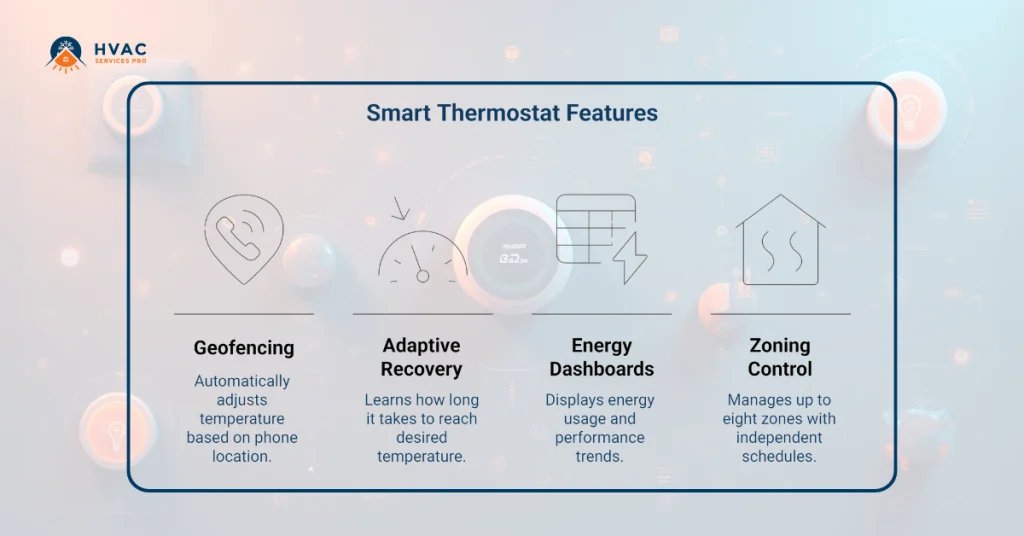
Owners find these features most practical:
- Geofencing: Automatically sets the system to “Away” based on phone location.
- Adaptive Recovery: Learns the time needed to reach your desired temperature.
- Energy Dashboards: Show runtime and performance trends; help spot issues early.
- Zoning Control: The XL1050 can manage up to eight zones from one hub, each with independent schedules.
Start with basic scheduling and adaptive recovery; add advanced features as you become comfortable.
Troubleshooting and Maintenance
Minor issues are common but easy to resolve:
- Wi-Fi Drops: Move your router closer or add a mesh node; 2.4 GHz signals penetrate walls better.
- Incorrect Stage Control: Re-run the setup wizard and verify equipment type.
- Excess Cycling: Set minimum runtime to at least 10 minutes.
- ComfortLink Errors: View logs on the XL1050 or Trane Home app and share them with your contractor.
Routine maintenance like seasonal filter changes and annual HVAC checkups keeps both your thermostat and Trane system calibrated, maximizing comfort and longevity.

Post-Setup Tips to Maximize Efficiency
Monitor Energy Dashboards Monthly: Track trends to catch small inefficiencies before they escalate.
Schedule Filter and Vent Cleaning: Seasonal checks prevent strain on the blower and maintain airflow.
Update Firmware Regularly: Smart thermostats often release performance or connectivity updates.
Review Schedules: Adjust based on seasonal occupancy patterns to ensure savings continue year-round.
Consult Your Technician for Zoning or Humidity Upgrades: If your home has multiple floors or high humidity, expert advice ensures your smart thermostat performs optimally.
Final Thoughts
Pairing a smart thermostat with your Trane system improves comfort, efficiency, and control. Trane-native options unlock full staging and diagnostics, while certified third-party units still save energy. Simple setup, firmware updates, and seasonal maintenance keep everything running smoothly.
For professional installation and ongoing support, HVAC Services Pro ensures your system delivers peak performance and peace of mind.
FAQs
How Do I Know If My Trane System Supports a Smart Thermostat?
We recommend checking your Trane model’s specifications for “Communicating/Variable Compatible” thermostats. Most ComfortLink-equipped systems fully support Trane-native smart thermostats, while older units may require adapters.
Can Third-Party Smart Thermostats Offer Full Trane Features?
Third-party thermostats like Ecobee or Nest save energy and allow app control, but they may not access multi-stage staging, humidity control, or diagnostic codes without additional adapters.
How Often Should I Update My Smart Thermostat Firmware?
Firmware updates should be applied whenever prompted by the manufacturer. Updates improve Wi-Fi stability, fix minor bugs, and ensure your thermostat communicates optimally with Trane equipment.
What Maintenance Helps My Smart Thermostat and Trane System Run Efficiently?
We suggest changing filters regularly, checking that sensors are unobstructed, and scheduling annual HVAC service. Proper maintenance keeps both thermostat algorithms and Trane hardware calibrated for optimal efficiency.
How Can Smart Thermostats Save Me Money Beyond Standard Programming?
Smart thermostats use adaptive recovery, occupancy learning, and geofencing to adjust temperature automatically. These features reduce unnecessary energy use, prevent overcooling or overheating, and can lower annual HVAC costs by 8-15%.