

The expense of replacing an aging or failed HVAC system is a nightmare for most homeowners. Whether it’s a furnace, air conditioner, heat pump, or the full heating-cooling system, the cost can range from a thousand dollars to well above ten thousand. Because of the big commitment, many homeowners rely on HVAC financing instead of writing a single check to make the investment affordable.
In this guide, we’ll cover how HVAC financing works, explain the financing options, detail the real costs beyond monthly payments, delve into approval and credit factors, explain consumer protections, and show how tax credits and rebates can reduce what you need to finance.
Key Takeaways
|
HVAC Financing: How Does It Actually Work?
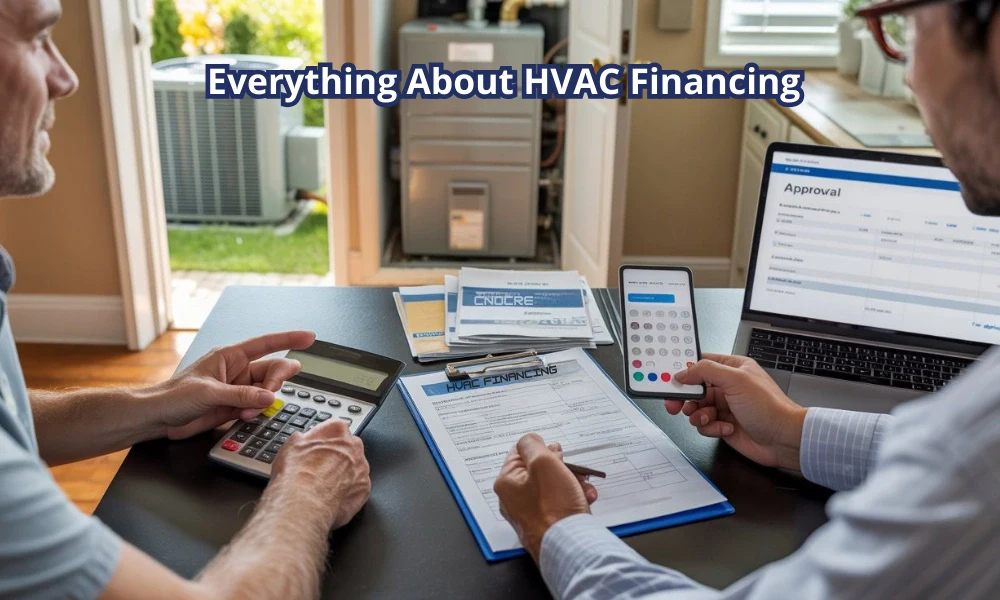
At its core, HVAC financing is a way for homeowners to pay for a new heating and cooling system in manageable monthly installments rather than paying the full cost upfront.
A typical new HVAC system might cost you anywhere from $6,000 to $20,000, depending on size, efficiency, and installation complexity. That includes the high-efficiency air conditioner and furnace. It’s not a comfortable amount to pay all at once for most families.
When you opt for HVAC financing, you can:
- Spread the upfront cost over a defined period
- Keep your saved cash for other expenses or emergencies
- Choose from different loan types with varying rates and terms
Despite the convenience, not all financing is the same, and understanding true financing versus promotional offers or deferred interest plans is critical for you to avoid expensive traps.
What Is Included in HVAC Financing?
Here’s a key distinction for you that is worth emphasizing:
HVAC financing is a structured loan or credit arrangement that includes:
- A defined interest rate or APR (Annual Percentage Rate)
- A repayment term
- Monthly payments
- Possible fees and closing costs
What financing is not:
Financing is not simply “paying later,” “deferred interest,” or a promotional payment plan without accountability.
Some contracts present a 0% APR for 12 or 18 months, but that can turn into very high interest if you don’t pay off the balance on time. These offers can feel like financing, yet be very different legally and financially.
So always check the terms (not just the “0%” headline number) before deciding.
Why Do Homeowners Choose Financing Instead of Paying Cash?

There are several reasons homeowners prefer financing:
1. Urgent Repairs or Replacement
When your furnace fails in the freezing temperature (or your air conditioning dies in summer), simply waiting to save up isn’t an option.
It’s the same reason why homeowners want clarity on the scheduling process for next-day installation once financing is approved. In emergency situations, speed matters just as much as affordability.
2. Protecting Savings and Emergency Funds
Life happens, and so do unexpected expenses. There could be many more high-cost, non-negotiable emergencies, like medical emergencies, major home repairs, automative failure, etc.
Paying large cash for an HVAC system can deplete these emergency funds that you might prefer to hold onto otherwise.
3. Predictable monthly payments
The HVAC installation timeline’s unpredictability is already stressful enough for homeowners. Nobody wants the variable budget on top of that.
When you know what you owe every month, budgeting becomes much easier for you. And it’s especially helpful when the expenses are unpredictable repairs or high-interest debt.
4. Tax and incentive strategy
Some financing plans combined with tax credits can mean you have to pay less after incentives are applied.
The Best Types of HVAC Financing Plans
There’s no single “best” financing option for everyone. What’s best depends on your credit profile, budget, risk tolerance, and how soon you can pay the debt. Here are the most common options:
Personal Loans for HVAC Systems
A personal loan is a straightforward unsecured loan that you can use for any purpose. You can get a personal loan and invest it in HVAC system replacement.
How it works:
You have to borrow a fixed amount to cover the HVAC cost first and repay it over a defined term (often 2–7 years). Rates are typically fixed, which means monthly payments remain the same.
Example:
A 5‑year personal loan for $10,000 at 8% APR might result in ~$203 monthly payments.
Pros:
- Quick application and approval
- Predictable monthly payments
- No equipment collateral required
Cons:
- Interest rates tend to be higher than secured loans
- Credit score has a bigger impact on approval and rate
Best for: Homeowners with good credit who want a predictable and unsecured payment plan.
Home Equity Loans and Second Mortgages

A home equity loan uses the equity in your home as collateral. As you have a collateral (and a costly and secured one), the loan has lower interest rates than unsecured loans.
These loans act like a second mortgage on your home. If you need a large sum, say $15,000–$30,000 for a sophisticated system, then a home equity loan can be a more affordable option.
Pros:
- Lower interest rate
- Fixed monthly payments
- Potential tax deduction on interest
Cons:
- Your home is at risk if you default
- Closing costs and fees can be higher
Risk framing: If you default, the lender could initiate foreclosure, a major concern homeowners raise when considering equity‑based financing.
HELOC (Home Equity Line of Credit)
A HELOC (Home Equity Line of Credit) is another way to borrow against your home, but rather than getting a lump sum, you access a line of credit as needed.
Pros:
- Flexibility to borrow only what you need
- You only pay the interest on the amount you use
Cons:
- Variable interest rates (can rise over time)
- Requires careful management to avoid overspending
HELOC vs Home Equity Loan: A HELOC is better if you prefer flexibility and may need funds for additional home improvements. A home equity loan is better only if you want fixed payments and a fixed rate.
Credit Card Financing
Some homeowners use credit cards for HVAC financing, but this approach comes with warnings.
When it can make sense:
- You qualify for 0% APR promotional financing
- You can pay off the balance before the promo ends
Downsides:
- Standard credit card APRs are very high (often 18%+)
- If you miss the deadline or make only minimum payments, interest accumulates rapidly
Be Cautious: This is a short-term strategy rather than a long-term financial solution.
Financing Through an HVAC Company or Participating Dealer
Many HVAC installers partner with third‑party lenders to offer on‑the‑spot financing.
Benefits:
- The application and approval process is simplified and straightforward through an HVAC company
- Often includes promotional rates or deferred interest offers
Pitfalls:
- Interest may be built into the system price
- Terms may include deferred interest that kicks in if terms aren’t met
- Not all dealers offer the same transparency
Note: Dealer financing can be a good option if you read the fine print and understand total costs.
How Much Does a New HVAC Really Cost With Financing?
Monthly payments matter, but they’re only part of the story. While these are important, regional pricing differences still play a huge factor. The HVAC installation cost in DFW differs greatly from McKinney. In a general sense, longer loan terms make your monthly payments smaller, but you pay an overall larger amount over time.
Here is a general idea of the total installation cost with HVAC financing:
Understanding HVAC Financing Terms
Before we dive into the calculation, let’s elaborate on a few terms first:
- Interest Rate: It is the cost (the lender’s fee) for your principal (the money you are borrowing).
- APR: It is the total of interest with fees and the actual total cost you end up paying.
- Fixed Rate: It is a stable monthly payment you make based on your APR.
- Adjustable Rate: Some rates may start lower, but can rise over time.
Fees That Increase the Real Cost of Financing
It’s common for loans to include:
- Origination Fees: upfront costs charged by the lender
- Closing Costs: loan workflow and legal costs
- Late Fees: penalties for missing payments
- Prepayment Penalties: charges for paying off early
These fees aren’t always obvious, so review the loan agreement carefully.
Monthly Payment vs Total Cost in HVAC Financing
Thinking only in terms of monthly payments can be misleading. What matters most is your total cost of ownership and the sum of:
- Monthly financing payments
- Energy and operating costs
- Maintenance and repair costs
To help you to understand how monthly payments relate to the total cost of ownership, here’s an illustrative example comparing a basic AC system with an energy-efficient model.
| System Type | System Cost | Monthly Payment | Total Cost + Interest | Energy & Maintenance | Total Ownership Cost |
| Basic HVAC System | $4,500 | $135 | $4,860 | $1,500 | $6,360 |
| Energy‑Efficient HVAC System | $6,000 | $180 | $6,460 | $1,000 | $7,480 |
There can be many factors that impact these costs, as well as lead times and installation timelines for new AC or heat pumps in DFW. The numbers are hypothetical and meant to show how a higher upfront investment can sometimes lead to lower long-term costs that include energy and maintenance. This is not based on any specific brand or product but rather a general comparison to guide financing decisions.
How HVAC Financing Approval Works through Credit Checks and What Lenders Look For
After applying, lenders evaluate your application based on factors such as:
- Financing eligibility
- Credit score
- Debt‑to‑income ratio
- Underwriting history
- Proof of income and employment
Based on your profile, you can get prequalifications or preapprovals:
- Prequalification: Soft credit pull that gives an estimate of how much you can get without affecting your credit score.
- Preapproval: Hard credit pull and more like an authoritative estimate that can affect your credit report.
Is a Credit Score Needed for HVAC Financing?
Most lenders accept fair to good credit. However, higher scores always help you get better rates. Some programs accept lower credit scores, but may include:
- Higher interest rates
- Larger required down payments
- Additional document requirements
What Documents are necessary for HVAC Financing?
Typical documents include:
- Pay stubs or proof of income
- Employment history
- Bank statements
- Recent tax returns
- Property ownership documentation
Preparing these in advance will speed up your approval.
Understanding the Legal Protections, Disclosures and Consumer Rights for Homeowners
Consumer finance laws protect you from predatory or unfair practices. Understanding your rights helps you avoid unfair terms and gives you recourse if a lender violates the rules.
The key protections you get as a borrower are:
- Consumer Financial Protection Bureau (CFPB): Regulates lending practices
- Truth in Lending Act (TILA): Requires full disclosure of APR, fees, and terms
- Fair Credit Reporting Act (FCRA): Protects your credit information
Local compliance is also an important factor besides financial disclosures. Your regional requirements and permitting process for air conditioner installation may or may not impact the codes you sign up for legal protections.
How to Reduce Your HVAC Cost with Tax Credits, Rebates, and Incentives

Rebates and incentives are often overlooked, but they can ease your finances.
Federal Tax Credits
The Energy Efficient Home Improvement Credit (25C) provides tax credits for installing high‑efficiency HVAC systems that meet ENERGY STAR criteria. This can reduce your taxable amount directly.
Utility and Manufacturer Rebates
Utility companies and manufacturers sometimes offer rebates for installing energy‑efficient systems. These incentives can cut the effective cost further.
You can combine federal, state, and utility incentives to maximize savings.
What is the Best Way to Finance A New HVAC System?
Before you sign anything, consider these strategies:
Compare HVAC Financing Offers
Don’t accept the first offer you see. Compare:
- Interest rates and APR
- Total financed amount
- Monthly payments
- Fees and penalties
- Eligibility requirements
Just like reading an HVAC quote the right way, you also need to avoid hidden fees and misleading claims in your financing. Comparing different offers lets you understand different angles for what you’re actually being charged for, not just the monthly payment.
Common Financing Mistakes to Avoid
Avoid these high‑cost traps:
- Choosing the lowest monthly payment without regard to total interest
- Missing payments and incurring late fees
- Signing deferred interest plans without understanding fine print
When To Pay Cash Smartly?
Sometimes paying cash is the smarter move, especially if:
- You have emergency savings
- You can avoid interest payments
- Long‑term financing cost outweighs monthly savings
Conclusion
HVAC financing gives homeowners a practical way to replace or upgrade heating and cooling systems without the pressure of a large upfront payment. With good financing, you can make a smarter decision that protects both comfort and finances. Whether you choose a personal loan, home equity option or dealer financing through providers like HVAC Services Pro, the right plan is one that balances affordability today with lower long-term costs and clear, transparent terms.
FAQs (Quick Answers to Common Questions)
What credit score is needed for HVAC financing approval?
Most lenders accept fair credit; excellent credit gets the best rates.
Does HVAC financing involve a hard or soft credit pull?
Prequalification is usually a soft pull; final loan approval uses a hard pull.
How long does approval take?
Approval can take minutes to a few days based on documentation.
Do HVAC financing plans include installation, labor, or maintenance?
Yes. Many financing plans allow you to finance both the equipment and installation, so you don’t pay separately. Some lenders even offer optional maintenance plans bundled into your payment schedule.
Can I pay off my HVAC loan early?
Many loans allow early payoff, though some include prepayment penalties.
What happens if I miss a payment?
You may incur late fees, and your credit score can be negatively affected.
HELOC vs Home Equity Loan, which is better?
A HELOC offers flexible access and variable payments; a home equity loan provides fixed payments and stability.