

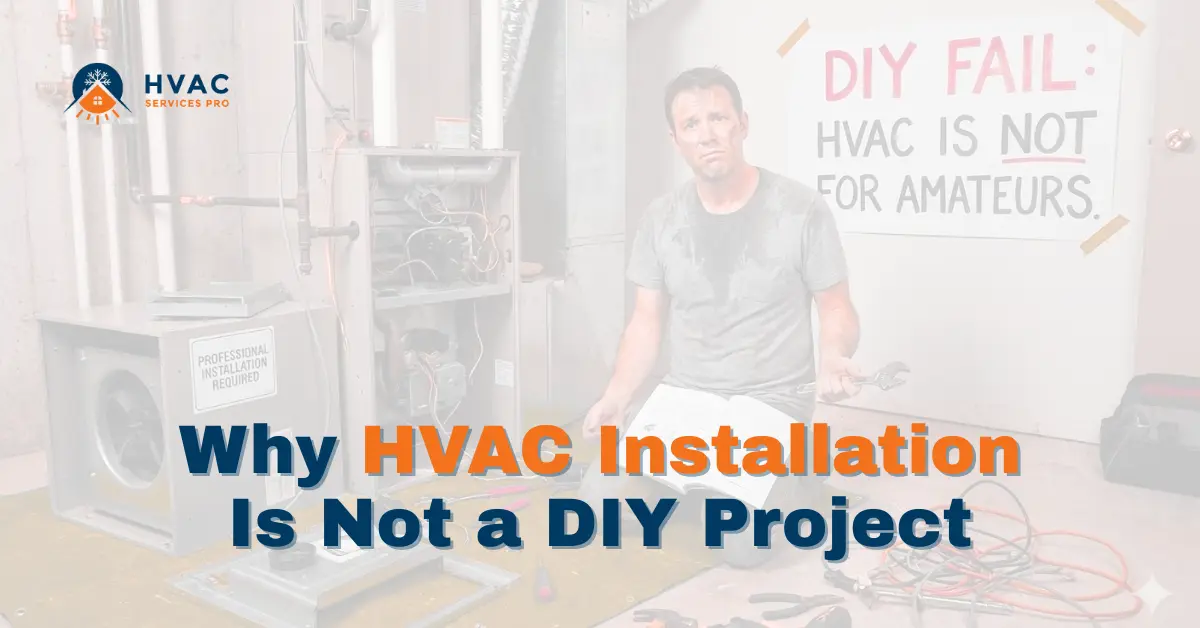
Thinking about installing your own HVAC system? Maybe you’ve watched some videos, read a few blogs, and felt confident you could handle it. But here’s the hard truth: DIY HVAC installation is risky, costly, and often illegal. Attempting it without professional training can lead to safety hazards, uneven comfort, higher energy bills, and even legal trouble.
In this guide, we break down the dangers of DIY HVAC work, explain why professional installation matters, and give you practical tips for keeping your home safe, efficient, and comfortable.
Key Takeaways
|
HVAC Installation Involves Serious Safety Hazards
Installing an HVAC system involves more than just plugging in a unit. These systems carry high-voltage electricity, refrigerants under pressure, heavy components, and sharp metal parts, all of which can cause severe injury if mishandled.
- High-Voltage Electrical Danger: HVAC systems operate on 220–240 volts. Incorrect wiring can lead to shock, fire, or damage to your home’s electrical system. Always hire a certified electrician for installation and wiring.
- Refrigerant Leaks: Refrigerants like R-410A can burn skin, irritate eyes, and cause breathing issues. Handling refrigerants without certification is both unsafe and illegal. Learn more about EPA Section 608 certification requirements.
- Heavy Lifting and Sharp Components: HVAC units are bulky and made of metal. A slip or drop can cause serious injuries. Professional techs have the right equipment and training to safely maneuver and mount units.
- Toxic Chemicals and Pressurized Parts: Mishandling refrigerants or other chemicals can displace oxygen and harm your lungs. Only licensed professionals should work with these substances.
Actionable Tip: Always hire certified HVAC technicians who are trained to handle electricity, refrigerants, and heavy equipment safely. Your safety and your home depend on it.
Improper Venting Can Lead to Carbon Monoxide Poisoning
Carbon monoxide (CO) is a silent, deadly gas that can accumulate if your HVAC system is improperly vented. DIY installations increase the risk of leaks from gas furnaces or other combustion HVAC units.
- Poor Venting = Dangerous Exposure: Even small venting errors allow CO to seep into living spaces. CO is odorless, colorless, and hard to detect without proper sensors.
- Health Risks: Exposure can cause headaches, nausea, dizziness, and confusion. Prolonged exposure can result in unconsciousness or death. According to the CDC, over 400 Americans die annually from CO poisoning outside of fire incidents.
- Houston-Specific Concern: Houston’s humid, low-pressure environment can worsen CO buildup. The Houston Health Department identifies indoor air quality, including CO monitoring, as a top safety priority.
Preventive Tip: Only have venting and gas lines installed or inspected by licensed professionals. Ensure your home has CO detectors installed in all key areas.
DIY HVAC Work Often Violates Building Codes and Voids Insurance
Local building codes exist to protect your home and your family. DIY HVAC installation often violates these codes and can have costly consequences.
- Permits Required: In Houston, the Houston Permitting Center mandates that licensed professionals obtain mechanical permits for HVAC work. Skipping this step can delay home sales, trigger fines, and require costly redo work.
- Insurance Risks: Many home insurance policies do not cover damage from unauthorized installations. Fire, water leaks, or system malfunctions may leave you personally liable for repairs.
Actionable Tip: Hire licensed HVAC technicians to ensure your installation complies with building codes and is covered under insurance. This protects your investment and your home.
Lack of Proper Tools and Training Makes DIY Risky and Inefficient
HVAC installation requires specialized tools that most homeowners don’t own: refrigerant gauges, vacuum pumps, leak detectors, combustion analyzers, and more.
- Specialized Equipment Needed: Without the proper tools, it’s impossible to charge, balance, and calibrate systems accurately.
- Professional Training Required: Texas requires HVAC technicians to be licensed by the TDLR, involving exams, hands-on experience, and continuing education. Attempting DIY without training often leads to inefficient systems, leaks, and wasted energy.
Fact: Poor installation can reduce system efficiency by up to 30%. That’s wasted comfort and money every month.
Actionable Tip: Only certified technicians have the tools and training to ensure your HVAC system runs efficiently and safely.
Incorrect HVAC Sizing Damages Your System and Spikes Energy Bills

Choosing the wrong size HVAC unit is one of the most common DIY mistakes. Size must account for square footage, insulation, windows, sun exposure, and ductwork, not just guesswork.
- Oversized Systems: Turn on and off too quickly (short cycling), reducing comfort and increasing energy costs. CenterPoint Energy estimates oversized units can waste over 30% more energy monthly.
- Undersized Systems: Run constantly to meet demand, stressing the system and raising bills.
Actionable Tip: Always have a licensed professional perform a Manual J load calculation to determine the correct unit size for your home.
Improper Ductwork Installation Causes Uneven Heating and Cooling
Ductwork is the backbone of your HVAC system. Poorly sized, routed, or sealed ducts create hot and cold spots and increase energy bills.
- Air Loss: Energy.gov reports that a typical home loses up to 30% of heated or cooled air due to leaks.
- Design Complexity: Ductwork design requires airflow calculations, proper routing, and sealing techniques. Small DIY fixes cannot replace a professional installation.
Actionable Tip: Schedule duct inspection and sealing with licensed HVAC contractors to maximize comfort and efficiency.
DIY Installations Compromise Efficiency and Long-Term Comfort
Even minor installation errors like a tilted unit, loose connection, or unbalanced airflow, can degrade system performance.
- Reduced Efficiency: Poor installation forces systems to work harder, raising energy bills and accelerating wear.
- Indoor Air Quality Risks: Gaps in ductwork cleaning, misaligned filtration, or improper humidity control can increase dust, allergens, and respiratory issues. Houston’s Health Department identifies HVAC-related ventilation issues as a key indoor air concern.
Actionable Tip: Check airflow balance and vent placement, but leave system calibration and pressurization to certified techs for lasting comfort.
Conclusion
HVAC installation is not a weekend DIY project it’s an investment in your home’s safety, comfort, and energy efficiency. Certified technicians do more than just install your unit; they ensure it runs safely and efficiently for years.
At HVAC Services Pro, we provide:
- Professional HVAC installation Houston
- AC repairs and emergency HVAC service
- Duct cleaning and indoor air quality improvements
- Custom maintenance plans for long-term system care
We also offer free consultations and full system assessments. Our experts can evaluate your current unit, recommend replacements, and plan upgrades without any pressure.
FAQs
What Are the Most Common DIY HVAC Mistakes?
DIY mistakes include improper sizing, venting errors, poor ductwork, and incorrect refrigerant handling. These issues lower efficiency, raise bills, and can create safety hazards.
How Can I Ensure My HVAC Installation Is Safe?
Only hire licensed, certified HVAC technicians. They follow safety codes, use proper tools, and inspect venting, wiring, and refrigerants to protect your home and family.
Can DIY HVAC Installation Affect Home Insurance?
Yes. Most home insurance policies will not cover damage from unauthorized installations. Fire, leaks, or system failures could leave you financially responsible.
How Do Professionals Determine the Correct HVAC Size?
Licensed techs use a Manual J load calculation, factoring in square footage, insulation, windows, and airflow needs. Correct sizing prevents short cycling, energy waste, and system wear.
What Tools Do Professionals Use That Homeowners Usually Don’t Have?
Techs use refrigerant gauges, vacuum pumps, leak detectors, and combustion analyzers. They also have the training to calibrate, charge, and balance the system efficiently.