


I know the feeling; it’s 4:00 PM in July, and that blast of air from your vents suddenly feels more like a hairdryer than an AC. In 2026, navigating the North Texas heat is a financial minefield.
Whether you are dealing with a simple filter clog or a major component failure, getting reliable AC repair in Dallas-Fort Worth is the only way to keep your home habitable when it’s 100°F outside.
We’re going to look at the real average AC repair cost DFW homeowners are seeing right now, and how to solve common troubleshooting traps.
Key Takeaways
|
Can You Fix It Yourself? Our DFW AC Troubleshooting Guide
Many common AC failures in North Texas are actually caused by simple blockages or tripped breakers that you can fix without calling a pro. I always suggest checking The Big Three local stressors first:
- Cottonwood seeds (Dallas Snow): These fluffy seeds act like a blanket, suffocating your system and causing it to overheat.
- Construction dust: If you are near a new development in Frisco or Celina, drywall dust can turn into a cement layer on your coils.
- Storm surges: North Texas thunderstorms often cause grid flickers that trip breakers or fry sensitive control boards.
If you’ve checked these and the unit still won’t kick on, it’s likely time for professional AC repair.
During the first visit diagnostic process, a technician will typically verify your thermostat settings and inspect the electrical service panel before diving into the mechanical components.
Dealing with Moisture and Warm Air
If your AC runs but the air is warm, it usually indicates that your indoor blower is working, but the cooling cycle has been interrupted. This is frequently tied to a failed capacitor or a tripped outdoor breaker.
Another common call I get involves leaks. Understanding water under the air handler, a clogged condensate drain line, or a rusted-through primary drain pan can save you from a major floor repair.
In our humid DFW summers, your AC pulls gallons of water from the air; if that drain pipe gets blocked by “algae slime,” that water has nowhere to go but your closet floor.
Survival Mode Fix: Fast Cooling Strategies
If the system stays down and the house begins to heat up, remember a few emergency cooling tips:
- Keep your blinds tightly closed,
- Avoid using the oven
- Use cold compresses on your neck and wrists to stay comfortable.
Beyond the basics, you can create a DIY Air Cooler by placing a large bowl of ice in front of a box fan. This creates a localized mist of cool air that can make a room significantly more bearable while you wait for a technician.
Additionally, remember that heat rises; if you have a multi-story home, moving your activities and even your mattress to the ground floor or a basement can drop the ambient temperature by several degrees.
How Much Does AC Repair Cost in DFW?

Common AC repairs in the Metroplex typically range from $150 to $900, while major components like coils or compressors can exceed $2,500.
| Repair Type | Estimated Price Range | Local Context |
| Diagnostic Fee | $75 – $200 | Often waived if you agree to the repair. |
| Capacitor Swap | $250 – $450 | The #1 failure during 100°F DFW heatwaves. |
| Blower Motor | $300 – $900 | Common in older units; labor adds $200+. |
| Evaporator Coil | $1,200 – $4,500 | Includes labor, the unit, and refrigerant. |
| Refrigerant Recharge | $600 – $1,500 | Costs are spiking due to the R-410A phase-out. |
I have found that the best way to avoid surprise bills is to insist on a transparent repair pricing model.
Companies like HVAC Services Pro and other reputable local contractors now use price books that show you exactly what a repair costs before any work begins. This eliminates the open-ended hourly bill that often leads to sticker shock.
Repairing AC to Enhance Indoor Air Quality and Efficiency
While most people focus on the outdoor unit, your ductwork plays a huge role in your monthly bills. If you notice a musty smell or excessive dust on your furniture, air duct cleaning can help.
In the DFW climate, humidity and construction dust can settle in your vents, forcing your system to work harder to push air through.
Replacing an older, inefficient central air system with a modern high-efficiency unit can reduce cooling energy use by 20% to 50%. Cleaning your ducts often acts as the first step in restoring that lost efficiency.
Should We Repair or Replace? The “5,000 Rule”
If the age of your unit multiplied by the repair quote exceeds $5,000, I recommend a replacement.
According to 2026 reports, 42% of U.S. households now use electricity as their primary heat source. As natural gas usage declines (dropping to 47% recently), more homeowners are switching to electric heat pumps.
When a repair just isn’t cost-effective anymore, a professional AC installation allows you to start fresh with a system designed for the new A2L refrigerants. Plus, you can offset the cost with:
- Federal Tax Credits (25C): Up to $2,000 per year for heat pumps.
- Oncor Rebates: Incentives ranging from $300 to $2,800, depending on efficiency.
How Does North Texas Soil Kill Your AC?
DFW’s expansive clay soil shifts constantly. If your condenser pad tilts more than 2 degrees, oil pools away from moving parts, causing a $3,000 compressor burnout. A simple level check and a few shims can prevent a $1,200 refrigerant line snap.
Use This DIY Repair Checklist Before You Call
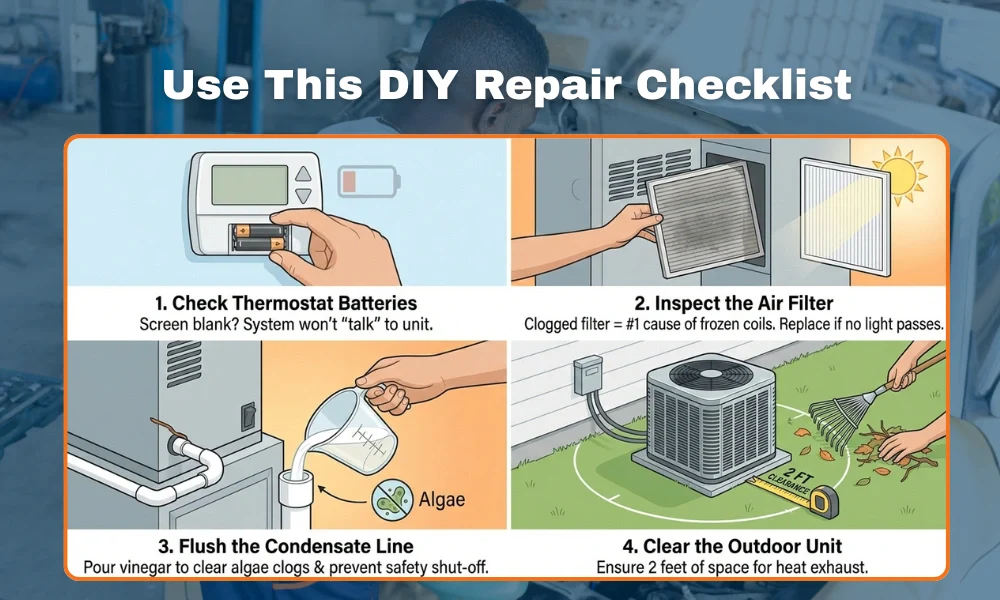
If your system stops blowing cold air, I recommend running through this quick AC repair checklist to see if you can solve the problem for free.
- Check the Thermostat Batteries: If the screen is blank or fading, your system won’t “talk” to the outdoor unit.
- Inspect the Air Filter: A clogged filter is the #1 cause of frozen evaporator coils. Replace it if you can’t see light through it.
- Flush the Condensate Line: Pour a cup of vinegar down the PVC drain line near your indoor unit to clear algae clogs that trigger safety shut-off switches.
- Clear the Outdoor Unit: Ensure there is at least 2 feet of clearance around your condenser to allow for proper heat exhaust.
A neighbor of mine recently called an emergency tech because her AC died, but it turned out her son had accidentally bumped the furnace power switch in the attic. Checking that switch first would have saved her $180.
Before she calls a technician, I recommend following these standard HVAC repair troubleshooting steps that can often get your system back online or help you provide better information to the professional.
Don’t Wait for a DFW Heatwave- Take Control of Your Comfort Today!
Your AC is your home’s most important investment in the Dallas-Fort Worth Metroplex. In a world of evolving refrigerant standards and shifting energy trends, being a proactive homeowner pays off in real savings.
From leveling your condenser pad to a professional tune-up, HVAC Services Pro is your partner in keeping DFW comfortable.
Beat the heat before the next triple-digit stretch! Schedule your high-efficiency tune-up today and get the service on your budget. Call us at 866-879-8122 or email office@hvacservicespro.com for immediate assistance.
Frequently Asked Questions
Why did my AC stop working after a thunderstorm?
Texas storms cause voltage spikes that kill capacitors. If you hear a humming sound outside but the fan isn’t spinning, that’s your culprit. It’s a common, relatively affordable fix.
How often should I change my filters in Dallas?
In the summer, check them every 30 days. If you’re near new construction in Frisco or have pets, they can clog in as little as two weeks, causing your coils to freeze.
My unit is only 5 years old, but I was told I need a replacement. Is that right?
If your unit is under 10 years old, a replacement quote should be met with extreme skepticism. Unless there is catastrophic structural damage, a 5-year-old system is almost always worth repairing under the “$5,000 Rule.”
Who is responsible for AC repair in a DFW rental?
In Dallas, landlords must legally maintain AC that cools to at least 15°F below the outside temperature. Under the Texas Property Code, they are required to repair conditions that affect your health or safety as long as your rent is current.