


Water under your air handler usually occurs from a clogged condensate drain line, a cracked drain pan, or a frozen evaporator coil.
In the high-humidity climate of the Dallas Fort Worth metroplex, your indoor AC unit acts as a powerful dehumidifier, pulling gallons of moisture from the air daily.
When the condensate management system fails, water pools under the unit, leading to water damage, mold risk, and potential structural issues. Addressing these leaks immediately ensures your system remains efficient and your home stays dry.
| Key Takeaways
|
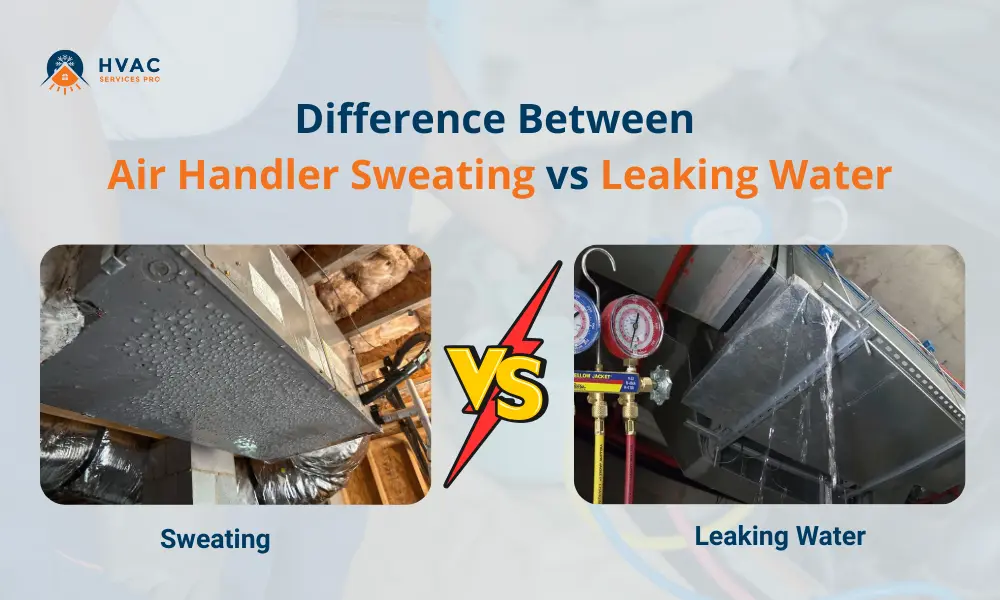
Difference Between Air Handler Sweating vs. Leaking Water
Air handler sweating is external condensation caused by temperature differences, while leaking water is an internal drainage failure.
When warm, moist air in an attic or closet hits the cold air handler cabinet, droplets form on the exterior. This is common in Tarrant County homes during peak summer.
| Feature | Air Handler Sweating | Air Handler Leaking Water |
| Primary Source | High humidity contacting cold exterior surfaces. | Internal failure of the drainage system. |
| Appearance | Fine mist or small droplets on the cabinet exterior. | Puddles, steady drips, or standing water in pans. |
| Location | Outside of the air handler cabinet or suction line. | Inside the unit, the primary drain pan, or PVC drain pipe. |
| Severity | Low; often managed by improving insulation or airflow. | High; leads to water damage and mold growth. |
| Common Solution | Re-wrapping insulation or sealing cabinet leaks. | Clearing a clogged condensate drain line. |
Water under the air handler becomes an emergency when the liquid reaches your ceiling or saturates the attic insulation.
Is Water Dripping from the AC Dangerous?
Yes, water dripping from an AC unit is dangerous because it leads to mold growth, structural rot, and electrical short circuits.
I once assisted a family in Dallas County who ignored a small drip for a week.
When HVAC Service Pro reached there, the water had fried the blower motor control board and ruined the return plenum insulation. A major issue happened on their which is-


Water Damage And Mold Risks From Air Handler Leaks
Water damage from HVAC leaks is often hidden. Even after the leak stops, insulation saturation keeps the area damp for weeks.
We recommend using a high-powered fan to dry insulation after an AC leak or replacing it entirely to eliminate the risk of mould remediation.
Beyond repair costs, standing water in a dark closet, air handler or attic promotes mold within 48 hours. This poses a health risk to everyone in the home.
| WARNING! Neglecting a leaking air handler can lead to serious electrical hazards or structural damage. If you suspect your unit is leaking water onto electrical components, immediately turn off the power at the breaker. |
Emergency Hvac Water Leak Warning Signs
An HVAC water leak can escalate quickly from a minor drip to serious water damage if it’s not addressed right away. But you can’t figure out the right way, of course, but there are a few signs that gives signal-
- If you see a water stain on the ceiling below the air handler, the secondary containment has already failed.
- A blank screen often means the float switch was tripped to prevent a flood; the system will not restart until the root cause is fixed.
- Hissing sounds often indicate a high-pressure refrigerant leak, which is an environmental and safety hazard.
That’s what we try to see during our diagnostic first-visit. We inspect the evaporator coil, test the static pressure, and verify the drain line slope. We find the root cause before suggesting any parts.
6 Most Common Causes of Water Under the Air Handler Fort Worth, TX
Water under an air handler is a common HVAC issue in Fort Worth due to high humidity and long cooling seasons. But it can happen for different reasons too. For example-
1. Clogged Condensate Drain Line
A clogged condensate drain line occurs when algae and biofilm buildup block water flow through the PVC drain pipe.
This is the most common reason an indoor AC unit leaks water. In the DFW heat, algae in the condensate line grows rapidly, creating a thick “slime” that stops flow.
- Signs of a clog: Water standing in the primary drain pan or a float switch that shuts off the system.
- Diagnosis: Check the drain line cleanout port. If it is full of water, the blockage is further down the line.
2. Drain Pan Problems
Drain pan problems involve the primary pan overflowing or a secondary drain pan filling due to cracks, rust, or improper leveling.
The primary drain pan sits directly under the evaporator coil. Over time, metal pans develop a rusted drain pan surface, while plastic ones can become a cracked drain pan.
If the AC drain pan is overflowing, the water spills into the secondary drain pan. If that pan also fails, water leaks directly into your home.
3. Float Switch and Safety Shutoff Issues
The float switch is a safety sensor that stops the AC system when it detects rising water levels in the drain pan.
When a float switch is tripped, your AC won’t turn on.
This pan switch shutoff is a protective measure. While it feels like a breakdown, the switch is actually preventing a massive attic AC leak ceiling stain.
We often find these switches covered in slime buildup, which requires a simple float switch trip reset after clearing the water.


4. Frozen Evaporator Coil
A frozen evaporator coil causes a leak when the ice undergoes a coil freeze-thaw cycle and overflows the drainage system.
When evaporator coil icing occurs, the ice often blocks the path to the drain pan. As it melts, water drips into the air handler cabinet and onto the floor.
- Low airflow: A dirty air filter causing a water leak is a common culprit.
- Refrigerant issues: A refrigerant leak can cause the coil to drop below freezing.
5. Condensate Pump Failure
A condensate pump failure occurs when the mechanical pump responsible for lifting water away from the unit stops functioning.
Many closet air handlers in the Dallas Fort Worth area use these pumps. Condensate pump not working symptoms include a full reservoir and water spilling from the pump housing. Often, the internal float gets stuck, or the motor fails due to age.
6. Drain Line Installation Problems
Improper installation, such as a missing P-trap or poor slope, prevents gravity from moving water out of the air handler.
- Missing P-trap: Without a properly installed P-trap, negative air pressure pulls water back into the unit instead of allowing it to drain.
- Slope problems: PVC drain pipes require a steady downward slope. If the line is level or “back-pitched,” water can stagnate and overflow.
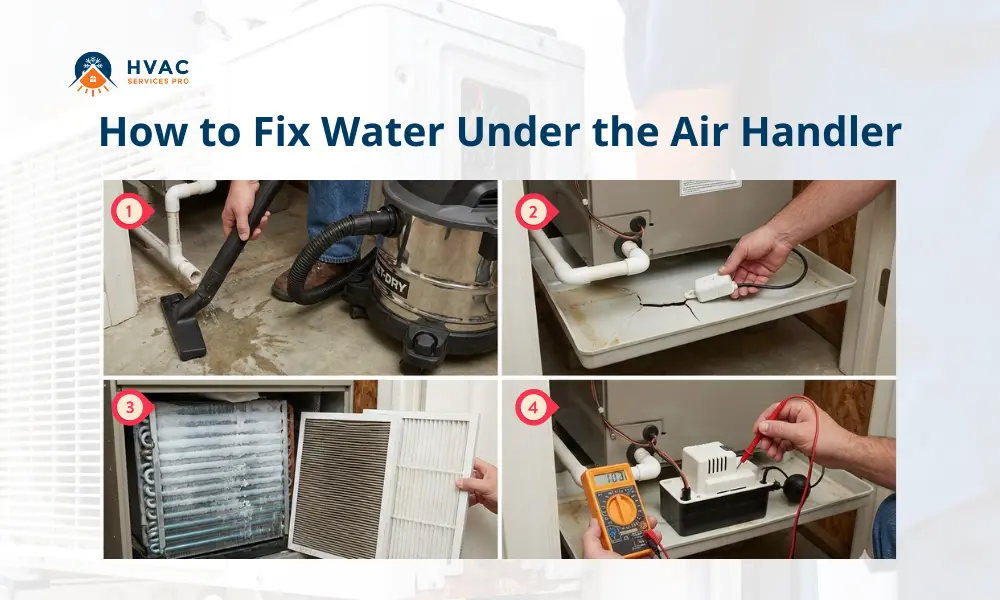
How to Fix Water Under the Air Handler Dallas, TX
To fix the leaking water issue in the AC air handler, follow these required professional HVAC repair troubleshooting steps below-
Step 1. Clearing a Clogged Drain Line
Unclog an AC condensate drain line by using a shop vac to suction out the blockage from the exterior termination point.
The shop vac AC drain line cleanout is highly effective. Attach the vacuum to the end of the PVC drainpipe outside and run it for several minutes.
Afterwards, pour a cup of distilled vinegar through the drain line cleanout to kill remaining algae and biofilm. We suggest avoiding bleach, as it can damage the seals in some systems.
Step 2. Fixing Drain Pan and Float Switch Issues
Fix drain pan issues by sealing small cracks with waterproof sealant or replacing the pan if rust is extensive.
If the float switch is the problem, ensure it sits level and moves freely. After you clear the water, the switch should reset automatically, allowing the thermostat to regain power.
Step 3. Fixing Frozen Coil and Airflow Problems
Restore airflow by replacing dirty air filters and ensuring all supply vents remain open throughout the house.
An AC repair checklist for homeowners in DFW always starts with the air filter. If a new filter and a thawed coil do not fix the issue, you likely have a refrigerant leak or a blower motor issue.
Step 4. Condensate Pump Repairs and Troubleshooting
In many homes across Dallas, Phoenix, and Orlando, air handlers located in basements or interior closets rely on a condensate pump to move water up and out of the home. If this pump fails, you will quickly find water pooling under the unit.
Basic Condensate Pump Troubleshooting
- Check the Power: Ensure the pump is plugged into a functional outlet and that the GFI outlet hasn’t tripped.
- Inspect the Reservoir: Gently remove the motor top and check for algae or slime buildup. Cleaning the tank with warm water and a little distilled vinegar can often restore function.
- Test the Float: Move the internal float up and down manually. If the motor kicks on when you lift the float, the pump is working, but the float was likely stuck due to debris.
- Clear the Discharge Line: If the pump runs but the water level doesn’t drop, the small vinyl discharge tubing is likely clogged. You can often blow through this line or use a shop vac to clear the obstruction.
When Pump Replacement is the Only Fix
While cleaning helps, certain mechanical or electrical failures require a full replacement:
- Motor Burnout: If the pump receives power and the float is lifted, but the motor remains silent or makes a loud grinding noise, the internal motor has likely seized.
- Broken Internal Float: If the plastic float is waterlogged or the integrated safety switch fails, the pump will no longer drain.
- Frequent Cycling or Leaking Housing: If the outer plastic reservoir is cracked or the pump “hums” constantly without moving water, it is time for a new unit.
While you wait for our technician to arrive, follow some emergency cooling tips, such as avoiding using the oven or dryer, which adds heat to the home.
Attic And Closet Air Handler Leaking Water Issue Texas Homeowner Faces
We get so many cases in Dallas, Fort Worth, and Atlanta about attic air handlers and water leaks. Those areas face extreme temperatures that accelerate the growth of algae and biofilm.
When a leak occurs in the attic, gravity causes water to migrate downward quickly. It often appears as a water stain on the ceiling.
We always recommend a secondary drain pan with a functional float switch for attic units to prevent ceiling collapse.
A closet air handler is leaking water, common in Miami and St. Petersburg apartments. It impacts flooring and drywall immediately.
Because these units are in the living space, a condensate pump failure or improper P-trap installation can lead to hidden mold growth behind baseboards within days. I often suggest flushing the condensate drain line every 6 months.

How Much Does Water Under the Air Handler Repair Cost?
Repairing water under an air handler usually costs between $125 and $1,600, with most homeowners spending around $650 for professional service.
The total price depends on the cause of the leak.
Simple fixes, like clearing a clogged condensate drain line, are on the lower end ($75–$300).
But if you want more involved repairs such as replacing a faulty condensate pump ($250–$500) or repairing an evaporator coil ($600–$1,200). The more you go, the more it can cost.
At HVAC Service Pro, we provide clear and straightforward repair pricing that ensures you understand the exact cost before any work starts.
Frequently Asked Questions
Is it safe to use bleach to clean my AC drain line?
It is safer to use distilled vinegar; bleach can be corrosive to certain PVC fittings.
How long does it take for a frozen coil to thaw?
A frozen coil can take anywhere from 2 to 24 hours to thaw completely, depending on the ice buildup.
Can a water leak in the air handler cause my furnace to stop working?
Yes, because water can drip onto the control board. It causes an electrical short that prevents both the heating and cooling cycles from starting.
Why is my AC leaking water even when the system is turned off?
This usually occurs because you have a frozen evaporator coil.
Does my homeowners insurance cover water damage from an air handler leak? Most policies cover sudden and accidental water damage like a pipe bursting. However, it may be excluded if caused by lack of maintenance.