

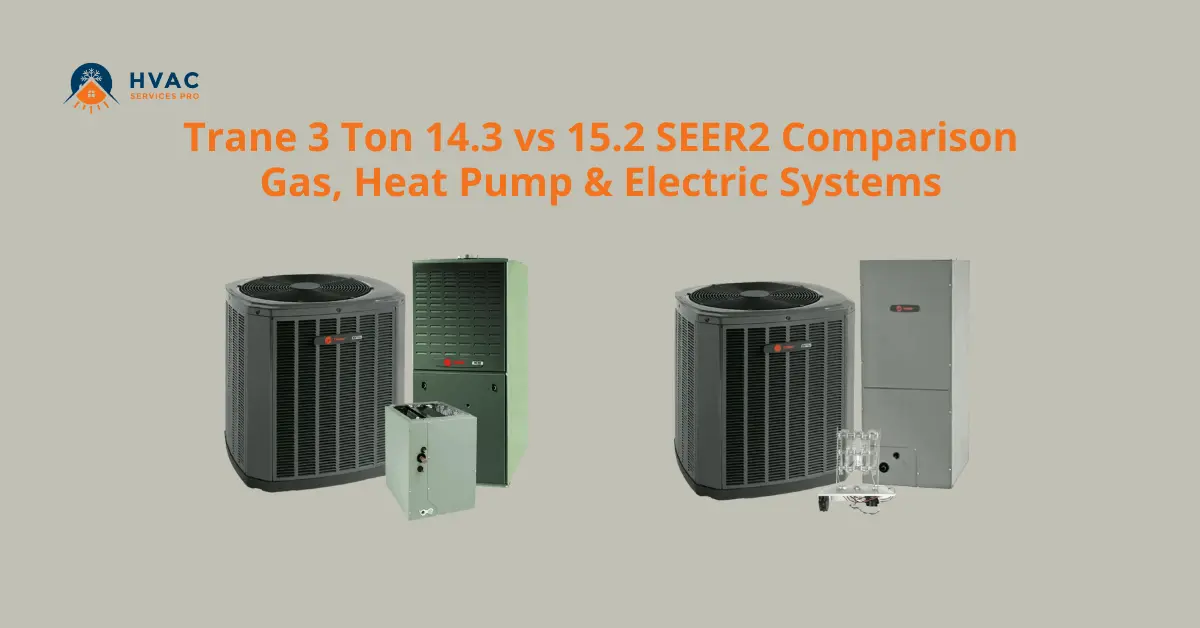
Choosing between a 14.3 SEER2 and a 15.2 SEER2 Trane system involves balancing upfront costs with monthly energy savings. The 15.2 SEER2 model offers roughly 6-7% higher efficiency.
This reduces long-term utility bills and often qualifies for federal tax credits. While the 14.3 SEER2 unit meets minimum legal standards, the 15.2 SEER2 tier serves as the sweet spot for homeowners seeking better performance without the premium price of variable-speed technology.
I remember a hot July afternoon when a homeowner in Phoenix asked me why her old unit was costing her a fortune. Her old system barely hit 10 SEER. We upgraded her to a Trane 3 Ton 15.2 SEER2 system. Her first cooling bill dropped by almost $60.
That experience taught me that small rating numbers represent real money staying in your pocket. I want to help you choose a system that fits your home and budget.
| TL;DR: Choosing a Trane 3 Ton 15.2 SEER2 system is the most cost-effective move for many because it often qualifies for a $2,000 tax credit. While the 14.3 SEER2 is a reliable budget option, the 15.2 model offers better humidity control and lower monthly utility bills in hot climates. |
Understanding a 3 Ton Trane System (36,000 BTU Explained)
A 3 ton Trane system provides exactly 36,000 BTU of cooling capacity per hour. This “tonnage” refers to the amount of heat the system can remove from your home. The main components include the compressor inside the outdoor condenser, the indoor evaporator coil, and the air handler or furnace that moves the air.
3 Ton AC Equals 36,000 BTU – What That Means
The term “ton” in HVAC does not refer to weight but to cooling power. One ton of cooling equals 12,000 BTU (British Thermal Units). Therefore, a 3 ton unit handles 36,000 BTU, which is a standard size for many average-sized American homes.
Trane 3 Ton System Square Footage Guide
A 3 ton system typically cools a home between 1,500 and 2,000 square feet. However, your local climate and home insulation significantly impact this range. In very hot regions, a 3 ton unit might only cover 1,500 square feet, while in milder areas, it can handle up to 2,100 square feet.
A 3-ton Trane system is often sufficient for a 2,000 sq ft home if the house has modern insulation and tight windows. If your home has high ceilings or many windows facing the sun, you might need a larger unit. We always recommend a Manual J Load Calculation to ensure the size fits your specific needs.
However, if you find that your home is slightly smaller than 1,500 square feet, you might want to look at the Trane 2-Ton 14.3 vs 15.2 SEER2 Systems. It is a great fit for a smaller unit that better meets your needs.
Load Calculation and Ductwork Compatibility
A professional load calculation determines the exact cooling needs by looking at wall thickness, window types, and roof color. You must also ensure your ductwork can handle the airflow of a 3 ton system. If your ducts are too small, the system will become noisy and lose efficiency quickly.
Trane 3 Ton SEER2 Matched System – What Changes the Rating?
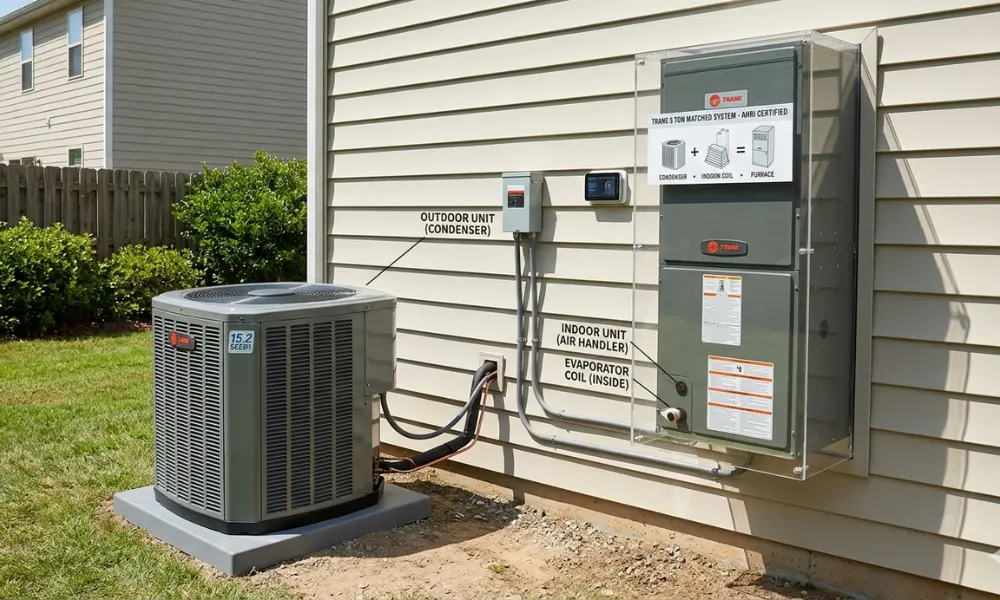
The SEER2 rating of your system is not determined solely by the outdoor unit. You achieve the advertised efficiency only when you have an AHRI-certified match. This means the outdoor condenser, indoor evaporator coil, and furnace compatibility are verified to work together efficiently.
Trane SEER2 Ratings through real systems give the real power to the Trane 3-ton. Here is what it does in the backend:
AHRI Match – Trane 3 Ton 14.3 SEER2
A 14.3 SEER2 rating is the baseline for many Trane SEER2 entry-level models like the XR14. To hit this rating, you must pair the condenser with a specific Trane-approved indoor coil. If the pairing is incorrect, your actual efficiency might drop below the legal minimum.
AHRI Match – Trane 3 Ton 15.2 SEER2
The 15.2 SEER2 rating often comes from the Trane XR15 or XL15i models. These systems require high-efficiency indoor blowers to reach their full potential. An AHRI-certified match ensures that the compressor and indoor fan operate in perfect synchronization to save energy.
What Changes the SEER2 Rating in a Matched Trane System?
Using a different evaporator coil can change your SEER2 rating by as much as 1 point. You cannot simply pair a new Trane SEER2 condenser with your existing furnace and expect the highest rating. The indoor blower motor type is a constant-torque or variable-speed motor. It directly determines the final AHRI efficiency score.
Trane 3 Ton 14.3 SEER2 System Options
The 14.3 SEER2 tier is a reliable, budget-friendly choice. It is the minimum efficiency allowed for new installations in many regions. This durable system provides consistent indoor comfort.
Trane 3 Ton 14.3 SEER2 Heat Pump
A 3 ton heat pump at this level provides efficient cooling and reliable heating. It features an HSPF2 rating (Heating Seasonal Performance Factor) that measures winter efficiency. These systems include a defrost cycle to keep the outdoor coils clear of ice during cold snaps.
- Auxiliary heat strips: Essential for backup heating when temperatures drop below freezing.
- Trane 3-ton heat pump matched air handler: Usually paired with the TEM4 or TEM6 series.


The air pump matched thing actually makes it a fan favorite among Trane 17 vs 18 SEER2 Systems.
Trane 3 Ton 14.3 SEER2 Gas Furnace and AC System
This setup pairs a standard air conditioner with a gas furnace. The AFUE (Annual Fuel Utilization Efficiency) of the furnace adds to the overall comfort. We often see the XR14 AC paired with an S9X1 or S8X1 gas furnace for a durable, cost-effective match.


Trane 3 Ton 14.3 SEER2 Electric Furnace and AC System
For homes without gas lines, an electric furnace serves as the air mover. While electric heat performance is 100% efficient at the point of use, it can be expensive to run in very cold climates. This system uses a Trane 3 ton electric furnace matched coil to maintain the 14.3 SEER2 cooling standard.

Trane 3 Ton 15.2 SEER2 System Options
The 15.2 SEER2 models offer a step up in technology and savings. These systems are popular because they often meet Energy Star requirements.
Trane 3 Ton 15.2 SEER2 Heat Pump
The Trane 3 ton 15.2 SEER2 heat pump (often the XR15) provides a higher HSPF2 rating. This leads to lower operating costs during the winter months. It is the best Trane 3 ton system for mild winters where you want maximum efficiency without a gas line.
Trane 3 Ton 15.2 SEER2 Gas Furnace and AC System
In hot climates, the extra efficiency of the 15.2 SEER2 AC pays for itself quickly. When paired with a 96% AFUE gas furnace, you get a high-performance dual-fuel capable system. This is widely considered the best Trane 3-ton system for hot climates due to its durability.
Trane 3 Ton 15.2 SEER2 Electric Furnace and AC System
This configuration uses a higher-grade indoor unit, like the Hyperion air handler. It provides better humidity control and quieter operation than the 14.3 SEER2 entry-level models.
So, if you ask me to choose between Trane 14.3 and 15.2 SEER2 Systems, I would recommend the 15.2 one. Cause it’s system is strong enough to handle the strong weather of Texas.
Gas Vs Heat Pump Vs Electric Trane 3 Ton System Comparison
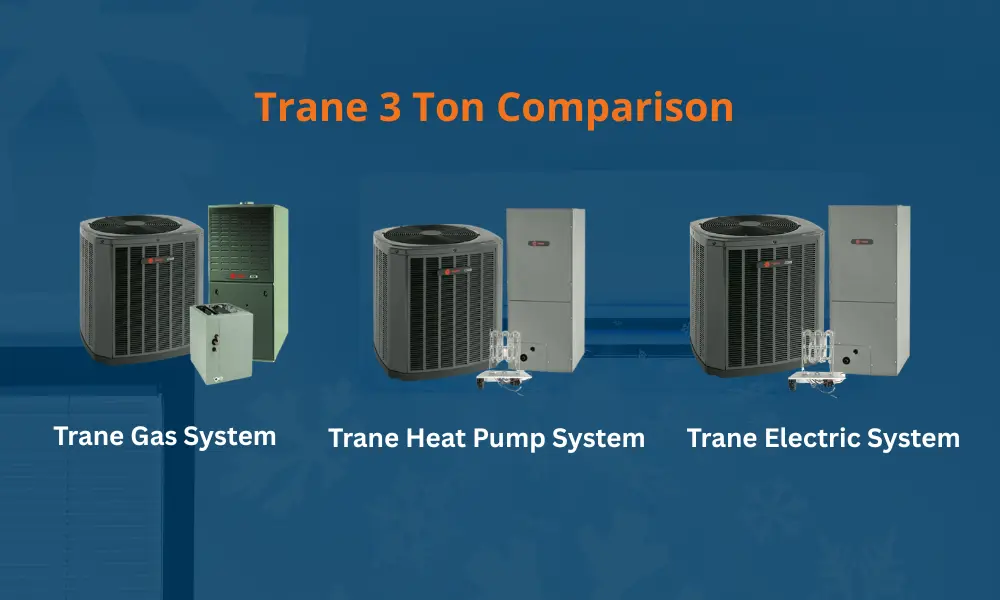
A Trane 3-ton gas system usually costs more to install if you need to run gas lines or venting. However, a heat pump may cost more. Over 10 years, the heat pump often wins on operating cost in areas with high gas prices.
The Trane 3-ton heat pump is significantly more expensive to buy than an electric furnace. However, the heat pump uses about three times less electricity to heat your home. You will usually recover the price difference in energy savings within 3 to 5 years.
Choosing between gas, heat pump, or electric depends on your local utility rates and winter weather. Each system has different AFUE and HSPF2 strengths.
3 Ton Trane System Gas vs Heat Pump vs Electric
| Feature | Gas Furnace + AC | Heat Pump System | Electric Furnace + AC |
| Heating Source | Natural Gas / Propane | Electricity (Heat Transfer) | Electric Resistance |
| Best Climate | Very Cold Winters | Moderate to Cold | Mild Winters Only |
| Installation Cost | Moderate to High | Moderate | Lowest |
| Monthly Cost | Low (if gas is cheap) | Lowest (in mild weather) | Highest in Winter |
Trane 3 Ton 14.3 vs 15.2 SEER2 Price Difference
The price gap between these two efficiency tiers is usually between $500 and $1,200 for the equipment. When you factor in the 15.2 SEER2 payback period, the higher efficiency unit often becomes the better financial choice.
According to the Modernize HVAC Cost Guide 2026, 14.3 vs 15.2 SEER2 price differences:
| Metric | 14.3 SEER2 (Trane XR14) | 15.2 SEER2 (Trane XR15) |
| Equipment Only Price | $3,200 – $4,500 | $3,800 – $5,500 |
| Installed Price | $8,500 – $11,000 | $9,500 – $13,000 |
| Annual Cooling Cost | ~$480 | ~$445 |
| Estimated Savings | Baseline | 7% Lower than 14.3 |
| Tax Credit | Rarely | Often (up to $2,000) |
Equipment Only vs Installed Price – What’s Included?
The equipment only pricing includes the condenser, coil, and furnace. The Trane 3 ton SEER2 installed price adds labor, permits, duct modifications, and a new thermostat. Trane 3 ton SEER2 replacement cost usually falls between $9,000 and $14,000, depending on your home’s complexity.
While the 15.2 is a great value, you should also consider a High-SEER2 Trane System (17–18+) if you live in a region with extreme utility costs.
Trane 3 Ton SEER2 System Cost Range & Financing Options
We know that a new HVAC system is a major investment. Most dealers offer Trane 3 ton SEER2 system financing to help spread the cost over several years. You can often find 0% interest deals for the first 12 to 60 months.
Financing a Trane 3 ton heat pump is common because the upfront cost is higher. Many local utilities also offer low-interest loans for high-efficiency heat pump upgrades. You can often buy Trane 3-ton 15.2 SEER2 system unit through authorized online retailers, but we recommend professional installation for warranty protection.
You can browse the full specifications and buy a Trane 3 Ton 15.2 SEER2 system through the official Trane HVAC product catalog. Because labor and ductwork are so critical to performance.
That’s why it is best to get a professional Trane HVAC Installation Service to handle your system replacement.
Warranty, Lifespan & Maintenance Costs
Trane is known for the Climatuff compressor, which is arguably the most durable in the industry.
To get the full 10-year parts warranty, you must complete your warranty registration within 60 days of installation. If you forget, the base limited warranty drops to only 5 years. Some premium models even include a 12-year compressor warranty.
With regular maintenance, a Trane 3 ton system lasts between 15 and 20 years.
The Trane 3 ton maintenance cost is usually $150 to $300 per year for two professional tune-ups. Keeping the coils clean and changing the filters are the best ways to protect your investment.
Rebates, Tax Credits & Government Incentives
In 2026, the federal government continues to incentivize high-efficiency upgrades. These programs can make the 15.2 SEER2 system cheaper than the 14.3 model after the credit.
A 15.2 SEER2 Trane 3 ton system often qualifies for the Federal Energy Efficient Home Improvement Credit (Section 25C). You can claim up to $2,000 for a qualified heat pump or $600 for a high-efficiency central AC unit.
Many local utility companies offer instant rebates for 15.2 SEER2 systems because they reduce the load on the power grid. These rebates range from $200 to $1,000, depending on your location and the specific equipment match.
The older 14 SEER units are being phased out to meet stricter environmental standards. The new SEER2 rules ensure every new system installed uses less electricity and causes less strain on our energy infrastructure.
Final Recommendation: Which System Fits You?
If you’re living in a hot climate and plan to stay put for the next 5+ years, the Trane 3 Ton 15.2 SEER2 just makes more sense, especially with that potential $2,000 federal tax credit helping offset the cost. Over time, the energy savings really add up.
On a tighter budget or fixing up a rental? The 14.3 SEER2 (XR14) is still a solid, dependable option. It’s simple, reliable, and gets the job done without stretching your wallet.
Have gas? A furnace and AC combo will give you that strong, cozy heat in winter. Prefer all-electric? The 15.2 SEER2 heat pump keeps things efficient year-round.
HVAC Services Pro will walk you through the options and help you choose what actually fits your home, not just what sounds good on paper.
Frequently Asked Questions (FAQs)
Is a 15.2 SEER2 Rating Good?
Yes, a 15.2 SEER2 rating is considered a high-value efficiency level. It offers a great balance between energy savings and affordable upfront equipment costs.
Does a 15.2 SEER Heat Pump Qualify for the Tax Credit?
Most 15.2 SEER2 heat pumps qualify for the $2,000 tax credit if they meet the required HSPF2 ratings. You should always verify the specific AHRI match with your contractor.
How Many Sq Ft Will a 3 Ton Heat Pump Cool?
A 3 ton heat pump typically cools 1,500 to 2,000 sq ft. The exact capacity depends on your home’s insulation, window efficiency, and local summer temperatures.
Why Are 14 SEER Being Phased Out?
The Department of Energy increased the minimum standards to 14.3 SEER2 in 2023. This change reduces overall energy consumption and carbon emissions across the United States.
Is 14.3 SEER2 the Same as 15 SEER?
Roughly, yes. Because SEER2 testing is more difficult, a 14.3 SEER2 unit is approximately equal to an old 15 SEER unit in terms of actual cooling power.
What SEER Is Best for a Heat Pump?
For most homeowners, 15.2 to 16 SEER2 is the “sweet spot.” It provides high efficiency for the tax credit without the extreme cost of 20+ SEER2 variable-speed units.
What Size Breaker for a 3 Ton Trane Condenser?
Most Trane 3 ton condensers require a 30-amp to 40-amp double-pole breaker. Your electrician must check the “Minimum Circuit Ampacity” on the unit’s nameplate.
Can I Upgrade From 14.3 to 15.2 SEER2 Without Changing the Furnace?
You usually cannot. To achieve the 15.2 SEER2 rating, you need a high-efficiency indoor blower motor. An old furnace will likely limit your new AC to a lower efficiency.