




Air Conditioner Repair Cost, Troubleshooting & Pricing Guide
Learn how to fix common AC problems, what repairs cost, and when it’s time to replace your system. This guide helps you save money and avoid costly breakdowns.
Get Fast AC RepairMost AC problems can be fixed by checking the thermostat, air filter, breaker, and outdoor unit. AC repair costs typically range from $150 to $1,500, while full system replacement ranges from $7,000 to $16,000 depending on size and efficiency.
Stay Cool in DFW Heat: Why Fast AC Repair Matters
When temperatures climb to 95–105°F in Dallas TX during July and August, a broken air conditioner transforms from an inconvenience into a genuine emergency. With average summer highs around 93°F and humidity that makes it feel even hotter, your cooling system works harder here than in most parts of the country—running over 2,200 hours annually just to keep your house comfortable.
HVAC Services Pro serves homeowners and businesses throughout, Dallas City, and surrounding North TX communities with same-day and emergency repairs when you need them most. As a state-licensed HVAC contractor working with Trane and RunTru systems, we back every new installation with a 5-year labor warranty and provide transparent, itemized quotes on every service call.
Here’s something most people don’t realize: the majority of “air conditioner not cooling” complaints start as small, fixable problems. A clogged filter restricting airflow, a tripped circuit breaker, or incorrect thermostat settings account for a surprising number of service calls. Catching these issues early can save you hundreds in repair costs and prevent minor troubles from escalating into major component failures.
This guide covers everything you need to know about air conditioner repair service in our area:
- Quick DIY checks you can do in 5–10 minutes
- Common AC problems and what you can safely try yourself
- Realistic AC unit pricing for Shreveport (including Trane systems)
- When repair makes sense vs. when replacement is smarter
- How to get an accurate quote from a qualified technician
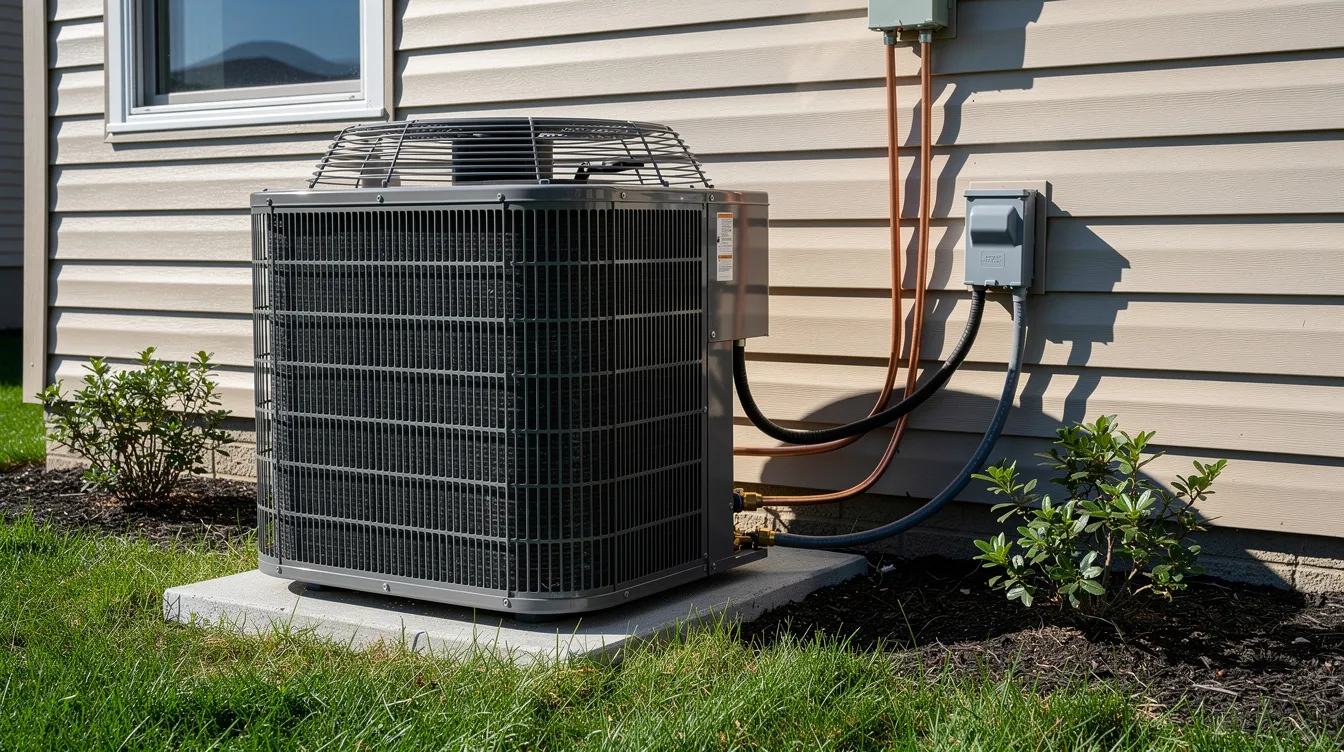
Quick DIY Checks Before You Call for AC Repair
Before scheduling professional air conditioning repair service, spend a few minutes on basic troubleshooting. Industry data suggests these simple checks resolve up to 70% of “AC not cooling” complaints—and even when they don’t fix the problem, they help your technician diagnose faster and save you money on the service call.
You won’t need any special tools beyond a flashlight and access to your thermostat, electrical panel, and outdoor unit.
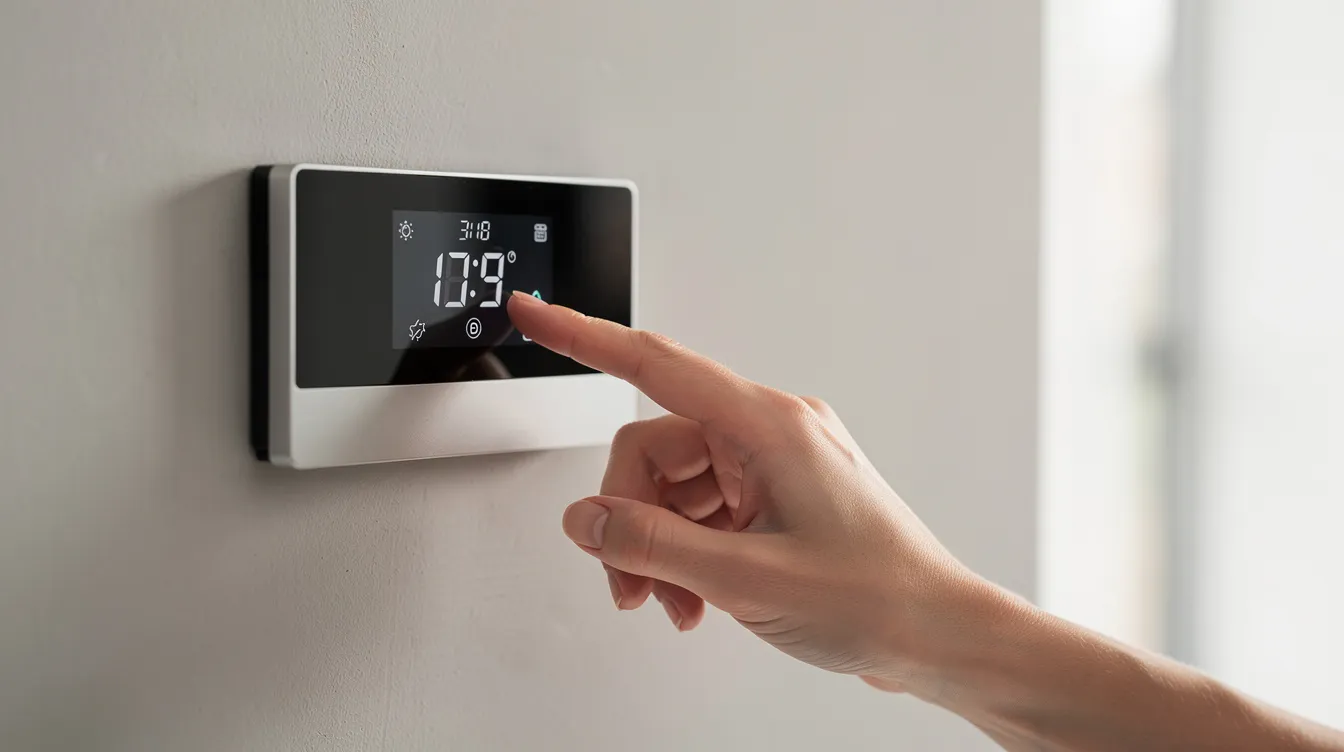
1. Check Your Thermostat
Start at the thermostat—it’s the most common culprit for AC systems that won’t cool:
- Confirm the mode is set to “Cool” (not “Heat” or “Off”)
- Set the fan to “Auto” rather than “On” for normal operation
- Lower the temperature setting at least 3–5°F below the current room reading
- Replace batteries if you have a battery-powered digital model (common in 2010–2020 installations)
- Review any programmed schedule that might be overriding your desired settings
A thermostat with dying batteries can display correctly but fail to send signals to your system. Fresh AA batteries take two minutes to install and eliminate this possibility.
2. Inspect the Breaker and Power
Head to your main electrical panel and look for breakers labeled “AC,” “Condensing Unit,” or “Air Handler”:
- A tripped breaker sits in the middle position or shows a red indicator
- Reset by switching fully OFF, then back ON once
- If the breaker trips again immediately or within minutes, stop—this indicates a serious electrical issue requiring professional diagnosis
Repeatedly resetting a tripping breaker creates fire risk and can damage your system. One reset attempt is safe; beyond that, call for service.
3. Replace the Air Filter
A dirty air filter causes more AC problems than any other single factor:
- Turn your system OFF at the thermostat
- Locate the filter at your return grille or inside the air handler (common sizes include 16x25x1 and 20x20x1)
- Slide it out and inspect—if it’s gray, brown, or visibly clogged, replace it
- Standard pleated filters cost $10–20 and should be changed every 30–60 days in dusty Louisiana conditions
Clogged filters restrict airflow by 15–20%, leading to weak air from vents, frozen coils, and your AC running constantly without cooling your home efficiently.
4. Inspect the Outdoor Unit (Condenser)
Walk outside and visually check your condenser:
- Clear leaves, grass clippings, and debris at least 2 feet around the unit
- When running, confirm the fan is spinning (you should hear and see it)
- Never remove panels or reach inside—high-voltage capacitors store dangerous charges even when power is off
After completing these checks, if your air conditioner still isn’t cooling properly, it’s time to schedule professional ac repair with HVAC Services Pro.
Common Air Conditioner Problems (and What You Can Safely Try)
Central AC systems and heat pumps share similar components and failure points. This section covers issues common to Shreveport homes and small businesses, explaining what causes each problem and what you can safely check yourself.
Anything involving electricity, refrigerant, or disassembly requires a licensed technician. Stick to observation and simple tasks described below.
AC Not Cooling at All
When your system blows hot air or nothing at all, likely causes include:
| Possible Cause | What You Can Check |
|---|---|
| Tripped breaker | Reset once (see above) |
| Thermostat failure | Verify settings, replace batteries |
| Failed contactor | Listen for outdoor unit—if silent, likely electrical |
| Blown capacitor | None—requires professional diagnosis |
| Compressor issues | None—major component needing technician |
| Severe refrigerant loss | None—requires EPA-certified handling |
| If your vents blow warm air while the outdoor unit sits silent, you’re looking at electrical or control problems that need professional attention. |
AC Running But Not Cooling Well
Your system runs, but indoor temperature stays uncomfortable. Common culprits:
- Dirty air filter (the most frequent cause—40% of cases)
- Clogged condenser coil reducing heat rejection by up to 30%
- Blocked supply or return vents
- Low refrigerant levels from a leak
What you can do: Open all supply registers throughout your home. Move furniture away from vents. Power off the system and gently rinse the outdoor coil with a garden hose if it’s visibly dirty. If these steps don’t help, schedule a coil cleaning and refrigerant check.
Weak Airflow from Vents
When air trickles out instead of flowing strongly:
- Filthy air filter (primary suspect)
- Failing blower motor (ECM variable-speed motors last 15–20 years; older PSC types last 10–12)
- Dirty evaporator coil
- Ductwork issues—loose connections, crushed flex duct, or leaks losing up to 30% of conditioned air
Safe homeowner actions: Replace the filter, ensure all interior doors and registers are open, and listen for the blower fan. A steady hum indicates normal operation; grinding or silence suggests motor problems.
Frozen Indoor Coil or Ice on Refrigerant Lines
Ice buildup signals trouble:
- Check the copper refrigerant lines near your outdoor unit—frost on the larger “suction” line is the first sign
- Look at the indoor evaporator coil if accessible
Ice typically results from restricted airflow (dirty filter, blocked return) or low refrigerant. Running a frozen system risks water damage and compressor failure costing $2,000–$5,000.
Immediate steps:
- Turn system to “Off” or “Fan Only”
- Allow 2–4 hours for ice to melt naturally (never chip it)
- If freezing returns after restart, call for service
Short Cycling (System Starts and Stops Frequently)
Normal cooling cycles run 15–20 minutes. If your system kicks on and off every few minutes:
- Oversized equipment (common in early 2000s installations)
- Thermostat placed in direct sunlight causing false readings
- Low refrigerant charge
- Dirty coils triggering safety switches
- Tripped high-pressure safety switches
What helps: Ensure your thermostat isn’t near heat sources. Replace the filter. Log cycle frequency (how many minutes on, how many off) to share with your technician.
Unusual Sounds or Odors
Your AC should operate with a steady hum, not attention-grabbing noises:
| Sound/Smell | Likely Cause | Action |
|---|---|---|
| Grinding | Worn motor bearings | Schedule service soon |
| Squealing | Belt issues (rare in modern direct-drive systems) | Schedule service |
| Buzzing | Electrical contactor problems | Schedule service |
| Burning/electrical smell | Arcing, melting insulation | Shut off immediately at thermostat AND breaker; call emergency service |
| Burning odors demand immediate shutdown. Electrical fires cause thousands in damage and pose serious safety risks. |
AC Unit Pricing in DFW: What a New System Really Costs
Understanding realistic hvac system cost helps you budget appropriately and recognize fair quotes. The prices below reflect 2024–2026 ranges specific to the Shreveport market, where labor runs $100–150 per hour and material costs sit 5–10% above national averages.
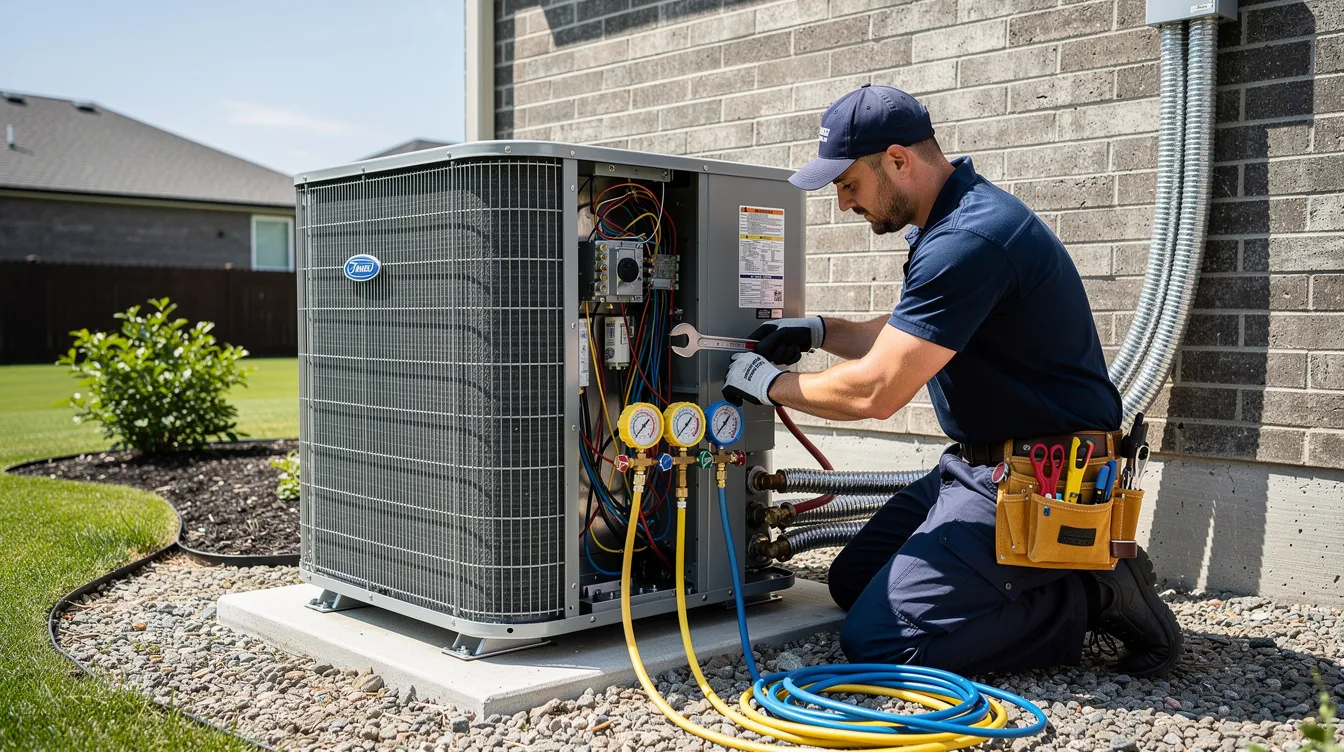
HVAC Services Pro installs Trane and RunTru systems with a 5-year labor warranty on every installation, giving you long-term peace of mind.
Understanding Unit-Only vs. Installed Price
- Unit-only price: The equipment itself—outdoor condenser and indoor components
- Fully installed price: Equipment plus labor, materials, refrigerant, electrical connections, thermostat installation, and permit fees
Most homeowners focus on installed price since that’s your actual out-of-pocket cost.
3-Ton Central AC or Heat Pump
Typical for 1,400–1,800 square foot homes that pair well with 3-ton, 15.2 SEER2 Trane air conditioner condensers:
| Component | Price Range |
|---|---|
| Unit only | $3,500–$5,500 |
| Fully installed | $7,000–$11,000 |
4-Ton System
Suitable for 1,800–2,300 square foot North Louisiana homes, including options like premium 4-ton Trane XV18 TruComfort variable-speed systems or RunTru by Trane 4-ton 14.3 SEER2 condensers:
| Component | Price Range |
|---|---|
| Unit only | $4,000–$6,500 |
| Fully installed | $8,500–$13,000 |
5-Ton System
For larger homes and light commercial spaces that often require 5-ton, 14.3 SEER2 Trane air conditioner condensers:
| Component | Price Range |
|---|---|
| Unit only | $4,500–$7,500 |
| Fully installed | $10,000–$16,000 |
 |
Trane AC Unit Price Specifics
Trane systems command a $1,000–$2,000 premium over builder-grade equipment—and there’s good reason:
- Climatuff compressors last approximately 20% longer than standard components
- Higher SEER2 ratings (up to 22+) significantly reduce Entergy bills
- Superior build quality with better humidity control and quieter operation
In Shreveport’s 2,200+ hour cooling season, a high-efficiency Trane system can save $300–600 annually on electricity. Over a 15-year lifespan, that efficiency advantage pays for the premium several times over.
Key Factors Affecting Your Price
Your actual cost depends on several variables:
SEER2 Rating: Each point above the minimum 14.3 SEER2 adds roughly $500–$1,000 to system cost. Higher ratings mean lower operating costs.
Installation Complexity:
- Tight attic access adds 10–20% to labor
- Roof-mounted units require additional equipment
- Long refrigerant line sets add approximately $10 per foot
Ductwork Condition:
- Reusing existing ducts saves $2,000+
- Duct sealing runs $1,500–$2,500
- Complete replacement costs $5,000–$10,000
System Type:
- Heat pump adds roughly $1,500 vs. straight cool with gas furnace
- Variable-speed equipment costs more upfront but operates more efficiently
- Single-stage systems are least expensive but cycle more frequently
Higher efficiency systems (16+ SEER2) cost more upfront but can save hundreds per year on energy bills. Over time, they often pay for themselves.
Financing, Rebates, and Long-Term Savings
HVAC Services Pro helps customers explore:
- 0% promotional financing (12–60 months depending on credit)
- Entergy rebates up to $1,200 for 16+ SEER2 systems
- IRA tax credits covering 30% of cost up to $2,000 for qualifying equipment
For your exact hvac system cost, contact us for a written, itemized quote based on your specific home and needs.
Repair vs Replace: Which Is Smarter for Your AC?
Many DFW-area systems installed in the early 2000s through 2010s are now 12–20 years old, putting homeowners squarely in the repair vs. replacement decision zone. Here’s how to think through your options.
When Repair Makes Sense
Investing in repairs typically works when:
- System age: Under 10–12 years with solid maintenance history
- Repair cost: Under a few hundred dollars for components like capacitors ($200–400), contactors ($150–300), or minor wiring repairs
- Track record: No history of major refrigerant leaks or repeated failures
- Refrigerant type: R-410A systems (post-2010) don’t face the supply issues of older R-22 units
When Replacement Is Usually Better
Consider a new unit when:
- System exceeds 12–15 years, especially pre-2010 equipment with outdated efficiency
- R-22 refrigerant systems (R-22 now costs $200+ per pound due to phase-out)
- Multiple service calls in recent cooling seasons for compressors, coils, or electrical issues
- Major repairs (compressor $2,000–$4,000, coil $1,500–$3,000) approach 30–50% of new system cost
A Simple Cost Comparison Method
Here’s a practical way to evaluate your situation:
Multiply your system’s age in years by the proposed repair cost. If that number exceeds the price of a new system, replacement makes financial sense.
Example:
- 14-year-old AC needs a $2,000 compressor repair
- 14 × $2,000 = $28,000
- A new Trane system costs approximately $9,000–$11,000 installed
- The calculation strongly favors replacement
Beyond the math, a new system also delivers:
- Lower bills: Modern SEER2 ratings cut energy consumption 20–40% compared to 15-year-old equipment
- Better comfort: Improved humidity control (maintaining 50–55% RH), quieter operation (40–50 dB vs. 60+ dB), more even temperatures throughout your home
- Warranty protection: HVAC Services Pro’s 5-year labor warranty plus 10–12 year manufacturer parts coverage eliminates worry about near-term repair costs
Get a Professional Evaluation
Rather than guessing, request an on-site evaluation from HVAC Services Pro. We’ll assess your current system’s condition and provide side-by-side repair vs. replacement options with transparent pricing for your specific situation.
When to Stop Troubleshooting and Call a Professional
Some problems require specialized tools, EPA certifications, and training that Louisiana regulations reserve for licensed professionals. Knowing when to step back keeps you safe and prevents costly mistakes.
Electrical and Safety Concerns
Call immediately if you notice:
- Burning smell or visible smoke from any component
- Sparking or arcing at electrical connections
- Breakers that trip repeatedly despite resetting
- Melted wire insulation or discolored components
Testing live circuits, replacing capacitors, or working inside the electrical panel creates serious shock and fire hazards. These tasks belong to trained technicians with proper equipment.
Refrigerant Issues
Federal EPA regulations require Section 608 certification for anyone handling refrigerant. Signs you have a refrigerant problem:
- Hissing sounds near copper lines
- Oil stains at connection points
- Coils that freeze repeatedly despite clean filters
- System runs constantly without cooling effectively
Technicians use nitrogen pressure testing to locate leaks and recovery equipment costing $5,000+ to properly handle refrigerant. Simply “topping off” without fixing leaks violates federal law and wastes your money.
Major Mechanical Failures
Leave these to professionals:
- Compressor won’t start despite power at the unit
- Loud grinding from the outdoor unit
- Seized fan motors
- Indoor blower not running even with correct thermostat settings
These repairs require matching exact specifications—horsepower, RPM, capacitor sizing—that guesswork can’t replicate. Incorrect parts damage your system and void warranties.
Indoor Air Quality and Comfort Problems
Persistent issues beyond basic temperature control often need professional assessment:
- Hot/cold spots throughout your house
- Excessive humidity despite running AC
- Visible dust accumulation at vents
- Uneven airflow between rooms
These symptoms may indicate ductwork problems, system imbalance, or the need for air duct cleaning. HVAC Services Pro offers complete indoor air quality solutions alongside standard repair service.
Running a struggling system during 95°F+ Shreveport heat accelerates wear on major components. What starts as a $300 repair can become a $3,000 compressor replacement if you push a failing system through peak summer demand.
How to Get an Accurate AC Repair or Replacement Quote
Phone estimates provide rough ballparks, but accurate pricing requires an in-home evaluation where a technician can assess your specific equipment and conditions.
Information to Have Ready
Before your service visit, gather:
- System brand and model: Look for labels on the outdoor condenser
- Approximate age: Installation date or when you purchased the home
- Symptoms: When the problem started, what happens (or doesn’t), any patterns you’ve noticed
- Recent service history: Previous repairs, routine maintenance records
What to Expect During the Visit
A thorough diagnostic includes:
| Assessment | What They’re Checking |
|---|---|
| Thermostat function | Signals, calibration, settings |
| Electrical components | Capacitor condition, contactor wear, wiring integrity |
| Refrigerant pressures | Proper charge levels (115–125 psi R-410A at 75°F) |
| Temperature differential | Supply vs. return air (should be 16–22°F difference) |
| System efficiency | Amp draws compared to rated specifications |
| For replacement quotes, expect measurement of your home’s cooling load, ductwork inspection, and discussion of your comfort priorities and efficiency goals. |
What HVAC Services Pro Provides
When you contact us for a quote, you receive:
- Transparent, itemized pricing for both repair and replacement options
- Recommendations on properly sized Trane and RunTru systems
- Information on financing plans and current rebates
- Clear explanation of warranty coverage
Ask about maintenance plans that help your new system run efficiently and catch small problems before they become emergency repairs.

Schedule Fast, Professional AC Repair with HVAC Services Pro
When your air conditioner stops cooling in Dallas brutal summer heat, every hour matters. HVAC Services Pro delivers the responsive, expert service you need—whether it’s routine maintenance, emergency repairs, or a complete system replacement.
Why local homeowners and businesses trust us:
- Same-day and emergency repair service for urgent situations
- Deep expertise with Trane and RunTru systems
- Comprehensive capabilities: installation, ac repair, maintenance, and air duct cleaning
- 5-year labor warranty on new installations
- Transparent quotes with no hidden fees
Ready to get your cooling system back on track?
- [Schedule an Appointment] for non-urgent repairs and annual maintenance
- [Request a Quote] for new Trane AC or heat pump installations
- [Book Today] or call now for air conditioner not cooling emergencies
Don’t let a small problem become a major breakdown during peak summer heat. Addressing issues early protects your system, saves money, and keeps your indoor comfort exactly where it should be—cool and comfortable all season long.
Compare AC System Prices
Common Questions About AC Repair and Cost
How much does AC repair cost?
Most AC repairs range from $150 to $1,500 depending on the issue. Minor fixes are inexpensive, while major repairs like compressors cost more.
How do I know if my AC needs replacement?
If your system is over 12–15 years old or repair costs are high, replacement is often the better option.
Why is my AC running but not cooling?
This is often caused by a dirty filter, low refrigerant, or airflow issues.
Get Your AC Fixed Today
Don’t wait for a breakdown. Get fast, reliable service now.
Book Appointment