





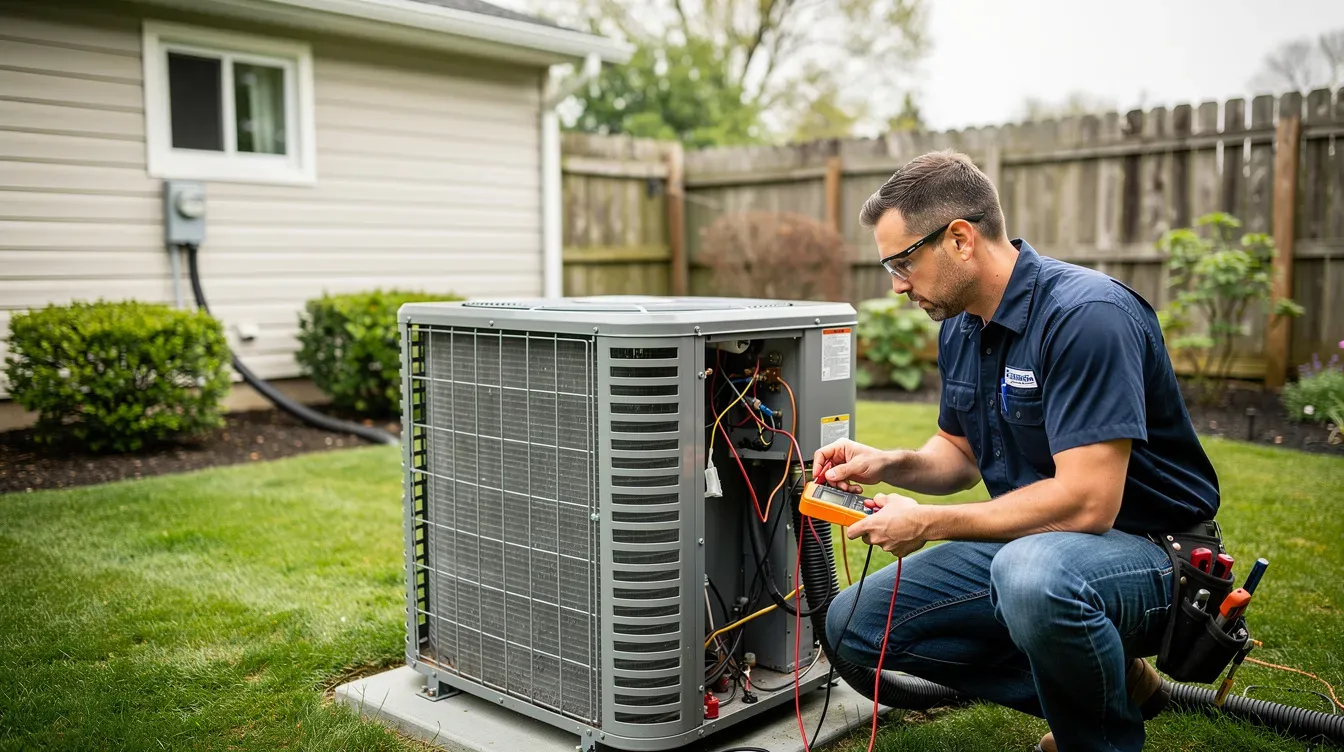
AC Unit Prices: Complete 2026 Cost & Installation Guide
Replacing or installing a central air conditioner is one of the larger home improvement investments you’ll make. In 2026, the ac unit cost landscape has shifted due to new SEER2 efficiency standards and refrigerant changes—meaning prices look different than they did just a few years ago.
This guide breaks down everything that affects central air conditioner prices, from system type and unit size to installation complexity and regional factors. You’ll walk away knowing exactly what to expect when contractors show up with quotes.
Overview: How Much Does an AC Unit Cost in 2026?
Most central AC units with professional installation in 2026 cost roughly $3,000 to $15,000 or more, depending on size, efficiency ratings, and installation complexity. Based on analysis of 56,000 real homeowner projects over the past six months, national averages for full HVAC replacements fall between $11,590 and $14,100.
Here’s a quick snapshot of what different air conditioning system types cost:
- Window units: $150–$1,000 (DIY installation)
- Ductless mini-splits: $2,000–$8,000 installed
- Standard central air: $3,000–$15,000+ installed
- Full system with new ductwork: $10,000–$25,000+
These numbers reflect 2026 pricing that incorporates mandatory SEER2 efficiency standards and the transition to R-454B refrigerant replacing R-410A. These changes have increased manufacturing costs by roughly 5-10%.
Keep in mind that all figures represent national averages. Your final price will vary based on home-specific conditions, which is why an in-home estimate is essential before committing to any new ac system.
| Type of AC | Typical 2026 Installed Cost | Best For |
|---|---|---|
| Window Unit | $150–$1,000 | Single rooms, renters |
| Portable Unit | $300–$800 | Temporary cooling, apartments |
| Ductless Mini-Split | $2,000–$12,000 | Additions, homes without ducts |
| Central Split System | $3,500–$15,000 | Most single-family homes |
| Packaged Unit | $4,000–$16,000 | Flat roofs, limited indoor space |
| Heat Pump | $4,000–$18,000 | Heating and cooling in one |
Main Factors That Impact AC Unit Cost
There’s no universal formula for air conditioner costs. The total cost you’ll pay is driven by equipment selection, labor, and your home’s specific conditions.
Here are the major cost drivers you’ll encounter:
- Unit size (tonnage): Larger homes need bigger systems, and each additional ton adds to both equipment and labor costs
- Efficiency rating (SEER2): Higher efficiency systems cost more upfront but reduce energy bills over time
- Type of system: Central split, packaged, mini-split, or heat pump configurations each carry different price tags
- Ductwork condition: Leaky or absent air ducts can add thousands to your project
- Installation complexity: Attic access, electrical upgrades, and local labor rates significantly affect installed costs
- Regional climate: Warmer climates often require larger systems and higher efficiency models
Understanding these several key factors helps you compare quotes intelligently and avoid overspending on a mismatched system—or underspending on something that won’t last.
AC Unit Cost by Type of System
Different AC types have vastly different price profiles. A simple window unit that cools a single room costs a fraction of what a whole-home central ac unit runs.
For whole-home cooling, most homeowners choose between central split systems, packaged units, or heat pumps. Portable and window units remain popular for supplemental cooling in specific rooms, while ductless mini-splits bridge the gap between room-level and whole-home solutions.
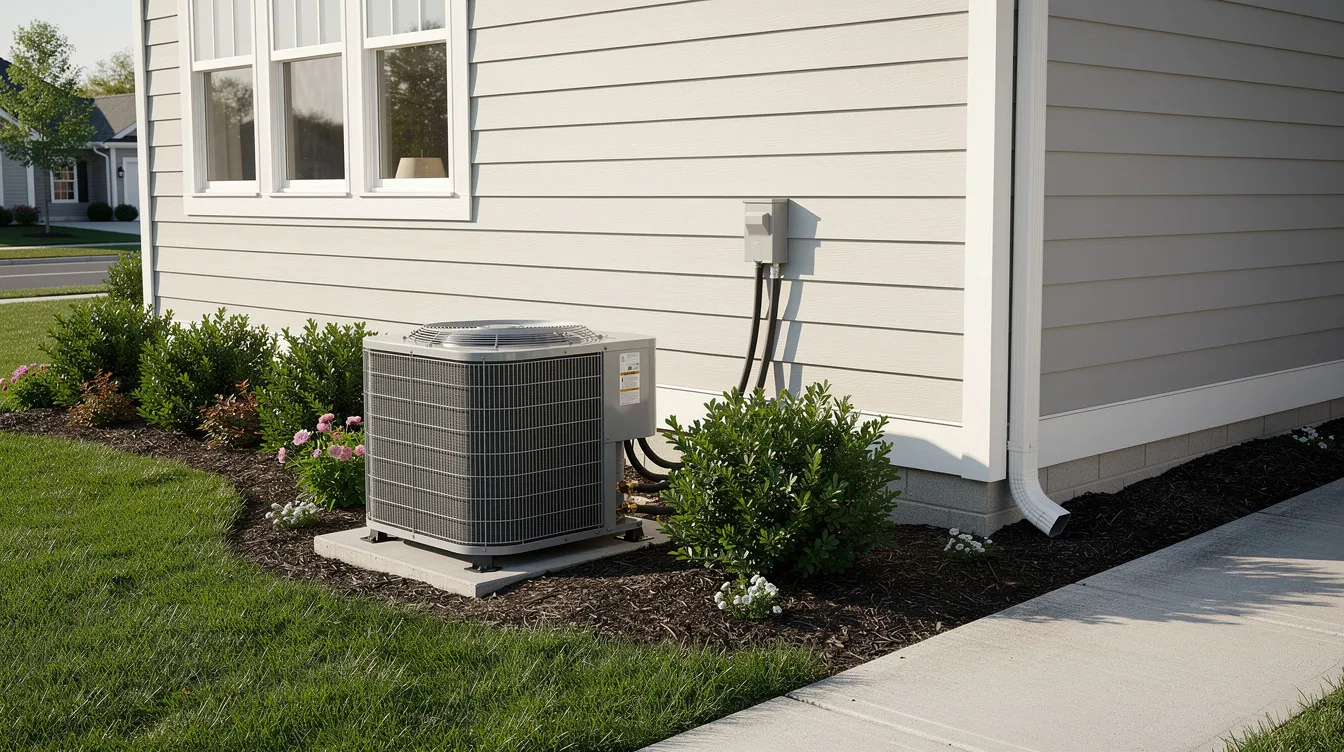
Central air conditioning dominates about 80% of U.S. single-family homes, with installed costs generally running $3,500 to $15,000+ depending on configuration, capacity, and efficiency level.
| System Type | 2026 Installed Cost | What’s Included |
|---|---|---|
| Window Unit | $150–$1,000 | Equipment only, DIY install |
| Portable | $300–$800 | Equipment + basic venting |
| Single-Zone Mini-Split | $2,000–$5,000 | Full install, one indoor unit |
| Multi-Zone Mini-Split | $4,000–$12,000+ | Full install, 2-4 heads |
| Central Split | $3,500–$15,000 | Condenser, coil, air handler, labor |
| Packaged Unit | $4,000–$16,000 | All-in-one cabinet, mounting, labor |
| Heat Pump | $4,000–$18,000 | Dual heating/cooling, full install |
Central Split Systems vs Packaged Units
A split system separates the outdoor unit (housing the compressor and condenser coil) from the indoor unit containing the evaporator coil and air handler. Refrigerant lines connect them through your home’s walls.
A packaged unit consolidates everything into a single weatherproof cabinet, typically mounted on a rooftop or concrete slab.
Cost comparison:
- Split systems: $3,500–$15,000 installed, depending on size and SEER2 rating
- Packaged units: Similar equipment costs, but add $1,000–$3,000 for mounting curbs, crane lifts, or roof penetration work
Which homes use which:
- Split systems work best for single-family homes with basements, attics, or utility closets
- Packaged units suit flat-roof homes, multifamily buildings, or properties with limited indoor space
System type often changes labor costs more than equipment costs due to access challenges and mounting requirements.
Ductless Mini-Split Systems
Ductless mini-splits feature wall-mounted or ceiling-mounted indoor units connected to an outdoor condenser via refrigerant lines. They’re ideal for additions, older homes lacking existing ductwork, or homeowners wanting zoned cooling.
2026 pricing:
- Single-zone system (12,000–18,000 BTU): $2,000–$5,000 installed
- Multi-zone setup (2-4 heads): $4,000–$12,000+
These systems use inverter-driven compressors that can achieve 25-33 SEER2, delivering 30-50% energy savings over standard systems. However, the cost per ton runs 20-40% higher than basic central air.
The real value appears in retrofit situations. If your home lacks ducts, installing a mini-split can save $5,000–$15,000 compared to adding new ductwork for a central ac system.
Heat Pumps Used as AC
Many new ac unit installations in 2026 are actually heat pumps—systems that provide both cool air in summer and heating in milder winters by reversing refrigerant flow.
What to know:
- Air-source heat pumps: $5,582–$11,644 installed
- Cold-climate models (optimized for -15°F operation): $6,168–$15,176
- Variable speed premium systems: Top of the range
Heat pump equipment typically costs $500–$3,000 more than a straight-cool air conditioner. However, they qualify for additional federal tax credits up to $2,000 and utility rebates that can offset the initial cost significantly.
Homeowners in moderate or warm climates should consider heat pumps when evaluating ac unit cost, since they eliminate the need for a separate furnace and deliver significant long term savings on both heating and cooling bills.
AC Unit Size (Tonnage) and How It Affects Price
Tonnage measures cooling capacity, with 1 ton removing 12,000 BTU per hour. Most residential systems fall in the 2–5 ton range, with square footage being just one factor in determining proper size.
General 2026 cost per ton:
- Standard efficiency (14-15 SEER2): $2,500–$3,000 per ton installed
- Higher efficiency systems (18+ SEER2): $3,500–$5,000 per ton
Factors that push sizing—and costs—higher include poor insulation, lots of west-facing glass, high ceilings, and hot climates like Arizona, Texas, or Florida.
Example for a typical 2,000 sq ft home:
A properly sized 3-ton unit (36,000 BTU) typically runs, while a larger 5-ton 14.3 SEER2 Trane condenser suitable for bigger homes will sit toward the upper end of typical price ranges:
- Low-end: $7,500
- Average price: $10,500
- Premium: $15,000+
Proper sizing requires a Manual J load calculation, not just a square-footage guess. Oversizing by even one ton increases initial cost by about 25% while creating humidity control problems and short-cycling that reduces system lifespan.
Energy Efficiency (SEER2) and Operating Cost Tradeoffs
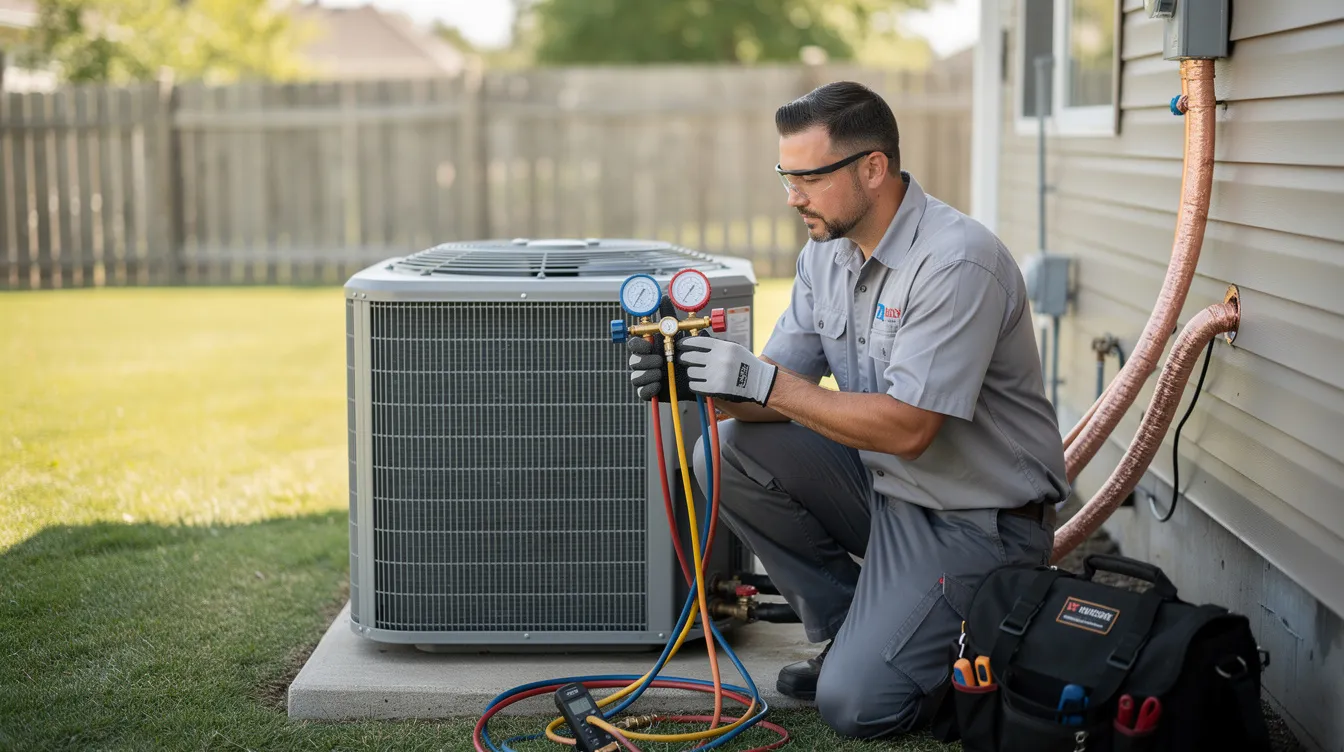
The SEER2 standard implemented in 2023 changed how air conditioner efficiency is tested and rated, accounting for realistic duct restrictions and cycling losses. Higher SEER2 ratings mean lower monthly utility bills but higher upfront costs.
Typical 2026 SEER2 pricing bands:
- Baseline (14-15 SEER2): $3,000–$6,000
- Mid-tier (16-18 SEER2): Add $1,000–$2,000
- High efficiency models (19+ SEER2): Add $2,000–$4,000
Savings example:
An 18 SEER2 3-ton unit running 1,500 hours annually at $0.15/kWh saves roughly $450/year compared to a 14 SEER2 model. At a $2,000 premium, that’s a 4-5 year payback period.
In hot, long-cooling-season climates, high efficiency makes financial sense. In cooler regions with shorter cooling seasons, mid-range energy efficiency ratings often deliver the best value, balancing energy costs against the cost of a new system.
Rebates, Tax Credits, and Incentives in 2026
Federal tax credits, state programs, and utility rebates can substantially reduce your effective ac unit cost when choosing energy efficient equipment.
What’s available:
- Federal credits under the Inflation Reduction Act: Up to $2,000 for qualifying heat pumps and ENERGY STAR certified ACs (14+ SEER2)
- State programs (like California’s TECH Clean): $1,000–$3,000
- Utility rebates: $500–$1,200 for 16+ SEER2 systems
Incentives can save money totaling $300–$2,000+ depending on your location and chosen equipment. Check dsireusa.org or ask your contractor about current programs—terms and deadlines change annually.
Installation & Labor: What Drives the “Installed” AC Unit Cost
Installation labor, permits, and materials typically account for 30-50% of the final installed AC cost—often $2,000 to $7,500 of the overall cost.
Key labor factors:
- Equipment location (attic adds $500–$2,000; rooftop adds $1,500–$4,000 for crane access)
- Electrical upgrades to 200A service: $1,000–$3,000
- Local hourly labor rates: $150–$250/hour depending on market
Typical timelines:
- Simple outdoor unit swap: 4–8 hours
- Full system replacement: 1–2 days
- Complex system with ductwork: Up to 3 days
Quality installation matters more than finding the cheapest bid. Proper refrigerant charge, airflow balancing, and timely registration of warranties require skilled technicians.
What thorough bids should include:
- Specific equipment model numbers
- Itemized labor costs
- Permit fees
- Startup/commissioning procedures
- Warranty details (parts and labor coverage)
Condition of Existing Ductwork and Home
Your existing infrastructure significantly affects total cost. Leaky, undersized, or damaged existing ducts can add substantially to your project:
- Duct sealing or repair: $3,000–$5,000
- Full duct replacement: $8,000–$20,000 for typical homes
- Zoning systems for uneven distribution: $2,000–$5,000
Older homes or those with additions often have existing ductwork that doesn’t distribute air evenly, requiring redesign to get full benefit from a new unit.
Improving insulation and air sealing before your AC upgrade can allow for a smaller unit, trimming $2,000–$4,000 from equipment costs while reducing long term energy savings on cooling bills.
Regional Climate and Local Market
Where you live affects both what you need and what you’ll pay:
- Southeast and Southwest averages run 15-25% higher due to demand and efficiency mandates
- Texas median projects: Around $14,000, with HVAC installation costs in the Dallas–Fort Worth area often falling in the $8,000–$16,000 range depending on system type and efficiency
- Rural Midwest projects: Often $9,000–$11,000 with $100/hour labor rates
- Urban centers add 10-15% for overhead and permit costs
Hot-region utilities often offer larger rebates for ultra-efficient systems, which can narrow the gap between standard systems and premium options.
Optional Features That Can Increase AC Unit Cost
Modern air conditioning systems can include comfort and control upgrades that add to project price while improving indoor air quality, quieter operation, and convenience.
Common upgrades and approximate 2026 costs:
| Feature | Additional Cost | Benefit |
|---|---|---|
| Two-stage compressor | $800–$1,500 | 15% efficiency gain, better humidity control |
| Variable speed compressor type | $2,000–$4,000 | 30% modulation, quieter operation |
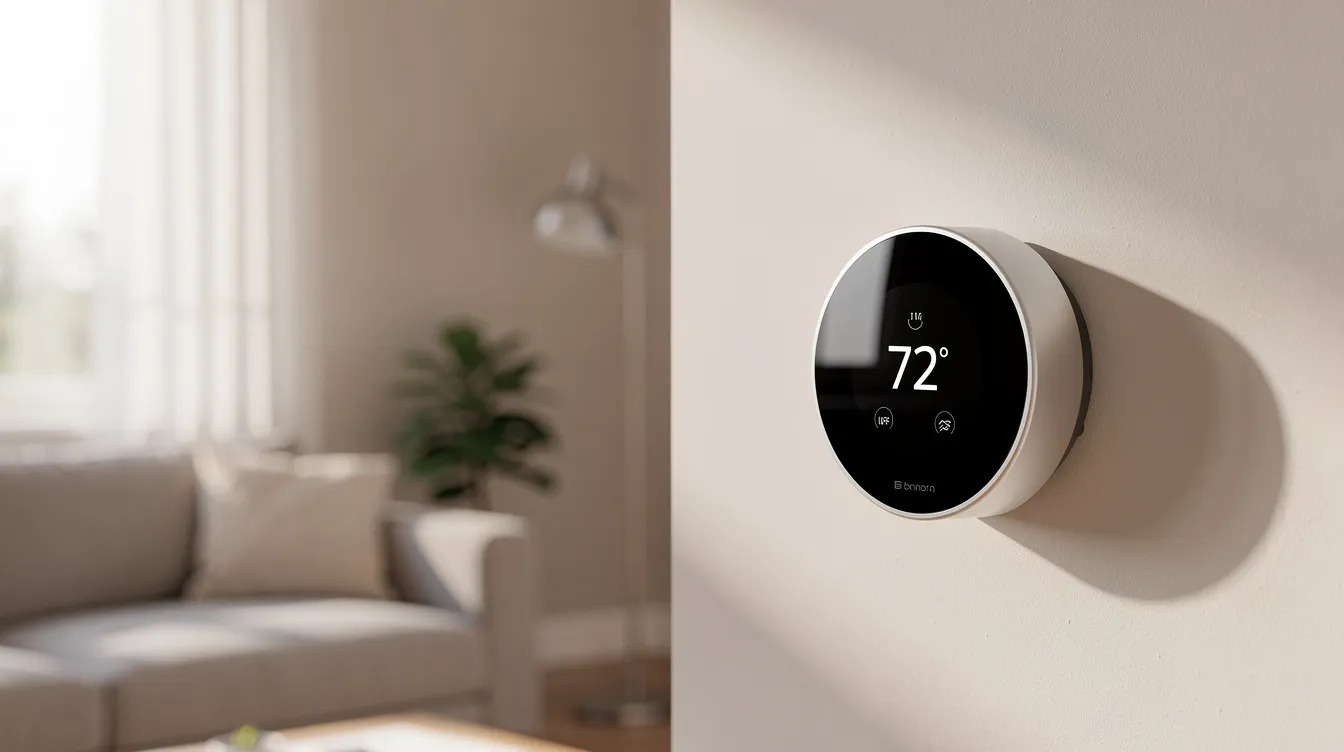
| Smart thermostat | $150–$400 | Remote control, learning algorithms |
| Zoning system | $1,500–$4,000 | Room-by-room temperature control |
| UV air purifier | $500–$1,500 | Enhanced indoor air quality |
| Dehumidification controls | $300–$800 | Better comfort in high humidity |
 |
Separate “must-have” advanced features from “nice-to-have” items when budgeting. Request itemized pricing to see exactly how each upgrade affects your total cost.
When to Repair vs Replace: Cost Considerations
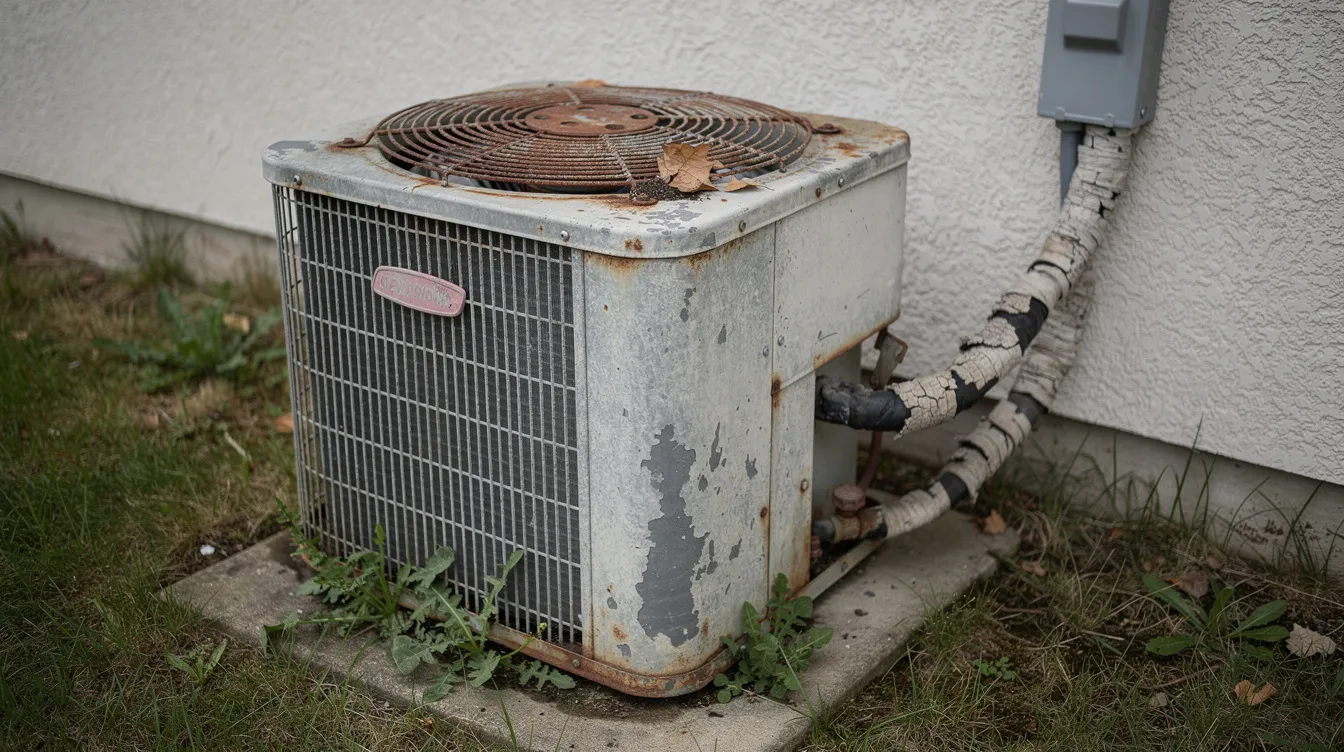
Central air conditioners typically last 10-15 years, with excellent maintenance extending some units to 20 years. Age heavily influences whether ac replacement makes sense.
General guidelines:
- If repair cost approaches 40-50% of new ac unit cost, replacement usually makes more financial sense
- Major component failures (compressor, evaporator coil) after 10+ years favor replacement
- Pre-2010 units or those using R-22 refrigerant typically run 30-50% less efficiently than current system options
- Your old unit may no longer be serviceable as refrigerant phases out
Cost comparison example:
Repeated $500–$800 seasonal repairs over three years ($2,000+ total) versus a $10,000 new ac unit delivering 25-40% lower energy bills often favors replacement. If your current system requires $1,200/year in energy costs and a new system cuts that by 30%, you’re saving $360 annually on top of avoiding repair costs.
How to Estimate Your AC Unit Cost & Get Accurate Quotes
The most accurate ac unit cost estimate comes from an in-home assessment that includes load calculations, duct inspection, and discussion of your efficiency and feature preferences.
Steps to get reliable quotes:
- Collect at least 2-3 written quotes specifying the same unit size, efficiency level, and feature set
- Ask contractors to separate equipment price, labor costs, permits, ductwork, and optional add-ons
- Verify that Manual J calculations were performed, not just square footage estimates
- Check contractor licensing, insurance, and warranty offerings
Timing tip: Schedule quotes during shoulder seasons (fall or early spring) when demand is lower. Many contractors offer 10-20% discounts on labor or promotional pricing during slower months.
Understanding the factors outlined in this guide—from tonnage and SEER2 to installation complexity and regional differences—puts you in control when comparing bids. Armed with this knowledge, you’ll choose a new air conditioner that delivers reliable cool air, fits your budget, and keeps energy costs manageable for years to come.
Compare Installed AC System Prices
Common Questions About AC Unit Cost
How much does a new AC unit cost in 2026?
Most new AC systems cost between $3,000 and $15,000 or more installed, depending on system type, efficiency, and installation complexity.
What affects AC unit cost the most?
The biggest cost factors are system size, SEER2 rating, ductwork condition, installation difficulty, and local labor rates.
Is it cheaper to repair or replace an AC unit?
If your unit is older than 10–15 years or repair costs are close to 40–50% of replacement cost, replacement is often the better long-term value.
Get Your AC Price Estimate Today
Find out what your new AC system should really cost before you commit to a quote.