





Air Conditioner Problems: Why Your AC Won’t Turn On, Won’t Cool, or Blows Warm Air
If your air conditioner isn’t working properly, you’re not alone. Many homeowners deal with AC issues like no power, weak airflow, or warm air during the hottest days.
In this guide, we’ll walk you through the most common AC problems, what causes them, and what you can do before calling a professional.
Modern central air conditioning systems face their toughest test during July and August heat waves, with 2026 projections showing average temperatures exceeding 95°F across many U.S. regions. When your ac unit struggles under this load, the most common air conditioner problems emerge: the system won’t power on, it runs but pushes warm air instead of cold air, or the outdoor unit fails entirely.
Industry data shows that over 60% of summer HVAC service calls between 2018 and 2025 involved condenser-related problems—the outside unit not running, the fan not spinning, or the ac system running without cooling properly. This article walks you through the most urgent symptoms first, then covers other frequent ac issues and basic DIY checks you can perform before calling a professional hvac technician. The guidance applies to typical split central air systems installed between 2010–2024, though many tips work for heat pumps and packaged units as well.
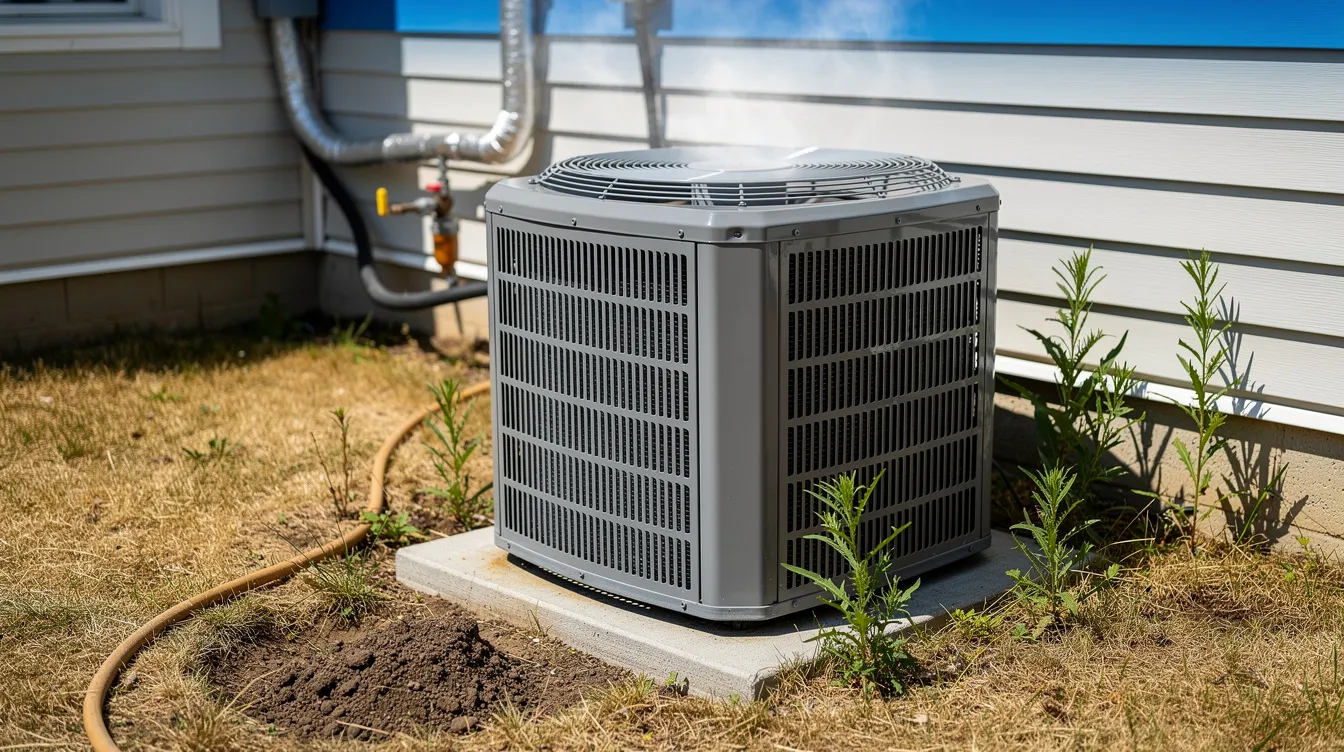
AC Not Turning On: Fast Checks Before You Call for Help
If your air conditioner won’t power on at all, start with safe electrical and thermostat checks before assuming a major breakdown. These steps take under 10 minutes and often resolve the issue without a service call.
- Verify thermostat settings: Confirm the thermostat is in cooling mode (not “Off” or “Heat”), with the temperature setpoint 3–5°F below the current room air temperature. Check that fan mode is set to “Auto” rather than “On”—leaving it on “On” can overwork the blower motor without engaging the compressor.
- Replace dead batteries: Battery-powered thermostats (common in Honeywell models from 2015–2021) can show blank screens or error icons when batteries deplete, especially in humid conditions. Swap in fresh AA batteries and wait 30 seconds for the display to reset.
- Check the circuit breaker: Locate your electrical panel and find the dedicated 15–60 amp double-pole breaker labeled “AC,” “Air Conditioner,” or “Condensing Unit.” If tripped, switch it fully OFF, wait 5 minutes, then flip it back ON. This pause allows internal high-pressure switches to reset. If the breaker trips repeatedly, stop resetting it—this signals deeper electrical issues or a failing compressor.
- Inspect the outdoor disconnect box: The weatherproof pull-out or fused switch mounted 3–6 feet from the condenser unit sometimes gets toggled off during landscaping. Confirm it’s fully inserted and engaged.
- Indoor blower runs, but condenser stays silent? If you hear the indoor unit running but the outside unit never starts, skip to the “AC Condenser Problems” section below for detailed outdoor-unit troubleshooting.
- Safety first: If you notice a burning smell, smoke, or visible charring around any wiring, shut off the power supply at the breaker immediately and call a qualified technician. NFPA data links thousands of annual home fires to hvac system electrical faults.
AC Blowing Warm Air: Why the System Runs but the House Won’t Cool
In many summer service calls, the indoor fan and thermostat appear normal, but supply vents push warm air or barely cool air instead of the expected cold output. This indicates a cooling process failure rather than a power failure.
- Confirm the outdoor condenser is running: Walk outside and check that the condenser fan is spinning, the compressor is humming, and there’s no visible ice buildup on the copper refrigerant lines or outdoor coil. If the outside unit is silent, see the condenser section below.
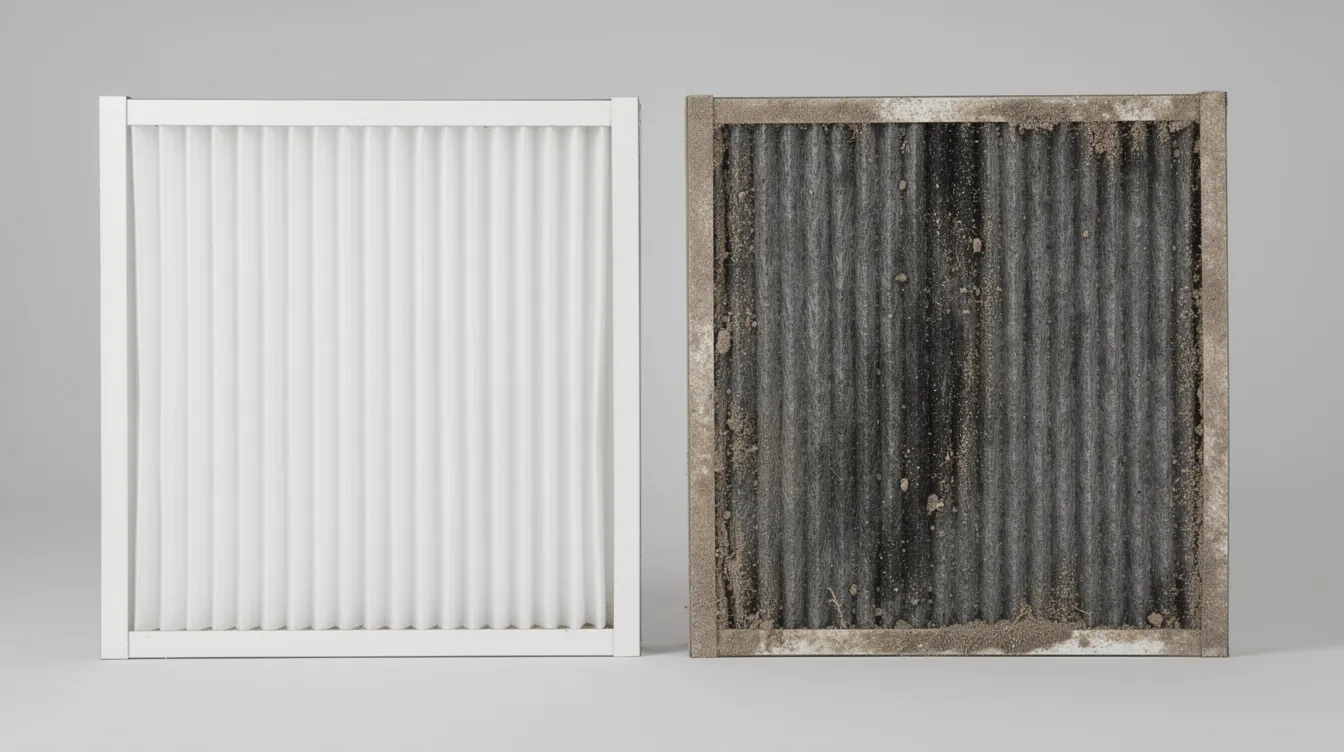
- Check the air filter first: A dirty air filter is the number one cause of warm-air complaints. Inspect the filter at your furnace or air handler—if it looks gray, dusty, or matted (especially after peak pollen season from April–June), replace it immediately. Clogged filters reduce airflow by up to 50%, which can cause the evaporator coil to freeze and block the cooling process entirely.
- Look for frozen evaporator coil symptoms: Weak airflow, visible ice on refrigerant lines near the indoor unit, or frost on outdoor lines all point to ice forming on the coil. Shut the system off at the thermostat, switch the fan to “On” to circulate indoor air, and let everything thaw for 4–24 hours before restarting. Running a frozen system risks serious damage to the compressor.
- Suspect low refrigerant or a refrigerant leak: Signs include warm air output, hissing sounds near the outdoor unit, or ice on the small liquid line (the thinner copper pipe). Refrigerant levels require EPA-certified handling—this is not a DIY repair. A professional technician will use specialized tools to detect leaks and recharge the system.
- Inspect dirty condenser coils: If the outdoor coil is matted with cottonwood fluff, grass clippings, or dust buildup, heat energy can’t escape efficiently. This forces the system to overheat and shut down. With power off, gently rinse the coil with a garden hose (not a pressure washer) to restore airflow.
- Consider system age: If your air conditioning system is over 12–15 years old and consistently struggles to deliver cool air on 90°F+ days, worn compressors and inefficient components may be the underlying cause—not just a simple warm air glitch.
AC Condenser Problems: Outdoor Unit Not Working or Not Turning On
When homeowners report ac condenser problems, they’re typically describing failures in the outdoor unit—its fan, compressor, and controls. Industry data suggests 50–60% of all AC failures originate here, causing symptoms like the condenser not turning on, fan not spinning, or the system blowing warm air despite running.
- Key condenser components: A modern condenser unit houses the compressor, condenser fan motor, contactor (electrical relay), dual run capacitor, and finned outdoor coil. A fault in any single component can prevent the entire unit from working properly.
- Condenser not turning on at all: The indoor blower may run normally, but outside remains completely silent. First, confirm 240V power at both the electrical panel breaker and the outdoor disconnect. Then listen for a faint “click” from the contactor when the thermostat calls for cooling—no click often indicates a failed capacitor or contactor coil.
- Fan not spinning but compressor humming: This typically points to a failed fan motor or capacitor. The compressor draws high amps trying to run without adequate heat rejection, which can cause compressor issues within minutes. Do not try to force the fan by hand—this risks blade damage and personal injury. Call for immediate professional service.
- Loud buzzing or chattering on startup: A weak or failing capacitor (capacitors degrade from heat cycles, especially at 120–140°F summer exposures) often produces this sound. Shut the system down immediately. Opening the electrical compartment without proper training risks electric control failure or shock from stored capacitor charge.
- Dirty condenser coils and blocked vents: Coils matted 50% or more with debris raise condensing temperatures dramatically, triggering high-pressure safety cutouts. Maintain at least 2 feet of clearance around the unit and 5 feet above. With power off, a gentle hose rinse removes most debris safely.
- Repeated short cycling or breaker trips: If the condenser starts and stops every 3–5 minutes, or trips the circuit breaker repeatedly, this indicates electrical problems or a failing compressor with seized bearings. Diagnosis requires a multimeter and refrigerant gauges—tools most systems homeowners don’t have. At this point, a professional hvac technician is essential.
Other Common Air Conditioner Problems Homeowners See
Beyond startup failures and warm-air complaints, several other common ac problems appear in mid-summer service calls.
| Problem | Likely Cause | Homeowner Check |
|---|---|---|
| Weak airflow from vents | Blocked vents, crushed flex ducts, aging blower motor | Verify all supply registers are open; inspect visible ductwork for kinks |
| R-22 refrigerant leak | Systems pre-2015 using phased-out refrigerant | Repair often uneconomical at $50+/lb; consider replacement |
| Frozen evaporator coil | Low airflow, dirty filters, low refrigerant | Shut off system; thaw completely before restart |
| Rattling or grinding noises | Loose panels, worn bearings, debris in fan | Rattling = schedule repair; grinding = shut down immediately |
| Water leaks or ceiling stains | Clogged condensate drain line or drain pan overflow | Check drain pipe for blockage; flush with vinegar solution |
| Uneven room temperatures | Thermostat sensor issues, leaky ducts, sun exposure | Confirm thermostat isn’t in direct sunlight; check owner’s manual for sensor location |
| For window units, many of the same principles apply—dirty filters, blocked vents, and drainage problems cause most failures. Always verify the unit is mounted level to ensure proper condensate drain function. |
When Repair Isn’t Enough: Age, Costs, and Replacement Decisions
After repeated issues like condenser not turning on, frequent refrigerant leaks, or the ac unit constantly running but not cooling, replacement often makes more financial sense than continued repairs.
- Typical lifespan: Most central AC systems last 10–15 years. Units beyond this age usually operate at significantly reduced efficiency and struggle during extreme heat.
- Cost tipping point: If a single repair quote (compressor replacement at $1,500–$3,000, for example) approaches 30–50% of a new high-efficiency system’s cost, replacement deserves serious consideration.
- Repeated major failures: More than two significant breakdowns in 2–3 years—especially involving the condenser, compressor, or refrigerant circuit—signals the system is nearing end-of-life.
- Efficiency gains: Systems meeting 2023+ SEER2 standards (minimum 14.3 SEER2) offer 20–30% energy savings over older equipment. Homes that struggled during 95°F+ heat waves often see dramatic comfort improvements with modern variable-speed equipment.
- Proper sizing matters: For replacements, request a Manual J load calculation rather than simply matching old tonnage. Homes with new windows, added insulation, or major renovations may need different capacity to avoid short cycling and uneven cooling.
Preventing Future AC Problems: Simple Maintenance That Actually Matters
Many common air conditioning problems—ac condenser not working, ac blowing warm air, frozen coils—are preventable with regular maintenance rather than emergency repairs.
- Change filters every 1–3 months: Use MERV 11–13 rated filters for most systems. Increase frequency during June–September peak usage, or if you have pets, allergies, or nearby construction affecting indoor air quality.
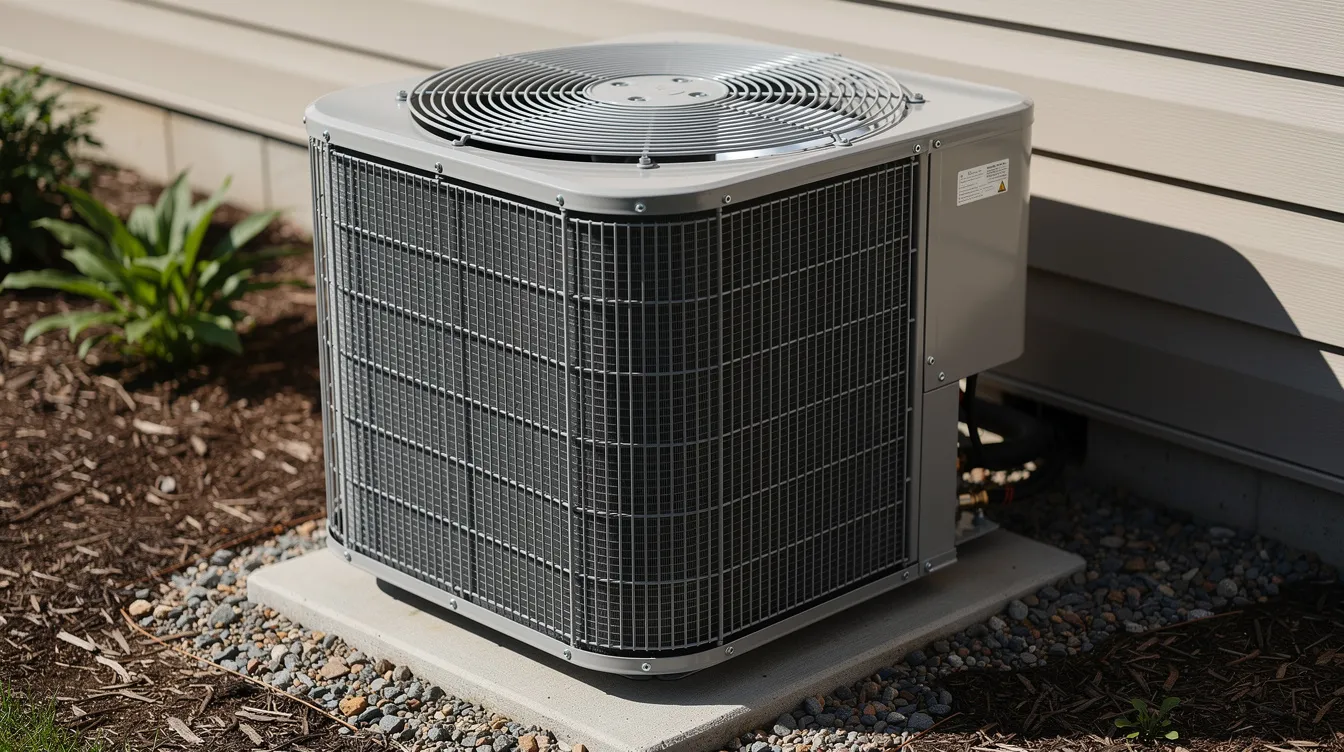
- Maintain condenser clearance: Keep at least 2 feet of clear space around the outdoor unit. Trim bushes, remove leaves and grass clippings, and prevent clogs by checking after lawn care.
- Schedule annual tune-ups: A spring inspection (March–May) catches refrigerant levels, electrical connection issues, capacitor degradation, and condenser health before the first heat wave. This single visit reduces emergency calls by up to 50%.
- Flush the drain line quarterly: Pour a cup of white vinegar down the condensate drain every 2–3 months during cooling season. This prevents algae and slime buildup that causes float switch shutoffs and water damage.
- Monthly visual inspections: Walk around your system monthly in summer. Check refrigerant lines for missing insulation, listen for new noises from the condenser, and look for water pooling near the indoor unit.
- Document recurring issues: Keep a simple log of problems and dates. If you experience multiple “condenser not turning on” events in one season, this pattern helps an hvac technician diagnose underlying causes and make informed repair-vs-replace recommendations.
With consistent attention to these basics, your air conditioner troubleshooting becomes less about emergency repairs and more about maintaining the comfort and efficiency your home deserves through every summer heat wave.
Still Having AC Problems?
If your air conditioner won’t turn on, isn’t cooling properly, or keeps blowing warm air, it may be time for a professional inspection. Get clear answers and the right solution for your home.
Schedule an Appointment