
Indoor air quality affects your health, comfort, and energy bills more than most homeowners realize. Dust buildup, allergy flare-ups, persistent odors, and humidity problems are all signs that your home’s air could be cleaner.
The good news is that you can improve indoor air quality simply by professional maintaining your HVAC system through regular filter changes, duct cleaning, seasonal tune-ups, and smart air management.
These steps/tips not only help you breathe easier but also extend the life of your system and lower energy costs.
Key Takeaways
|
Why Indoor Air Quality Matters
Indoor air is invisible, but its effects are very real. Poor air quality can trigger:
- Sneezing, coughing, and allergy flare-ups
- Headaches, fatigue, or difficulty concentrating
- Worsened asthma or other respiratory symptoms
- Mold and mildew growth from excess humidity
In Texas, homes often trap pollen, dust, and other pollutants due to hot summers and tightly sealed buildings.
Without proper HVAC care, these contaminants circulate constantly, making your home uncomfortable and unhealthy.
How HVAC Systems Help Clean Your Air
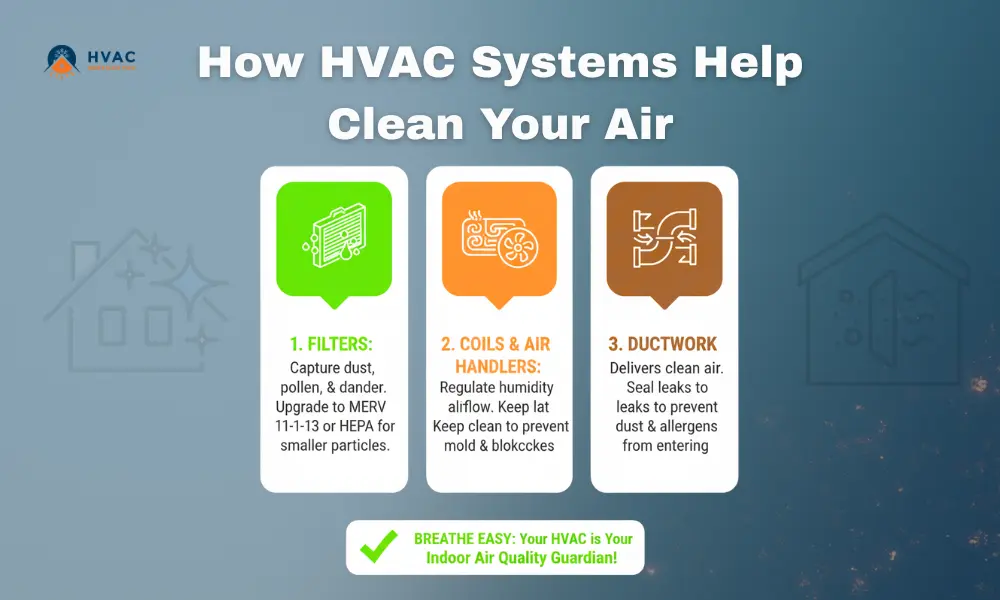
Your HVAC system is more than a heating and cooling machine it’s the heart of your indoor air quality. Here’s how it works:
- Filters: Capture dust, pollen, pet dander, and other particles before they circulate. Upgrading to a high-quality MERV 11–13 or HEPA filter traps even smaller particles.
- Coils and Air Handlers: Keep air moving and regulate humidity. Dirty coils or blocked handlers reduce airflow and allow moisture to build up.
- Ductwork: Delivers clean air throughout your home. Leaky or dirty ducts can blow dust and allergens into your living spaces.
Tip: Inspect coils and air handlers at least once a year and clean ducts regularly to keep air flowing freely.


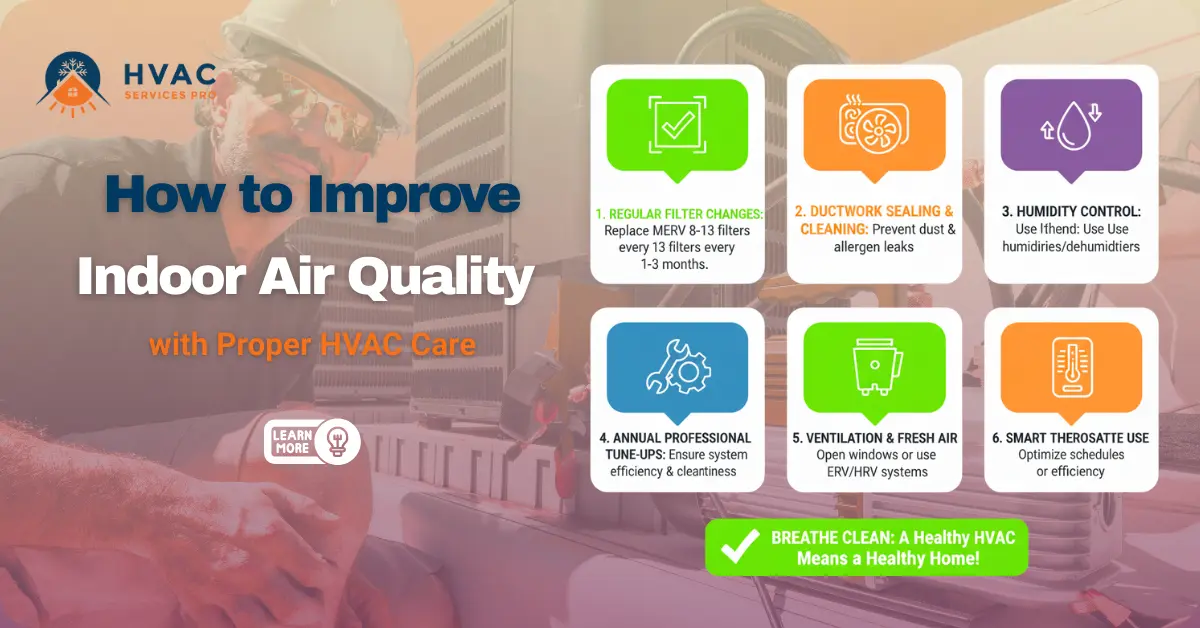
10 Proven HVAC Tips to Improve Indoor Air Quality
Here are practical, actionable steps every homeowner can take to keep their air clean, healthy, and comfortable:
1. Change Filters Regularly
Your HVAC filter is the first line of defense against dust, pollen, pet dander, and other airborne contaminants. Over time, filters become clogged, reducing airflow and letting pollutants recirculate in your home.
- How often: Replace every 1–3 months based on usage, pets, or allergies.
- Tip: In dusty areas like Dallas or Fort Worth, monthly changes during the spring pollen season or summer dust storms are ideal.
- Benefit: Clean filters improve airflow, reduce energy bills, and keep allergens at bay.
2. Schedule Seasonal Tune-Ups
Professional inspections are crucial for keeping your system running efficiently and maintaining clean air. Technicians can detect hidden issues before they become expensive repairs.
- Frequency: Twice a year, spring for cooling, fall for heating.
- What’s checked: Airflow, refrigerant levels, coils, electrical connections, and overall efficiency.
- Benefit: Tune-ups prevent dust and mold buildup, reduce allergy triggers, and save energy.
3. Seal Leaky Ductwork
Leaks in ducts allow dust, insulation particles, and even pests to enter the air your family breathes. Leaks also force your system to work harder, increasing energy costs.
- How to fix: Use foil-backed HVAC tape or have a professional seal leaks.
- Benefit: Clean air circulation, improved system efficiency, and lower utility bills.
4. Use a Smart Thermostat for Circulation
Smart thermostats aren’t just for convenience; they improve air quality by controlling airflow. Many models let your fan run intermittently, filtering air even when the system isn’t actively heating or cooling.
- Tip: Set fan cycles for 15–30 minutes every hour for constant air movement.
- Benefit: Reduces stagnant air, distributes filtered air evenly, and keeps allergens from settling.
5. Upgrade to High-Quality Filters
Standard filters catch larger debris but miss tiny particles like pollen, mold spores, and dust mites. High-efficiency MERV 11–13 or HEPA filters capture these smaller contaminants.
- Tip: Check your system’s specifications; some HVAC units require compatible high-MERV filters.
- Benefit: Cleaner air, fewer allergy symptoms, and better respiratory health.


6. Add UV Lights or Whole-Home Air Purifiers
UV germicidal lights can kill mold, bacteria, and viruses inside your HVAC system. Whole-home air purifiers remove allergens, smoke, and dust continuously.
- Tip: Discuss options with your HVAC technician to ensure compatibility and effectiveness.
- Benefit: Significantly improves indoor air quality, especially for households with pets or allergy sufferers.
7. Keep Vents and Return Grilles Clear
Obstructed vents reduce airflow, create pressure imbalances, and allow dust to accumulate. Furniture, curtains, or rugs blocking registers can compromise both comfort and air quality.
- Tip: Maintain a 1–2 foot clearance around all vents and returns.
- Benefit: Better airflow, more consistent temperatures, and cleaner air delivery throughout your home.
8. Clean Coils and Air Handlers
Coils and air handlers accumulate dust, pollen, and grime, which reduces HVAC efficiency and allows contaminants to recirculate.
- DIY tip: Gently vacuum or brush dust from accessible coils and blower components.
- Professional tip: Schedule annual professional cleaning for deep cleaning of internal components.
- Benefit: Optimized airflow, reduced allergens, and longer system life.
9. Monitor and Manage Humidity
Humidity levels directly affect indoor air quality. High humidity encourages mold and dust mites, while low humidity can dry out skin and irritate respiratory passages.
- How to manage: Use your HVAC system with a humidifier or dehumidifier as needed.
- Tip: Aim for indoor humidity between 40–50%.
- Benefit: Healthier air, reduced mold growth, and more comfortable living conditions.
10. Track System Performance and Issues
Early detection of problems keeps small issues from becoming major ones. Strange noises, odors, or uneven airflow are often signs of dust buildup, leaks, or mechanical issues.
- Tip: Keep a simple log or take photos of problems as they occur.
- Benefit: Provides technicians with clear information, speeds up HVAC repairs, and prevents air quality issues from worsening.

Why Choose HVAC Services Pro for Indoor Air Quality
At HVAC Services Pro, we don’t just repair systems, we improve the air your family breathes. Texas homeowners rely on us because we provide:
- Licensed, Local Technicians: Experts familiar with Texas pollen, dust, and humidity challenges.
- Affordable, Transparent Pricing: No upsells; clear “Any Size, Same Price” policy.
- Free Consultations and Duct Inspections: Honest advice on improving air quality without pushy sales.
- Focus on Clean Air: From filter upgrades to full duct cleaning, we prioritize your indoor air.
- Fast, Friendly Service: Many tune-ups and cleanings are completed the same day.
Final Thoughts
Improving indoor air quality doesn’t require high-tech systems or costly overhauls. With regular filter changes, seasonal tune-ups, duct sealing, and optional upgrades like smart thermostats or UV lights, you can breathe easier, reduce allergens, and protect your HVAC investment. Contact us to start today by taking these simple, actionable steps and enjoy cleaner, healthier air at home all year long.
FAQs
How Often Should I Replace My HVAC Filter To Maintain Clean Air?
We recommend changing filters every 1–3 months, depending on your home, pets, and local dust levels. Frequent replacements prevent dust, allergens, and reduced airflow.
Can HVAC Maintenance Reduce Allergy Symptoms At Home?
Yes. Regular maintenance, including filter replacement, duct cleaning, and coil care, minimizes dust, pollen, and mold spores, reducing allergy triggers for your family.
Is Duct Cleaning Necessary For Healthy Indoor Air?
Duct cleaning is highly beneficial if dust, debris, or mold has accumulated. Clean ducts prevent airborne particles from circulating and improve overall HVAC efficiency.
Do Smart Thermostats Improve Air Quality Or Just Comfort?
Smart thermostats enhance air circulation by running the fan periodically, helping filters trap more particles and keeping air fresh throughout your home.
Can I Improve Air Quality Without Replacing My HVAC System?
Absolutely. Upgrading filters, sealing ducts, adding UV lights or purifiers, and keeping up with seasonal maintenance can drastically improve indoor air quality without a full system replacement.