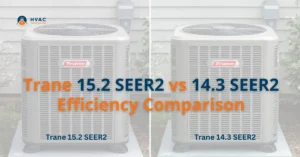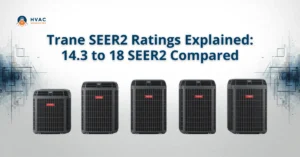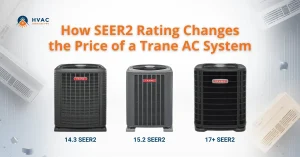


In 2026, choosing between Trane 14.3 SEER2 and 15.2 SEER2 is no longer just about “good” or “better”. The DOE standards have shifted, and the industry is transitioning to sustainable refrigerants. The technical gap between these two tiers has widened.
But does that mean a Trane 15.2 SEER2 is worth going for instead of a Trane 14.3 SEER2 system? This guide from HVAC Services Pro goes into the engineering, financial, and comfort differences to help you decide which efficiency profile fits your home’s specific needs.
TL;DRUpgrading to a Trane 15.2 SEER2 system is a high-value investment that pays for itself through superior humidity control, lower monthly bills, and federal tax credits, whereas the 14.3 SEER2 remains the best entry-level choice for budget-conscious homeowners in mild climates. |
The 2026 Shift: Why SEER2 and R-454B Matter Now
If you haven’t purchased an HVAC system since 2022, the terminology has changed. The Department of Energy (DOE) introduced SEER2 (Seasonal Energy Efficiency Ratio 2). SEER2 measures the efficiency ratings closer to “real-world” performance. Unlike the old SEER metric, SEER2 ratings in real systems factor in the actual static pressure of residential ductwork.
The New M1 Testing
The standard SEER testing used to measure efficiency at a static pressure of 0.1 inches of water. However, most residential ductwork creates much higher resistance. The new M1 testing procedure increases this pressure to 0.5 inches.
That’s a 500% increase to more accurately reflect your home’s conditions.
- A Trane 14.3 SEER2 system is the new “baseline” for the Southeast and Southwest. Under the old system scale, this would have been roughly equivalent to a 15 SEER unit.
- A Trane 15.2 SEER2 system represents a high-performance entry point, equivalent to nearly 16 SEER in previous years.


The Refrigerant Transition
As for refrigerants, the HVAC industry has moved away from R-410A, too. R-454B is more of the trend now.
R-454B has a low Global Warming Potential (GWP). It reduces the environmental impact of your system by 78% compared to the previous standard. Modern Trane systems have the ground up build to handle the thermodynamic properties of this new, eco-friendly blend.
14.3 SEER2 (The Value Tier) vs. 15.2 SEER2 (The Efficiency Tier)
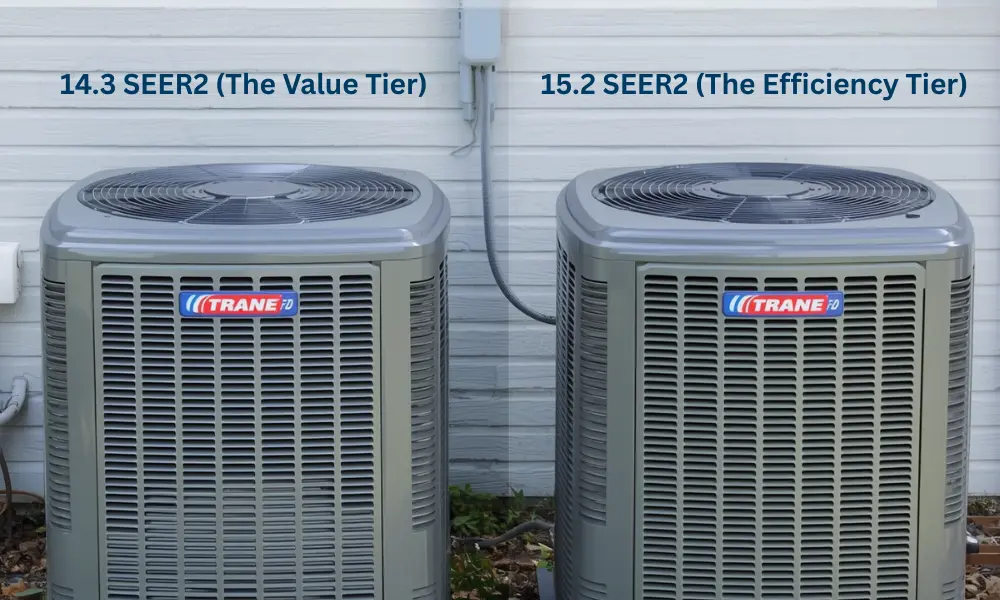
The comparison between a Trane 14.3 SEER2 system and a 15.2 SEER2 system comes down to your local climate and how long you plan to stay in your home.
Performance Profiles
Both tiers typically have the Trane single-stage compressor system. This means the system is either 100% on or 100% off. Trane’s best efficiency tier offers the TruComfort™ variable-speed, which is absent in both of these systems.
However, the 15.2 SEER2 models often have larger coil surface areas. So, these systems transfer heat more efficiently and consume slightly lower energy during long run cycles.
Comfort & Dehumidification
A Trane 15.2 SEER2 AC condenser generally has better humidity control performance. It can run more efficiently at peak loads. So, it can pull more moisture out of the air than a baseline 14.3 system.
Annual Operating Costs
For a typical 2,500 sq. ft. home, the annual operating cost difference between 14.3 and 15.2 SEER2 is approximately 7-10%. However, your local climate is the single biggest factor in whether or not you get your upfront cost back.
- 14.3 SEER2: Ideal for mild climates or homeowners looking for the lowest upfront Trane 14.3 SEER2 equipment-only price.
- 15.2 SEER2: Recommended for hot, humid climates where the 14.3 vs 15.2 SEER2 kWh usage gap results in significant monthly utility savings.


14.3 SEER2 (5TTR4) vs. 15.2 SEER2 (5TTR5): Mechanical Differences
While both systems are part of Trane’s reliable single-stage lineup, the Trane 15.2 SEER2 (5TTR5) has more features than the 14.3 SEER2 (5TTR4).
Engineering & Build Comparison
The 5TTR5 series is physically larger than the 5TTR4 for a reason. To reach the 15.2 SEER2 threshold under the new M1 testing standards, the system requires more surface area to dissipate heat.
- Coil Surface Area: The 5TTR5 models typically feature a larger Spine Fin™ outdoor coil. More surface area means the system doesn’t have to work as hard (consume as many watts) to move heat out of your home.
- Charging & Capacity: Because of the larger coils, 15.2 SEER2 systems often have a higher refrigerant charge (using the new R-454B) compared to their 14.3 counterparts.
- Pressure Protection: While the 14.3 (5TTR4) is Trane’s “value” powerhouse, the 15.2 (5TTR5) often includes additional internal sensors, such as high and low-pressure switches, which protect the Climatuff™ compressor from extreme conditions.
The “Humid Climate” Performance Gap
A major differentiator between the two is latent heat removal (dehumidification).
- 14.3 SEER2: Dehumidifies the legal minimum. In very humid areas, it may cycle off before the air is truly dry, leading to a “clammy” feeling indoors.
- 15.2 SEER2: Because of the enhanced coil design, this system can pull significantly more moisture out of the air during a standard cooling cycle.
Financial Analysis: Payback Periods and Tax Credits
There are so many more factors besides the payback period to get back your upfront “sticker” price. In 2026, the federal government heavily incentivizes the move toward higher efficiency.
The Investment Gap
The cost difference between 14.3 and 15.2 SEER2 ranges from $600 to $2000 (depending on the tonnage). However, your payback period can be shorter with energy rebates and tax credits.
Federal Incentives (Section 25C)
Under the Inflation Reduction Act, homeowners may qualify for the Section 25C tax credit with the following criteria:
- Heat Pumps: Upgrading to a Trane 15.2 SEER2 heat pump system can qualify you for a tax credit of up to $2,000, provided the system meets the required Consortium for Energy Efficiency (CEE) highest tier.
- Air Conditioners: A qualified high-efficiency AC system can net a credit of up to $600.
Note: Always verify your AHRI certificate number with your installer. This certificate is the only legal proof that your “matched system” (the combination of your outdoor unit and indoor coil) actually meets the efficiency ratings required for these tax credits.
The Verdict: Is the 15.2 SEER2 Upgrade Worth It for You?

To simplify the choice between the 14.3 and 15.2 Trane systems, ask yourself these three questions. Your answers will reveal if the “Efficiency Tier” is a smart investment or an unnecessary expense.
1. Does your local utility offer high-efficiency rebates?
In 2026, many local power companies offer “instant” rebates for systems reaching 15.2 SEER2 that are not available for baseline 14.3 units.
If a local rebate is $500 and the tax credit is $600, the 15.2 SEER2 upgrade effectively pays for itself before you even turn it on.
2. Is your home in a “High Run-Time” climate?
- The “Yes” Zone: If you live in the Southeast or Southwest and your AC runs for more than 6 months a year, the 14.3 vs 15.2 SEER2 kWh usage gap will save you enough on monthly bills to justify the upgrade.
- The “No” Zone: If you live in a mild climate where you only use the AC for 8–10 weeks a year, you likely won’t see a return on investment for over a decade.
In some “Yes” zones, the combination of extreme heat and high local kWh rates can sometimes make even the 15.2 SEER2 feel like a baseline choice. That’s when a 17-18+ SEER2 Trane system is better.
3. Is your existing ductwork in good shape?
The 15.2 SEER2 units move heat more aggressively. So, they are less forgiving of leaky or undersized ducts. If your ductwork is restricted, a 15.2 SEER2 unit may actually perform worse than a 14.3 unit.
The “Worth It” Rule of Thumb: If you plan to stay in your home for more than 5 years, the 15.2 SEER2 is almost always the better choice for resale value and comfort.
Matching the Hardware: Coils, Furnaces, and Air Handlers
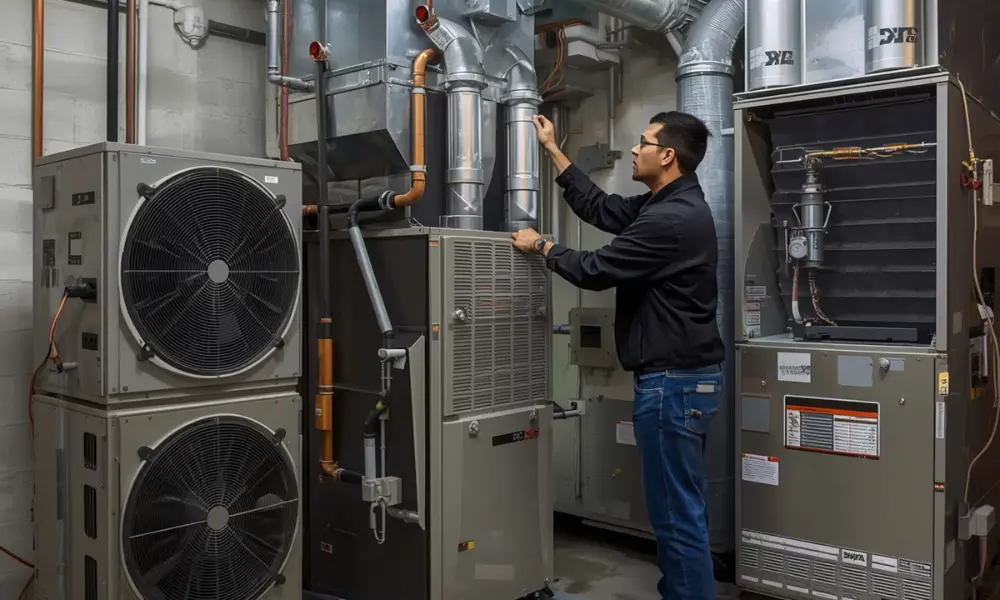
So many homeowners ask me if they can simply “swap the outdoor unit”. After all the readings are on the outdoor heat pump or AC condenser, right? But achieving a 14.3 or 15.2 SEER2 rating requires a matched system.
The “Matched System” Rule
According to the Air Conditioning, Heating, and Refrigeration Institute (AHRI), a system is only truly efficient if the outdoor condenser and indoor evaporator coil can “work” together.
Pairing a Trane 15.2 SEER2 AC condenser with an old, mismatched indoor coil will likely fail to reach the rated efficiency. You may even void your manufacturer’s warranty.
Common Configuration Options for Trane Systems
- Trane Air Handler Pairings: For all-electric homes, pairing the 5TTR4 or 5TTR5 series with a Trane variable-speed blower is essential. The variable-speed motor adjusts the airflow CFM per ton to match the cooling demand. It is the primary driver to reach 15.2 SEER2 levels.
- Gas Furnace Combinations: If you use natural gas, your Trane compatible gas furnace acts as the “lungs” of the system. Choosing a furnace with a high-efficiency blower motor can push a baseline 14.3 system closer to 15 SEER2 performance.
- Dual Fuel Configuration: For colder climates, you can pair a 5TWR5 heat pump with a gas furnace for a Trane dual fuel setup. The system can easily switch between electricity and gas based on whichever is more efficient at your current outdoor temperature.

Sizing for Comfort: Tonnage and Capacity
Efficiency is meaningless if you have an incorrectly sized system for your home. HVAC professionals use a Manual J Load Calculation to calculate the exact BTUs your home needs.
Choosing the Right Capacity
Trane’s 2026 professional line offers a range of sizes to fit different homes.
If you look at the 14.3 vs 15.2 SEER2 debate for 2-ton Trane systems, smaller homes often see a faster ROI due to the lower price delta between the units.
Conversely, the 15.2 SEER2 upgrade over the 14.3 for 3-ton Trane systems makes sense for better dehumidification during long cooling cycles.
- 1.5 to 2 Tons: Ideal for smaller homes or apartments (approx. 600–1,200 sq. ft.).
- 3 Tons: The “sweet spot” for many mid-sized American homes (1,500–2,000 sq. ft.).
- 4 to 5 Tons: Necessary for large homes (2,500+ sq. ft.).
Note: Don’t depend on these approximate measurements alone. You’re more likely to end up with an oversized or undersized system this way. The downsides of an improperly sized system heavily outweigh any high SEER2 rating you get.
Conclusion
The “best” system depends on your goals for the next decade. If you are looking for the most reliable, budget-friendly entry into the Trane family, 14.3 SEER2 is your value-tier option. 15.2 SEER2 Trane systems give you long-term utility savings, better humidity control, and maximum federal tax credits between the two.
At HVAC Services Pro, we’ve found that in hot climates, the 15.2 SEER2 is often the standard of choice because it can make up for the cost difference within 3 to 5 years. So, where you live and how much you are going to use your air conditioner condenser definitely impact your choice.
Frequently Asked Questions (FAQs)
Since both systems are single-stage, is the 15.2 SEER2 actually any quieter than the 14.3?
The 15.2 SEER2 (5TTR5) is slightly quieter. Both use Trane’s Climatuff™ compressor. However, the 15.2 SEER2 model has additional sound-dampening measures and a different fan blade pitch to handle the larger coil.
Is the new R-454B refrigerant safe to have in my home?
Yes. R-454B is “mildly flammable”, but it is extremely difficult ot ignite. Besides, these systems have specific safety sensors and sealed compartments to remove the risk.
Will a 15.2 SEER2 system last longer than a 14.3 SEER2 system?
The lifespan of both systems is typically 15–20 years. However, the 15.2 SEER2 (5TTR5) includes high and low-pressure switches that act as “internal bodyguards” for the compressor. These sensors can shut the system down before a minor issue (like a dirty coil or a leak) causes expensive damage to the compressor. It can potentially extend the system’s functional life.
Can I keep my current thermostat if I upgrade to the 15.2 SEER2 model?
If you have a modern digital or smart thermostat, it will likely work with either system. However, we recommend getting a “communicating” or high-end smart thermostat to get the best out of the system.