
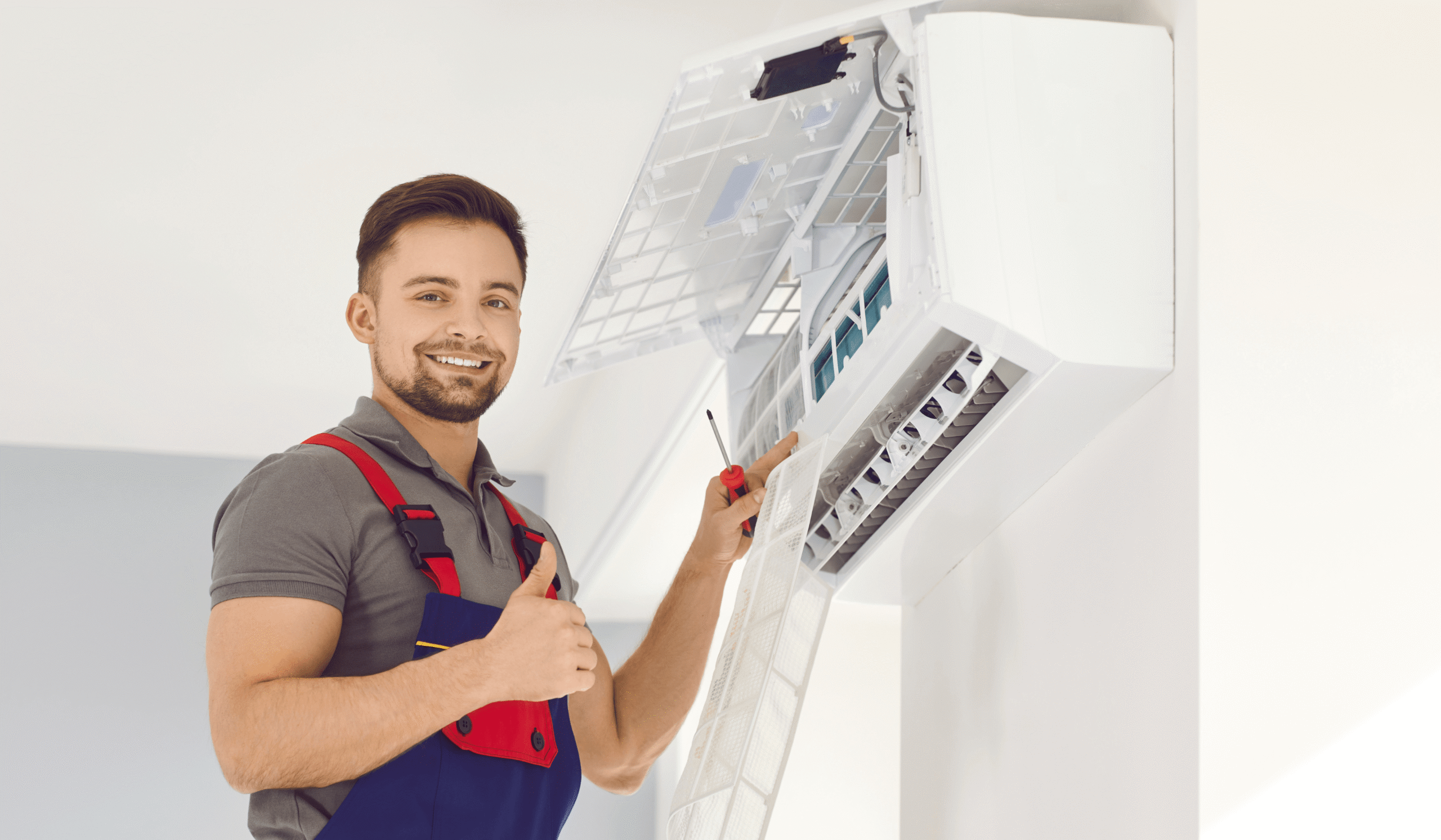
Introduction to Air Conditioners
Air conditioners are a cornerstone of home comfort, especially when summer temperatures soar. Whether you’re looking to upgrade your current system or install a new hvac system for the first time, choosing the right air conditioner is essential for meeting your family’s cooling needs and ensuring a comfortable home year round.
Trane air conditioners are engineered to deliver efficient, reliable cooling for homes of all sizes and budgets. With a broad selection of hvac products, Trane offers everything from advanced variable speed systems—designed for precise temperature control and maximum energy efficiency—to traditional single-stage units that provide dependable performance at a budget-friendly price.
No matter your needs, Trane’s air conditioners are built for durability and long-lasting performance. Their focus on energy efficiency means you can enjoy a cool, comfortable home without worrying about high utility bills. By relying on Trane, you’re choosing products that are designed to keep your home comfortable, efficient, and affordable, not just during the hottest days of summer, but all year round.
Overview of Trane Air Conditioner Units
Trane central air conditioner units are built for long-term, reliable home cooling during hot summer months and year round comfort. Whether you’re replacing aging equipment or buying a new hvac system for the first time, understanding your options helps you make a confident decision.
This guide quickly answers what a trane air conditioner unit is, explains the main product types, and walks through how to choose the right products for your home. Trane offers multiple product tiers—premium, mid-range, and value—to match different budgets and comfort goals.
Key benefits of Trane air conditioners:
- Reliability: Trane has been a pioneer in air conditioning since 1931, building durable hvac systems designed to perform for 15+ years
- Energy efficiency: Modern Trane units feature SEER2 ratings that can deliver significant energy savings compared to older equipment
- Quiet operation: Many models include sound-dampening technology for comfortable outdoor spaces
- Flexible options: From variable speed compressors to single-stage systems, there’s a Trane to fit most cooling needs
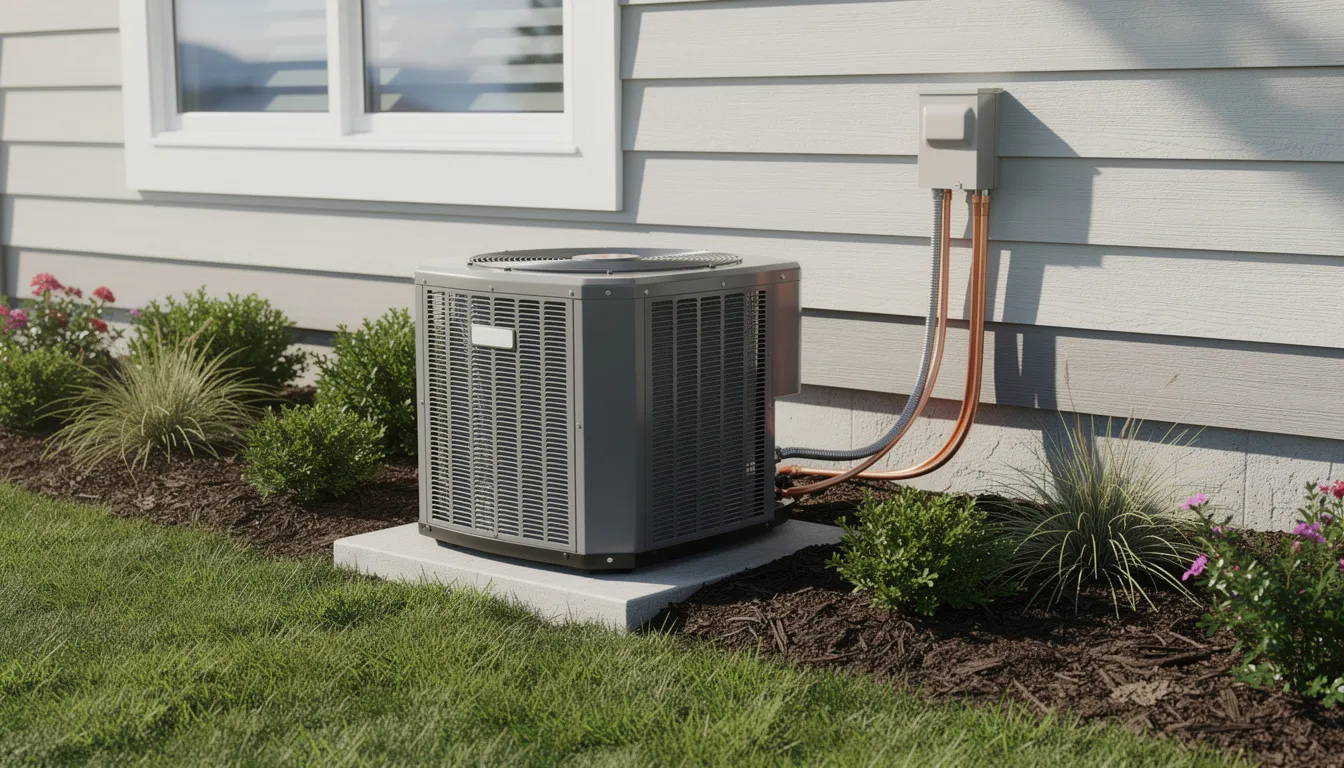
Trane Air Conditioner Product Tiers
Trane organizes its AC units into distinct performance tiers—often described as “Premier,” “Priority,” and “Choice” style categories. These tiers help homeowners find the right balance between upfront cost, efficiency, and advanced features.
Trane offers a variety of models, including split-systems, multi-speed, and compact units designed to suit different climates and home sizes, giving homeowners flexibility and customization options.
Premier (Top-Tier):
- Highest SEER2 ratings, often exceeding 20
- TruComfort variable speed compressors for precise temperature and humidity control
- Best fit for homeowners who prioritize maximum home comfort and plan to stay long term
Priority (Mid-Tier):
- Strong efficiency with two-stage or high single-stage compressors
- Balances advanced performance with moderate pricing
- Ideal for typical suburban homes seeking lower energy bills
Choice (Entry-Level):
- Dependable, essential cooling at accessible price points
- Meets or exceeds current minimum efficiency standards
- Good option for smaller homes, rental properties, or budget-conscious buyers
An HVAC dealer can show you which exact Trane series in 2024–2025 map into each tier for your specific region and climate.
Premier-Level Systems (Top-Tier Trane Units)
Premier-level Trane air conditioner units deliver maximum comfort, efficiency, and noise control for homeowners who want the best performance available. These systems are designed for those planning to stay in their home for many years, where long-term energy savings and superior comfort justify the higher upfront investment.
Typical Premier features include:
- SEER2 ratings that can exceed 20, translating to substantial energy savings
- Variable speed compressors that adjust output in small increments for steady temperatures
- Advanced humidity control—critical in hot, humid regions like Texas or Florida
- Smart thermostat compatibility for remote access and scheduling
- Exceptionally quiet outdoor operation
Premier systems are ideal for large homes, households with high comfort expectations, and climates where air conditioners run heavily from spring through fall. Pricing sits at the higher end of the spectrum, and most dealers recommend an in-home estimate rather than relying on flat online quotes.
| Tier | Best For | Efficiency | Upfront Cost |
|---|---|---|---|
| Premier | Maximum comfort, long-term value | Highest (20+ SEER2) | Higher |
| Priority | Balanced performance and value | Mid-high (16-19 SEER2) | Moderate |
| Choice | Essential cooling, budget-friendly | Standard (13-15 SEER2) | Lower |
Priority Systems (Balanced Performance & Value)
Priority-level systems represent Trane’s “sweet spot” for many homeowners—strong comfort, good efficiency, and a moderate price that doesn’t stretch the budget too far.
These units typically feature higher SEER2 ratings than basic models, often with single-stage or two-stage compressors designed for reliable daily use. They’re engineered to handle demanding summer heat while keeping energy bills reasonable.
Priority systems work well for:
- Typical suburban homes built after 1990 with standard insulation and ductwork
- Families upgrading from pre-2006 equipment (often 10 SEER or lower)
- Homeowners who want noticeable energy efficiency improvements without top-tier pricing
- Those seeking a dependable system that balances performance and cost
If you’re replacing a 15-20 year old unit, a Priority-level system can feel like a significant upgrade in both cooling performance and monthly operating costs.
Choice Systems (Essential, Budget-Friendly Cooling)
Trane’s Choice-style systems focus on dependable, essential cooling at a more accessible price point. These units use solid, proven technology and typically feature SEER2 ratings that meet or slightly exceed the 2023 minimum efficiency standards.
Choice systems are appropriate for:
- Smaller homes with lower cooling needs
- Rental properties where upfront cost matters most
- Households that prioritize reliability over advanced features
- Climates with milder summers where AC runs less frequently
Even at the entry level, a new Trane Choice system represents a meaningful step up from aging pre-2006 10 SEER equipment. You can expect improved efficiency, quieter operation, and more consistent cooling.
With proper maintenance, Choice systems typically last 12-15 years and come with basic warranty coverage that protects your investment. They may lack some smart features found in higher tiers, but they still rely on Trane’s reputation for durable construction.
Heat Pump Systems
Heat pump systems offer a smart, energy-efficient alternative to traditional air conditioners by providing both heating and cooling in a single, versatile system. Trane’s heat pump systems are designed to deliver year round comfort, seamlessly switching between cooling your home in the summer and providing warmth during colder months.
With advanced technology and variable speed options, Trane heat pumps stand out for their exceptional energy efficiency and consistent performance. These systems automatically adjust their output to match your home’s needs, ensuring optimal comfort while minimizing energy use. This means lower energy bills and a more comfortable living environment, no matter the season.
Trane’s heat pump systems are built to be durable and reliable, so you can count on them for years of dependable service. They integrate easily with other Trane hvac products, creating a complete heating and cooling solution tailored to your home. By choosing a Trane heat pump, you’re investing in a system that delivers efficient, comfortable performance and helps you maintain the perfect indoor climate all year round.
Featured Trane Model Example: XR15 Air Conditioner
The XR15 is a concrete mid-range trane air conditioner unit that homeowners often encounter when pricing systems. It’s a popular choice that balances reliability, competitive efficiency, and accessible pricing.
The XR15 is typically a single-stage unit with SEER or SEER2 ratings that significantly outperform older 10 SEER systems common before 2006. For many 3-4 bedroom homes, it hits the mark between “good enough” and “more than you need.”
Common XR15 applications:
- Replacement of 15-20 year old units that have reached end of life
- Upgrades in warm climates with moderate humidity
- Homes where owners want proven technology without premium pricing
- Situations where budget matters but energy efficiency is still a priority
Note: Exact XR15 specifications and SEER2 values should be verified against the latest Trane datasheets for the 2024-2025 model year, as ratings can vary by configuration and region.
Accessories and Add-Ons for Trane AC Units
Accessories can significantly improve comfort, air quality, and energy savings when paired with a Trane air conditioner unit. Before pressing submit on your final purchase decision, consider what add-ons might enhance your system.
Common accessory categories:
- Smart thermostats: A matched Trane thermostat can fine-tune variable speed or two-stage units, reducing temperature swings and improving humidity control
- Whole-home air cleaners: Remove dust, allergens, and particles from circulating air
- UV lights: Help control mold and bacteria growth inside the HVAC system
- Zoning systems: Direct cooling to specific areas of your home for personalized comfort
- High-MERV filters: Especially useful for allergy or asthma sufferers during peak pollen seasons
A woman in a navy shirt is standing in a living room holding an air filter—this basic maintenance task becomes even more important when you’ve invested in filtration accessories.
Ask a local Trane dealer which accessories are compatible with your specific outdoor unit and existing furnace or air handler before making final decisions.
Energy Efficiency: SEER2, EER2 & Potential Savings
SEER2 (Seasonal Energy Efficiency Ratio 2) measures how efficiently an air conditioner cools over an entire cooling season. EER2 measures steady-state cooling performance at a specific outdoor temperature. Both matter, but SEER2 is the number most homeowners compare when shopping.
Many Trane central AC units in 2024 range roughly from 13.4 SEER2 to over 23 SEER2. Higher ratings mean lower energy consumption for the same amount of cooling.
Efficiency comparison:
| Rating Range | Category | Typical Monthly Impact |
|---|---|---|
| 13-15 SEER2 | Good | Meets minimum standards, basic savings |
| 16-19 SEER2 | Better | Noticeable reduction in cooling costs |
| 20+ SEER2 | Best | Maximum energy savings over time |
Older systems installed before January 2006 are often 10 SEER or less. Upgrading to even a mid-range energy efficient unit can cut cooling costs by 20-40%, depending on your situation.
Actual savings depend on:
- Local climate and how many hours your AC runs
- Thermostat settings and usage patterns
- Home insulation quality
- Duct condition and sealing
- Regular maintenance habits
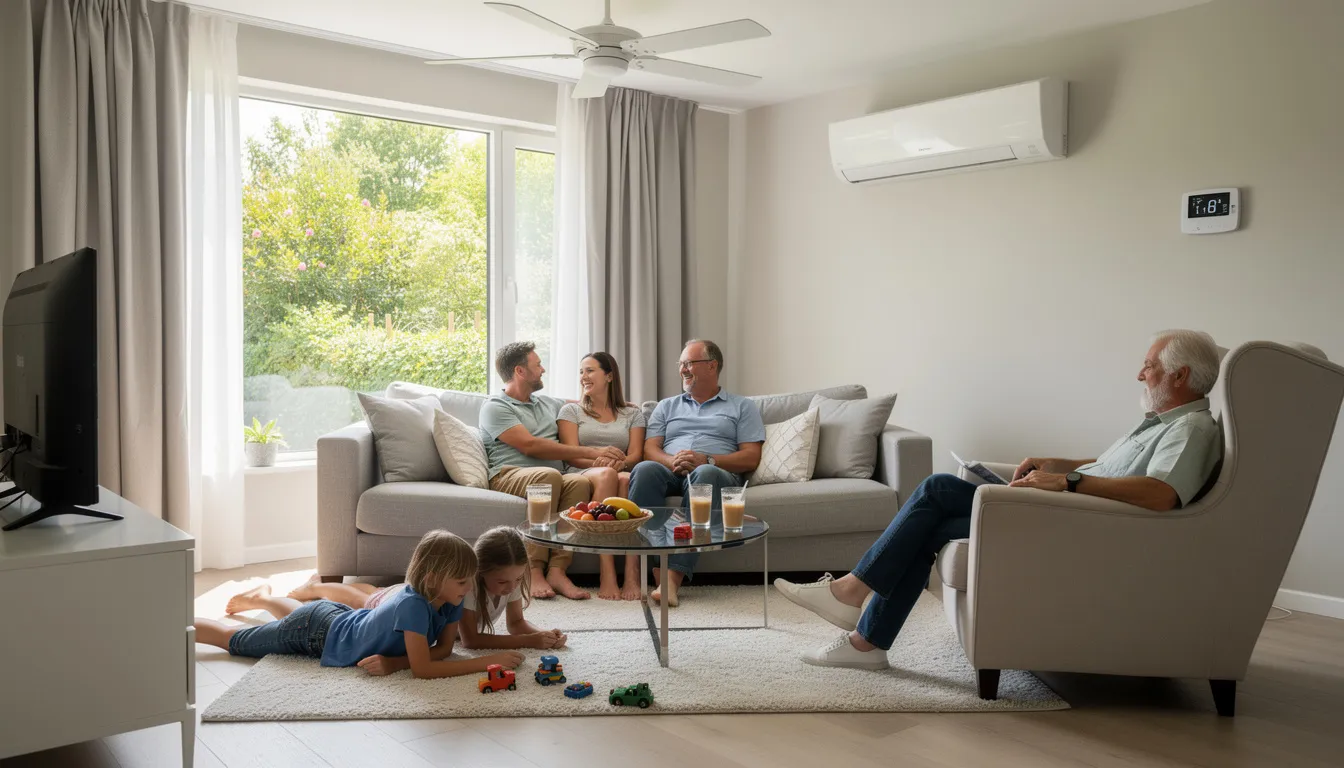
Comfort Features: Humidity Control, Quiet Operation & Technology
Trane designs its HVAC systems with the user’s needs and comfort in mind, focusing on features like noise reduction and affordability. Trane focuses not just on temperature, but also on humidity and noise levels inside and outside your home. True home comfort means more than hitting a number on the thermostat.
Variable speed and two-stage compressors help maintain steadier indoor humidity in humid regions without overcooling. Instead of cycling on and off at full blast, these systems modulate their output to remove moisture more effectively while keeping temperatures consistent.
Many Trane units include sound-dampening features like compressor sound enclosures to keep outdoor noise low—particularly important if your condenser sits near patios, bedrooms, or shared property lines.
Three main comfort benefits:
- Smoother temperatures: Less hot/cold cycling means fewer temperature swings throughout the day
- Lower indoor humidity: Better moisture removal makes 75°F feel more comfortable than a humid 72°F
- Quieter operation: Reduced noise inside and outside your home
Pairing a Trane air conditioner with a compatible smart thermostat allows scheduling, remote access, and more precise control of both comfort and energy use. Many homeowners find they can answer questions about their system status from anywhere using a phone app.
Reliability, Testing & Build Quality
Trane has built a reputation for durability that dates back to its founding in 1885 and its entry into air conditioning in 1931. That heritage matters when you’re choosing equipment expected to last 15+ years.
Trane’s lab testing protocols subject systems to accelerated wear and harsh conditions, simulating many years of use in just a few months. Units are pushed through extreme temperatures, humidity levels, and continuous operation to identify potential failure points before products reach the market.
Design details that support longevity:
- Corrosion-resistant coils that stand up to salt air, humidity, and environmental exposure
- Heavy-gauge steel cabinets with protective finishes
- Quality compressor construction backed by manufacturer warranties
- Components designed to handle real-world conditions, not just laboratory environments
Reliable performance reduces unexpected breakdowns during heat waves—exactly when repair wait times are longest and third party partners in the service industry are busiest.
Even the most durable unit needs annual professional maintenance and basic homeowner tasks like filter changes. A bit of prevention goes a long way toward maximizing your system’s lifespan.
Choosing the Right Trane Air Conditioner Unit for Your Home
Proper sizing and system matching matter more than simply choosing the highest SEER2 rating available. An oversized system wastes energy and creates humidity problems, while an undersized unit runs constantly without keeping up.
A Manual J load calculation (or similar method) determines correct tonnage based on:
- Home size and layout
- Insulation quality and window types
- Regional climate and sun exposure
- Number of occupants and internal heat sources
Warning: Avoid rule-of-thumb sizing or simply replacing your old unit with the same tonnage without a new calculation. Homes change over time—added insulation, new windows, or room additions all affect cooling needs.
Key decision factors to discuss with your dealer:
- Home square footage and number of floors
- Regional climate (humid Southeast vs. dry Southwest)
- Budget for equipment and installation
- Plans to stay in the home long term
- Noise sensitivity and outdoor unit placement
- Existing ductwork condition and sizing
Trane approved affiliates can help you find the right products by walking through specific Trane series and efficiency levels that match your goals for comfort and energy savings.
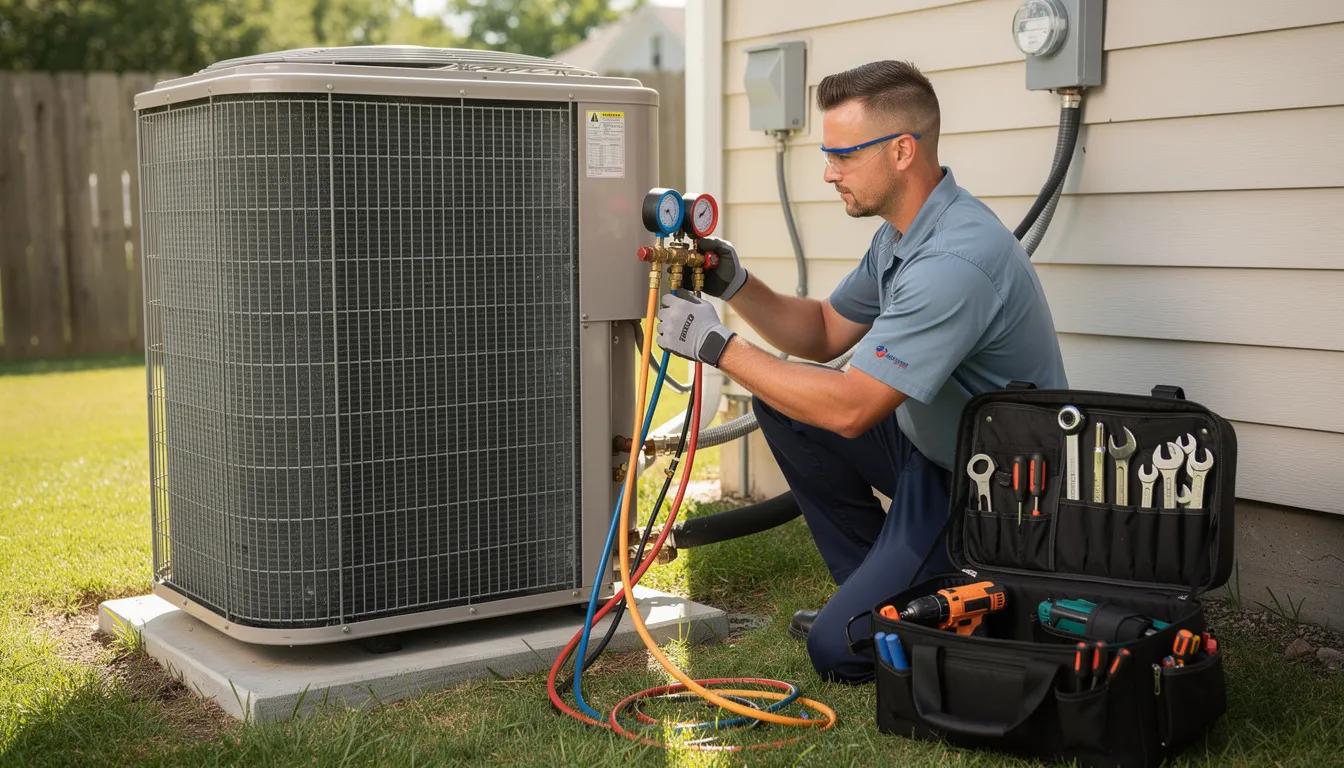
Installation, Maintenance & Ownership Costs
Installation quality and ongoing maintenance often determine how well a Trane air conditioner unit performs over 10-15 years. Even the best equipment underperforms when poorly installed.
Professional installation typically includes:
- Removing and disposing of old equipment
- Setting the new condenser on a proper pad with clearance
- Connecting refrigerant lines with proper brazing and leak testing
- Verifying airflow, refrigerant charge, and electrical connections
- Testing system operation and thermostat programming
Annual maintenance should cover coil cleaning, refrigerant level checks, electrical inspections, and system performance tests—ideally before peak summer heat arrives.
Ownership cost considerations:
- Higher-efficiency units cost more upfront but can offset pricing through reduced monthly power bills
- Warranty coverage varies by tier—register your unit promptly after installation following current Trane policy
- Budget for annual professional services (typically $100-200 per visit)
- Plan for filter replacements every 1-3 months depending on your system and household
The information shared during installation—like refrigerant type, warranty terms, and maintenance schedules—is worth keeping in a safe place for future reference.
Contacting a Local Trane Dealer or HVAC Expert
A local, qualified Trane dealer is the best source for model recommendations, pricing, and installation scheduling. Talk to a local Trane dealer or HVAC expert to find the best heating and cooling solution for your needs. They can walk you through options across Premier, Priority, and Choice-style systems, plus accessories and financing where available.
Dealers can answer questions, help you find the right products for your home, and repair your system.
Local experts understand specific climate considerations and building codes in areas like the Southeast, Midwest, or Southwest—factors that directly affect which heating and cooling system works best for your situation. They can also connect you with party partners for services like duct cleaning or electrical upgrades if needed.
Before your appointment or home visit, prepare:
- Recent utility bills showing summer energy usage
- Basic home information: square footage, year built, insulation upgrades
- Notes on current comfort issues (hot rooms, humidity problems, noise)
- Your budget range and any financing questions
- Questions about warranty, maintenance plans, and installation timeline
Contact a local Trane dealer to schedule an in-home estimate. Ask for a load calculation and request comparison quotes on at least two Trane options that suit your budget and comfort needs. By consent to an on-site evaluation, you’ll get accurate information shared specifically for your home rather than generic estimates.
Whether you’re in a row of suburban townhomes or a standalone house, the right trane air conditioner unit makes summer heat manageable and keeps your home comfortable for years to come.