





3 Ton AC Unit With Gas Furnace Installation Cost

Choosing the right HVAC system for your home can feel overwhelming with all the efficiency ratings, sizing rules, and equipment options on the market. If you’re considering a 3 ton AC with gas furnace combination, you’re looking at one of the most popular residential setups in North America—and for good reason. This guide breaks down everything you need to know about sizing, costs, installation, and finding the right contractor.
Quick Answer: Is a 3 Ton AC With Gas Furnace Right for Your Home?
A 3 ton AC with gas furnace combo is best suited for single-family homes ranging from 1,500 to 2,000 square feet with existing ductwork and access to natural gas or propane. This setup works particularly well in mixed climates like the Midwest, Northeast, or parts of the South where summers demand robust cooling and winters require reliable heat.
The term “ton” in HVAC refers to the amount of heat the unit can remove, not its weight. A 3 ton AC unit has a cooling capacity of approximately 36,000 BTUs (British Thermal Units) per hour—derived from the historical energy needed to melt one ton of ice in 24 hours. The gas furnace provides high-BTU output (often 80,000–100,000 BTUs), which heats homes much faster than electric heat pumps, especially in freezing temperatures.
To make this tangible, consider a common matched system like the Goodman GLXS3BN3610 (a 3 ton 13.4 SEER2 R-32 condenser) paired with a GR9S800803BN 80% AFUE 80,000 BTU furnace. Equipment-only pricing runs around $4,211, with total installed costs varying by region and complexity.
This type of split HVAC system dominates North American homes—over 70% of new installations in gas-available regions use this configuration. Gas heating can run 30-50% cheaper than electric resistance heat, making it ideal for budget-conscious homeowners seeking dependable performance.
The rest of this article covers sizing nuances, cost breakdowns, efficiency ratings, and what to ask your installer before signing a contract.
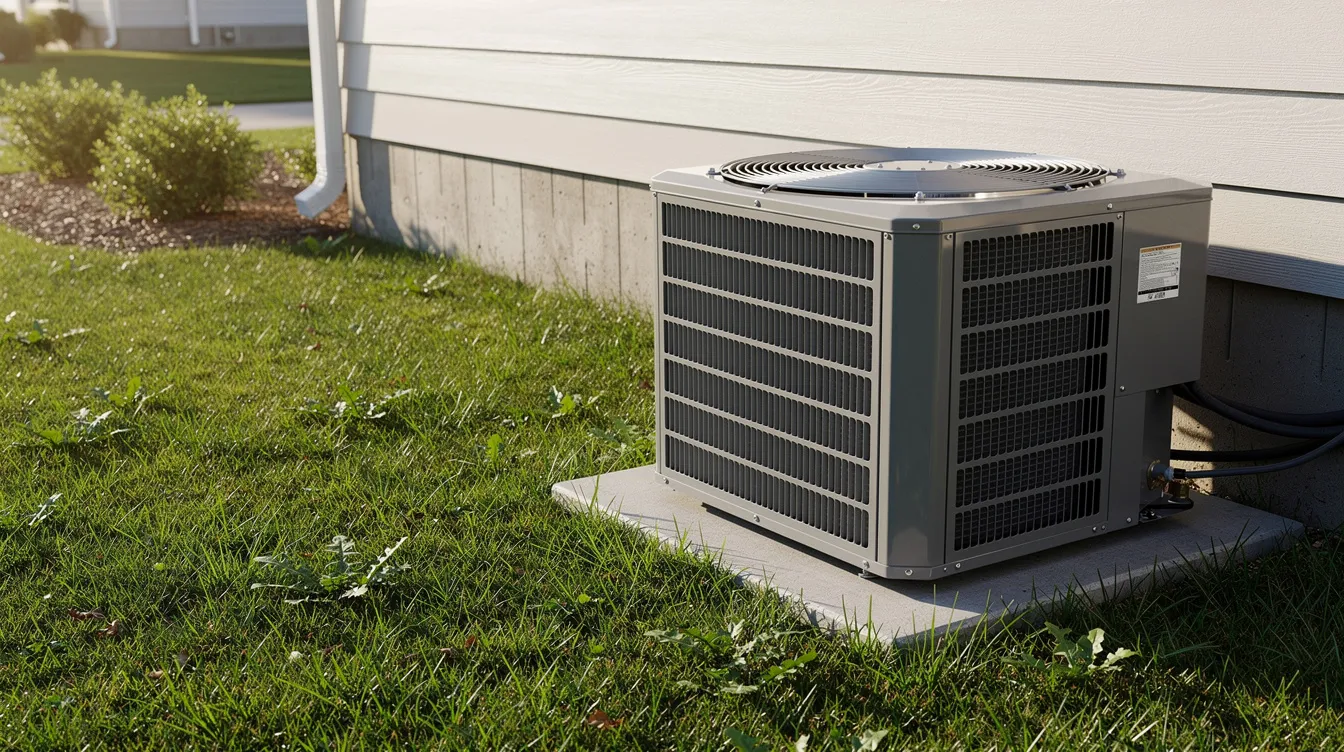
What Is a 3 Ton AC Unit in a Gas Furnace HVAC System?
A 3 ton central AC unit delivers precisely 36,000 BTU/hr of cooling capacity, functioning as the cooling half of a split HVAC system where the gas furnace handles heating through combustion. Understanding this distinction between cooling tons and heating BTUs helps you evaluate whether equipment is properly matched.
Key difference: AC capacity is measured in tons (12,000 BTU/hr per ton), while furnace capacity uses input and output BTU ratings. An 80,000 BTU input furnace at 80% AFUE delivers 64,000 BTU of usable heat; the same furnace at 96% AFUE delivers 76,800 BTU—a significant real-world difference in comfort and efficiency.
Standard Components
A complete system includes:
| Component | Function |
|---|---|
| Outdoor condenser | Houses compressor, condenser coil, and fan |
| Indoor evaporator coil | A-coil or slab mounted on furnace |
| Gas furnace cabinet | Contains heat exchanger, inducer motor, blower |
| Thermostat | Controls temperature and mode switching |
| Ductwork | Distributes conditioned air throughout home |
| The evaporator coil typically mounts atop the furnace in upflow configurations (common in basements) or downflow setups (attic installations). A 3-ton condenser requires roughly 1,200 CFM (cubic feet per minute) of airflow to operate efficiently, which the furnace blower must deliver. |
This configuration has been standard in 90% of U.S. forced-air homes built between 1990–2025. The system enables seamless switching between cooling mode (refrigerant cycle) and heating mode (gas burner ignition) via the thermostat, providing year-round temperature control without separate equipment.
Do You Need a 3 Ton AC With Gas Furnace? Sizing & Home Requirements
Proper sizing is critical. Typically, a 3 ton AC unit is suitable for cooling homes ranging from 1,500 to 2,000 square feet, depending on factors like insulation and climate. But square footage alone doesn’t tell the whole story—several variables shift this range by 20-30%, which is why many homeowners turn to professional AC sizing with Manual J calculations to get it right.
Factors Affecting System Size
- Square footage: Baseline 400-500 sq ft per ton
- Insulation quality: R-30 ceilings vs. R-13 can change load 15-20%
- Window quantity and quality: U-factor 0.3 low-E vs. 0.7 single-pane increases load 10-25%
- Ceiling height: 10-12 ft vaulted ceilings add roughly 20% to calculations
- Regional climate: Texas (1,200 cooling hours) vs. Michigan (800 cooling hours)
Why Sizing Mistakes Cost You
Oversizing to 4 tons causes:
- Short cycling (runs under 10 minutes)
- Reduced dehumidification by 20-30%
- Indoor humidity staying above 55%
- 10-15% higher utility bills from restart surges
- Compressor wear happening 2x faster
Undersizing creates:
In some larger homes, a 5 ton Trane 17 SEER2 two-stage gas furnace system can better handle peak loads without overworking.
- Extended 20+ minute runtimes
- Hot and cold spots throughout the home
- 15% higher energy use
- Equipment struggling to maintain setpoints
The Manual J Solution
A professional Manual J load calculation can help ensure that a 3 ton AC unit is the right fit for a home, taking into account factors like insulation, climate, and ceiling height. This ACCA-standard process uses software like Wrightsoft to model heat gain and loss precisely, and it’s the same approach used in guides on choosing the best size heat pump for a 1,500 sq ft house.
Example scenario: An 1,800 sq ft two-story home built in 2005 in Charlotte, NC (2,500 HDD/1,400 CDD) with R-19 walls and 20% window area might calculate to a 34,000-38,000 BTU cooling load and 70,000 BTU heating load—perfectly matching a 3 ton 15 SEER2 AC plus 80k BTU 95% AFUE furnace.
Energy Star reports that properly sized 3 ton systems in 1,600 sq ft Midwest homes cut peak demand 25% compared to oversized units. Contractors must perform this $200-500 calculation; guessing based on old unit size fails 40% of audits per NREL studies.
What to Look for in a 3 Ton AC and Gas Furnace Combination
The goal is selecting a matched HVAC system that balances comfort, efficiency, reliability, and long-term value. Considerations for a 3-ton AC unit with a gas furnace include opting for modern R-32 refrigerant, a high efficiency rating (15+ SEER2, 95%+ AFUE), and variable-speed blowers for enhanced comfort and dehumidification.
AC Efficiency Metrics
SEER2 (Seasonal Energy Efficiency Ratio 2) replaced SEER as the DOE standard in 2023. Higher numbers mean lower summer electricity bills:
| SEER2 Rating | Performance Level | Annual Savings vs. 10 SEER |
|---|---|---|
| 14-15 | Entry-level compliant | ~20% |
| 15-17 | Mid-efficiency | ~25% |
| 17-22 | High end premium | ~30%+ |
| High-efficiency cooling modern 3-ton AC units, particularly those with 14.5 SEER2 or higher, provide energy-efficient cooling and can offer up to 30% savings over older 10 SEER systems, similar to a Trane 3 ton 15.2 SEER2 condenser using R-454B refrigerant. |
Furnace Efficiency (AFUE)
AFUE measures how much fuel becomes usable heat:
- 80% non-condensing: $1,200 equipment cost, requires metal venting and is common in bundled systems like a 3 ton Trane 18 SEER2 two-stage gas furnace package
- 90-92%: Mid-range option with PVC venting
- 95-96% condensing: $2,000+ equipment, captures latent heat, PVC venting
A 96% AFUE furnace saves roughly $300/year compared to 80% in a 100k BTU home.
Comfort and Quality Features
- Variable-speed or ECM blowers: 60-75% less electricity than single stage PSC motors, quiet operation
- Two-stage burners: 70%/100% fire rates for even temps within ±1°F
- Modulating gas valves: 35-100% infinite control for maximum comfort
- Smart thermostat compatibility: Ecobee or Nest integration for 10% additional savings
Why AHRI Matching Matters
An AHRI-matched system ensures the blower motor properly handles the cooling load. Matched 3-ton systems are designed to work together, reducing system stress, preventing short-cycling, and significantly increasing the lifespan of the equipment. Mismatched setups can void warranty coverage and lose 15% performance.
Modern refrigerants like R-32 or R-454B have a lower Global Warming Potential (GWP) compared to older R-410A systems—R-32’s GWP of 675 versus R-410A’s 2,088 represents significant environmental improvement while boosting SEER2 ratings by approximately 5%, which is why systems like a 3 ton Trane 15.2 SEER2 R-454B electric system with pro installation are increasingly common.
Understanding Costs: 3 Ton AC With Gas Furnace Pricing & Installation
The total expense for purchasing and installing a 3-ton AC unit typically ranges from $3,000 to $15,000 or more. For a complete 3 ton AC + gas furnace replacement including labor, expect $7,000-$12,000 for basic configurations (14 SEER2/80% AFUE) and $12,000-$18,000+ for premium systems (18 SEER2/96% AFUE variable-speed). National averages hover around $9,800, with Northeast regions running $11k+ and Southern states closer to $8k, aligning with many regional HVAC installation cost guides for homeowners.
Cost Breakdown
| Component | Price Range |
|---|---|
| 3 ton condenser | $1,500-$3,500 |
| Evaporator coil | $500-$1,000 |
| Gas furnace (80k BTU) | $1,200-$3,000 |
| Installation labor | $3,000-$6,000 |
| Ductwork modifications | $1,000-$3,000 |
| Electrical/gas work | $500-$1,500 |
| Permits | $200-$500 |
| Factors affecting the installation costs of a 3-ton AC unit include system complexity, home type, and necessary modifications for optimal operation. Upgrades or changes to ductwork may contribute to the overall expense of installing a 3-ton AC unit, and local market conditions can also impact pricing for new HVAC systems and installation. |
Concrete Price Scenarios
Budget option: Goodman 13.4 SEER2/80% 80k BTU system at $4,211 equipment + $4,500 installation = approximately $8,711 total.
High end option: 17 SEER2/96% AFUE with variable-speed blower at $7,500 equipment + $6,000 installation = approximately $13,500 total.
Incentives and Rebates
Look for federal tax credits up to $600 and local utility rebates for high-efficiency systems. The Inflation Reduction Act provides credits through 2026 for qualifying equipment. California and other states often have additional rebates that can offset the purchase cost significantly, and many cost resources detail how incentives can lower local prices for new HVAC systems and installation.
Many dealers offer financing options to help customers manage the costs associated with purchasing and installing a new AC unit, making it more accessible for homeowners on tighter budgets.
Warranty Considerations
Standard terms include:
- 10-year compressor and parts coverage
- Limited lifetime heat exchanger warranty (critical—cracks risk CO leaks)
- Registration required within 60 days for full coverage
These warranty terms affect long-term value; premium equipment with better coverage often proves less expensive over a 15-20 year ownership period, especially on advanced setups like a 3 ton Trane 18 SEER2 two-stage variable-speed gas furnace system.
3 Ton AC With Gas Furnace: Installation, Codes, and When Access Is Limited
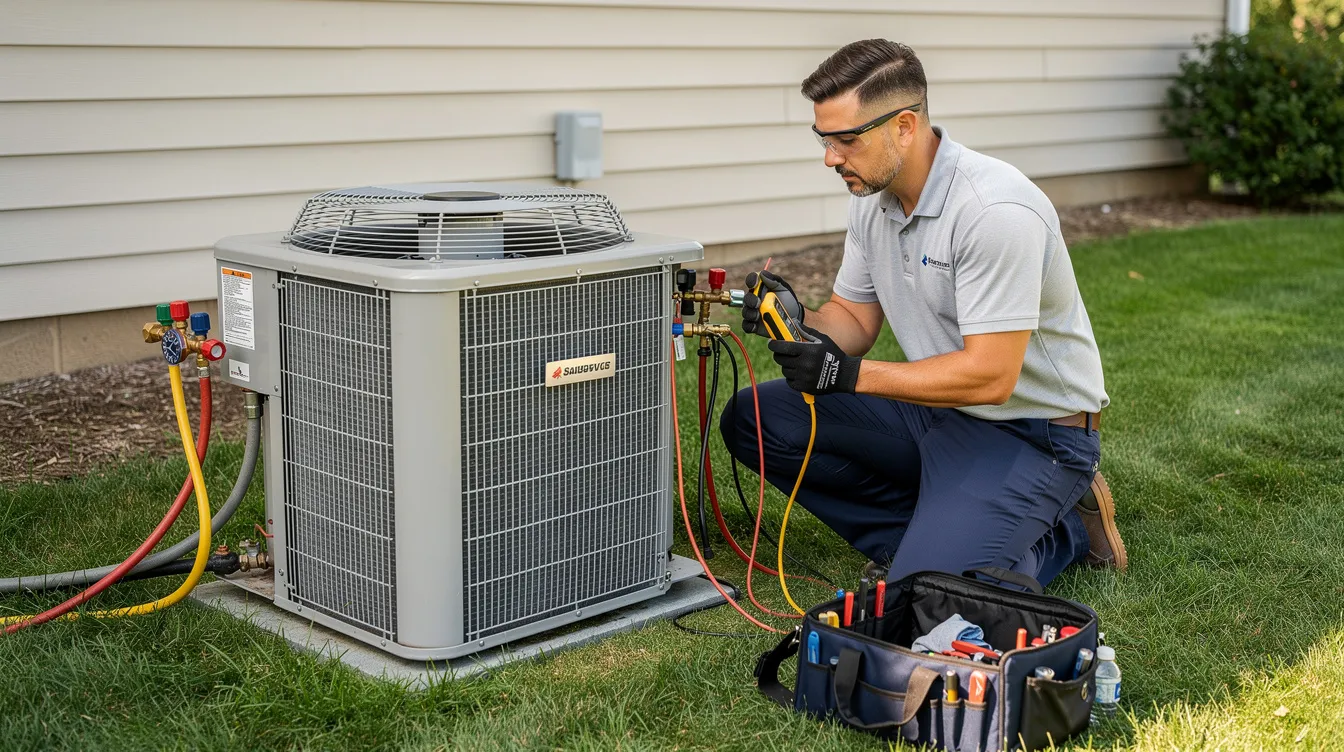
Professional installation is essential for safety, performance, and code compliance of any gas furnace and central AC system. Licensed NATE/EPA 608 certified technicians ensure your investment operates at designed efficiency and meets local building codes.
Key Installation Steps
- Old equipment removal (~$500)
- Condenser pad placement or crane lift ($300-$1,000)
- Coil-furnace assembly with brazed refrigerant lines (R-410A requires 4-6 lbs charge)
- Gas piping (1/2” black iron, 0.5” WC pressure test)
- Venting installation (80% uses two-pipe; 96% condensing uses PVC)
- Electrical wiring (115V/240V depending on configuration)
- Manifold checkout and startup (13” WC gas pressure verification)
When Installers Are Unable to Access Areas
Tight attics with 24” joist spacing, sealed crawlspaces, or blocked utility rooms create complications. Approximately 30% of installation jobs face access challenges that delay work 1-2 days and add $1,000-$3,000 for mini-slabs or vacuum lifts, especially when relocating or replacing the outdoor AC condenser unit.
Code Considerations
Modern codes restrict certain installations:
- 80% AFUE furnaces require direct/roof venting with 5 ft clearance
- Single-wall flues are banned in many jurisdictions
- Post-2025 A2L refrigerants (R-32) require flame sensors
- 200A electrical panel may be needed (3 ton draws 20-30A)
- Duct static pressure must not exceed 0.5” WC
- Energy Star mandates 400 CFM/ton airflow
Schedule a Pre-Installation Visit
Before any work begins, ensure your contractor verifies:
- Physical access to all equipment locations
- Existing duct condition and sizing
- Electrical panel capacity
- Gas meter adequacy
- Any modifications needed for code compliance
This prevents surprises on installation day and ensures accurate quoting.
Maintenance, Lifespan, and When to Replace a 3 Ton AC With Gas Furnace
Regular maintenance is critical to keep a 3 ton HVAC system efficient and to reach its typical 12–20 year lifespan. Skipping annual service can reduce equipment life by 30-40% and increase operating costs significantly.
Routine Maintenance Tasks
DIY (homeowner):
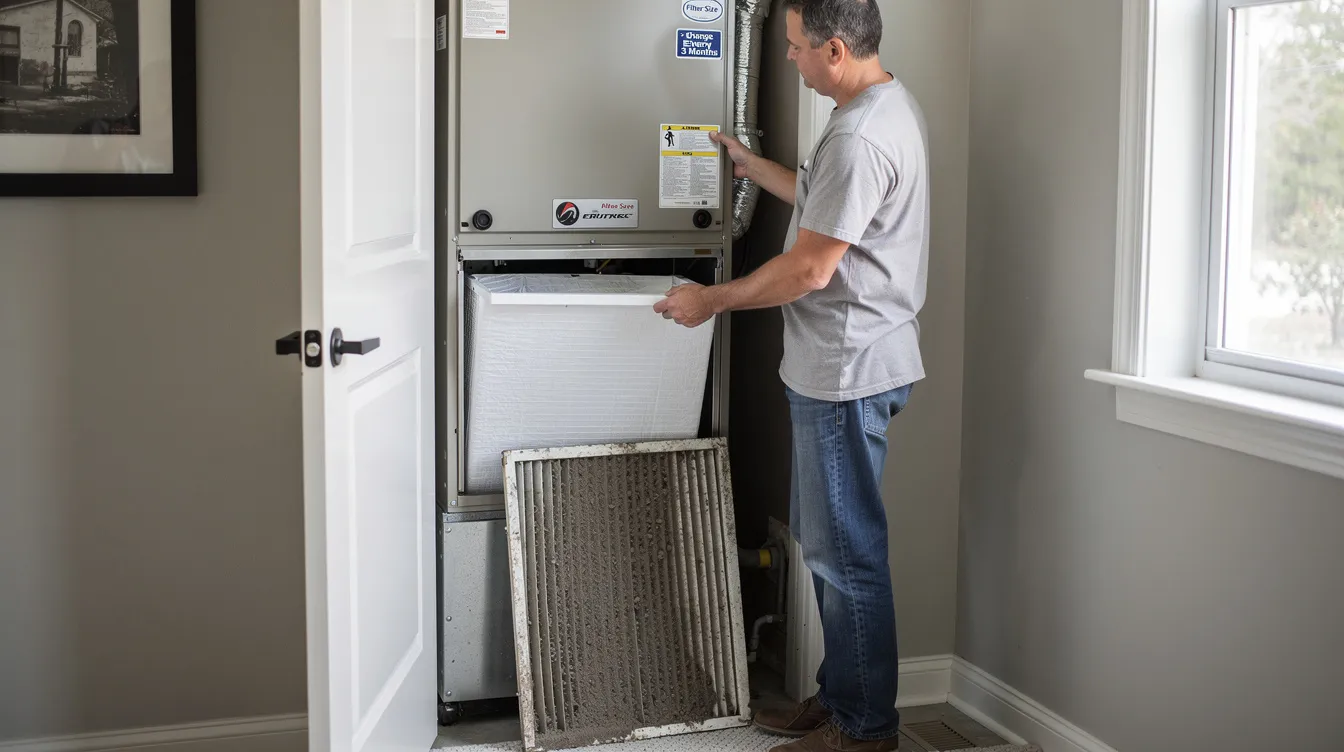
- Filter changes every 1-3 months (MERV 8-11 filters, ~$20 each)
- Keep outdoor unit clear of debris
- Check thermostat batteries annually
Professional service ($150-300/year):
| AC Tune-Up | Furnace Inspection |
|---|---|
| Clean evaporator and condenser coils | Inspect burners and igniter |
| Check refrigerant charge (12-14 oz top-off if needed) | Heat exchanger crack test via mirror/camera |
| Verify capacitor pressure (30” target) | Inducer vacuum verification |
| Inspect electrical connections | Flue inspection and CO testing |
Expected Lifespan
- AC compressor: 12-15 years (high SEER2 units may extend 20%), particularly when the condenser on the air conditioner is properly maintained
- Gas furnace: 15-25 years (96% AFUE models outlast 80%), particularly in well-designed setups such as a 5 ton Trane 18 SEER2 two-stage communicating gas furnace system
Signs It’s Time to Replace
- Three or more breakdowns per year
- Energy bills rising 20% without rate changes
- Temperature unevenness of ±5°F between rooms
- Loud banging, grinding, or unusual noise during run cycles
- Equipment older than 15 years
When one component fails near end-of-life, consider replacing both the AC and furnace together. This ensures a matched, efficient system and saves 25% on labor costs versus separate replacements. The time investment pays off in reliability and lower long-term operating costs.
How to Choose the Right HVAC Contractor for a 3 Ton AC & Gas Furnace
The installer’s workmanship often matters more than the brand logo on your 3 ton ac unit or furnace. A quality installation maximizes efficiency, comfort, and equipment longevity—while poor installation undermines even premium equipment, regardless of how competitive the local HVAC system pricing and installation packages may look.
What to Look For
- State licensing and $1M+ liability insurance
- EPA 608 certification for refrigerant handling
- 4.8+ star Google reviews with 50+ 3-ton residential installations annually
- NATE certification (North American Technician Excellence)
- Familiarity with your specific home type and climate zone
Connecting with a qualified dealer is essential for obtaining a properly sized air conditioner tailored to a home’s specific needs, as they can perform load calculations and recommend suitable models.
Getting Quotes
Request at least two written quotes that specify, especially if you’re comparing different capacities such as a 4 ton 17 SEER2 two-stage gas furnace and AC system:
- Complete model numbers (condenser, coil, furnace)
- SEER2 and AFUE efficiency ratings, since larger homes may justify options like a 5 ton 17 SEER2 two-stage gas furnace system
- Warranty terms and registration process
- Any ductwork or electrical changes included, particularly if you’re considering advanced communicating systems such as a 5 ton 18 SEER2 communicating gas furnace system
- Permit costs and timeline
Questions to Ask
- “Will you perform a Manual J load calculation, or are you basing size on my existing equipment?”
- “Is this an AHRI-matched system?”
- “ECM or PSC blower motor?”
- “Two-stage or single stage burner?”
- “What’s included in post-installation support?”
After Installation
- Register equipment within 60 days for full warranty coverage
- Ask about annual maintenance plans ($200/year average)
- Keep all documentation and model numbers accessible
- Learn your thermostat programming for optimal efficiency
Top firms offer 24/7 emergency service and stand behind their work. Avoid contractors who skip load calculations—40% of systems sized this way fail ACCA audits.
A Note on Online Research
When researching HVAC equipment and contractors online, you may occasionally encounter security blocks on manufacturer or dealer websites. If you see messages indicating the website is using a security service to protect itself from online attacks, or that an action you just performed triggered the security solution, don’t be alarmed.
These blocks can occur from several actions that could trigger this block including submitting a certain word or phrase, a SQL command or malformed data. The cloudflare ray id found at the bottom of this page helps identify the issue. If you’re unable to access a site, you can email the site owner to let them know you were blocked. Please include what you were doing when the page came up and the cloudflare ray id, which you can click to reveal. This helps the site owner know you were blocked and resolve the issue. Generally, using a security service like this helps protect against online attacks, so trigger this block including submitting a certain word shouldn’t cause concern—simply connect through a different method or contact the company directly.
Key Takeaways
- A 3 ton AC with gas furnace suits 1,500-2,000 sq ft homes with existing ductwork
- Proper Manual J sizing prevents costly short-cycling and comfort issues
- AHRI-matched systems ensure optimal performance and protect warranties
- Total installed costs range $7,000-$15,000+ depending on efficiency level
- Look for 15+ SEER2 and 95%+ AFUE for maximum savings and comfort
- Federal tax credits up to $600 help offset high end equipment costs
- Professional installation and annual maintenance maximize 15-20 year lifespans
Conclusion
A properly sized 3 ton AC with gas furnace delivers reliable year-round comfort when matched to your home’s specific needs and installed by a qualified professional. The things that matter most—accurate load calculations, AHRI-matched equipment, and quality installation—determine whether your investment performs as designed for the next two decades.
Take action by scheduling consultations with 2-3 licensed contractors in your area. Ask them to perform Manual J calculations, provide detailed written quotes with model numbers, and explain their warranty registration process. With the right system and installer, you’ll enjoy efficient, comfortable living through every season.