





Best Size Heat Pump for a 1500 Sq Ft House (2026 Guide)
Figuring out the right heat pump for a 1500 sq ft house isn’t as simple as plugging numbers into a formula. While square footage gives you a starting point, the actual size you need depends on factors that vary dramatically from one home to the next. This guide breaks down exactly how to determine the correct sizing for your specific situation in 2026.
Key Takeaways
- Most 1500 sq ft homes require between 2 and 3 tons (24,000–36,000 BTU/h), with 2.5 tons being a common starting point for average conditions.
- Your climate zone matters significantly—a home in coastal California may need only 2 tons, while the same square footage in Florida or Minnesota typically requires 2.5–3 tons.
- A Manual J load calculation is the only reliable method for determining exact sizing, considering insulation, windows, air leakage, and local climate data.
- Oversized heat pumps cause short-cycling, poor humidity control, and higher energy bills, while undersized units run constantly and struggle to maintain comfort.
- Well-insulated homes built after 2015 often need less capacity than older homes of identical square footage.
Quick Answer: Typical Heat Pump Size for a 1500 Sq Ft House
For most 1500 sq ft homes, you’ll need a heat pump between 2 and 3 tons, which translates to 24,000–36,000 British thermal units per hour of cooling capacity. A 3 ton heat pump is the most common recommendation for average modern homes in this size range with good insulation.
In mild climates like coastal Oregon or California, many 1500 sq ft homes operate comfortably with approximately 2 tons. In hot-humid climates like central Florida or cold climates like Vermont, 2.5–3 tons becomes more standard. These are 2026 rule-of-thumb ranges and should never substitute for a professional Manual J calculation.
Construction quality shifts these recommendations considerably. A well-insulated home built in 2020 with high-performance windows may comfortably run on 2 tons, while a drafty 1970s home of the same size might require the full 3 tons. The sections below explain how to refine this rough answer into a precise size for your specific 1,500 sq ft home.
What “Heat Pump Size” Really Means
When HVAC professionals discuss heat pump size, they’re referring to heating and cooling capacity—not the physical dimensions of the unit. This measurement indicates how much heat energy the system can transfer per hour, expressed in either tons or BTU/h.
The conversion is straightforward: one ton of capacity equals exactly 12,000 BTU/h. Heat pump size, measured in British thermal units (Btu) or tons, indicates how much space it can heat or cool. For a 1500 sq ft home, you’ll typically consider these options:
- 2 tons = 24,000 BTU/h
- 2.5 tons = 30,000 BTU/h
- 3 tons = 36,000 BTU/h
Manufacturers list both heating and cooling capacity specifications, and these can differ based on outdoor temperature conditions. This distinction matters significantly for cold climates—a heat pump rated at 3 tons at 47°F outdoor temperature may only deliver 60–70% of that capacity when temperatures drop to 5°F. Air source heat pumps transfer heat from the outside air into the home during winter and reverse the process in summer, making them versatile for year-round climate control.
Square Footage vs. Real-World Sizing for a 1500 Sq Ft Home
The classic sizing rule suggests 1 ton of cooling power per 500–600 square feet of living space. Applied to a 1500 sq ft home, this yields a rough range of 2.5–3 tons. While helpful for initial conversations with contractors, this approach is essentially a starting point that can be significantly wrong.
Using these formulas for your home’s square footage produces estimates like this:
- 1 ton per 600 sq ft = 2.5 tons for 1500 sq ft
- 1 ton per 500 sq ft = 3 tons for 1500 sq ft
However, a well-insulated, tightly sealed home can often use a smaller, less expensive heat pump than a drafty home of the same size. A modern home built after 2015 with code-level insulation and efficient windows may need significantly less capacity than a 1970s home with poor insulation and single-pane windows—even at identical square footage.
Other variables include ceiling height (8-foot standard vs. 9-foot or cathedral ceilings affect air volume), number of stories, and floor plan configuration. A two-story layout has different thermal characteristics than a single-story ranch. These square footage guidelines help you talk to contractors, but they should never replace a proper sizing calculation such as a professional AC sizing using Manual J load calculations.
How Manual J Load Calculations Size a 1500 Sq Ft House
The Manual J load calculation is the most thorough and reliable method for determining a home’s heating and cooling load, developed by the Air Conditioning Contractors of America (ACCA). For any 1500 sq ft home, this industry-standard approach produces the most accurate sizing.
A Manual J calculation considers various factors such as insulation levels, window specifications, air infiltration, and occupancy to determine the precise size of the heating or cooling unit needed for a home. Key inputs include:
- Climate data (design temperatures for your specific city)
- Insulation R-values in attic, walls, and basement
- Window type, size, and orientation
- Air leakage rates (sometimes measured via blower door test)
- Number of occupants and internal heat gains from appliances
Professional Manual J calculations typically provide sizing accuracy within 10-15%, compared to 25-50% variance with simplified methods, making them essential for proper HVAC sizing from full-service HVAC system professionals. For a 1500 sq ft home, Manual J can easily change the recommendation from a rule-of-thumb 3-ton system to a more accurate 2-ton or 2.5-ton system, especially in efficient houses.
Always ask contractors to share the key Manual J results—total BTU loads for both heating load and cooling load, plus the recommended tonnage—rather than accepting a verbal guess.
Key Factors That Change Heat Pump Size for a 1500 Sq Ft House
Two 1500 sq ft homes built in different years or different climate zones can require completely different heat pump capacities. Understanding these variables helps you anticipate what your load calculation performed by a contractor might reveal.
Climate zone represents the most significant variable. Cold climates like Chicago or Denver require capacity that can handle substantial heating needs, often necessitating cold climate heat pumps that maintain performance at extreme temperatures. Hot-humid climates like Houston demand systems sized for both high cooling load and moisture removal. Mild climates like Seattle permit lower tonnage because temperature swings are modest. Homes in colder northern climates often require “cold climate” heat pumps or dual-fuel systems with a gas backup.
Insulation quality and air sealing directly impact required capacity. A 1980s home that undergoes R-38 attic insulation and air sealing improvements might reduce its load enough to move from a 3-ton to a 2.5-ton system. Sealing air leaks around windows, doors, and penetrations can meaningfully change your sizing requirements.
Windows and orientation play substantial roles. Many large, west-facing windows in a 1500 sq ft home can significantly raise cooling load, while modern double- or triple-pane windows reduce needed tonnage compared to single-pane configurations.
Layout and building configuration affect decisions too. A two-story 1500 sq ft home may benefit from zoning or ductless multi-zone setups to address how heat rises between floors, while a single-story slab ranch could be served by one properly sized central unit.
Common Heat Pump Size Ranges for 1500 Sq Ft Homes (By Climate)
Rather than memorizing a single number, think of sizing as a range influenced by your regional climate. Here’s what 2026 data suggests for typical 1500 sq ft homes with standard 8-foot ceilings:
Mild coastal climates (coastal Oregon, coastal California): Many homes fall around 2 tons. The moderate summers and winters reduce both heating and cooling needs significantly.
Hot-humid climates (central Florida, Houston, coastal Georgia): Expect 2.5–3 tons as standard. Systems must handle both high cooling capacity demands and moisture removal during humid months.
Hot-dry climates (Phoenix, Las Vegas): Cooling is the priority, typically requiring 2.5–3 tons, but with less emphasis on dehumidification.
Cold climates (Vermont, Minnesota, Chicago): Sizing prioritizes winter heating capacity, often 2.5–3 tons depending on insulation quality. Cold weather performance curves become critical here.
These ranges assume standard occupancy. Higher ceilings, significant internal heat gains from home offices, or large kitchens can push required size upward. Treat any single number as a conversation starter with your HVAC contractor, not a guaranteed answer. A detailed load calculation still has the final word on exact BTU requirements for proper sizing.
Risks of Oversizing and Undersizing a Heat Pump in a 1500 Sq Ft Home
The principle that “bigger is better” doesn’t apply to HVAC systems. Improperly sized heat pumps can lead to thousands of dollars in wasted energy costs, uncomfortable temperatures, and premature equipment failure, making accurate sizing critical for cost-effectiveness.
Oversizing problems manifest quickly. Oversized heat pumps can lead to inefficiencies such as short-cycling, which reduces comfort and increases energy costs. The system turns on and off too frequently because it heats or cools the home too quickly. This constant cycling wastes energy, creates hot and cold spots, degrades the user experience, and shortens system lifespan. In humid states, an oversized system creates higher humidity because it cycles off before adequately dehumidifying the cool air. You’ll also pay more upfront for equipment and installation you don’t need.
Undersizing issues create different headaches. An undersized unit struggles to maintain desired temperatures, leading to discomfort and higher energy bills. The system runs almost constantly on extreme temperature days, may never reach your setpoint, and relies heavily on electric resistance backup strips in winter—significantly inflating heating costs.
For a 1500 sq ft home, selecting an oversized 3.5-ton system where a 2.5-ton would suffice can cost thousands more over the system’s 15-year life. ACCA guidelines generally allow a small margin (often up to 10–15%), and a slightly undersized but efficient variable-speed unit can often be preferable to a significantly oversized unit with single-stage operation, even when you’re considering higher-capacity options like a 3.5 ton 15.2 SEER2 heat pump system.
Types of Heat Pump Systems Suited to a 1500 Sq Ft House
A 1500 sq ft home could be served by different heat pump system configurations depending on your existing infrastructure, comfort priorities, and budget.
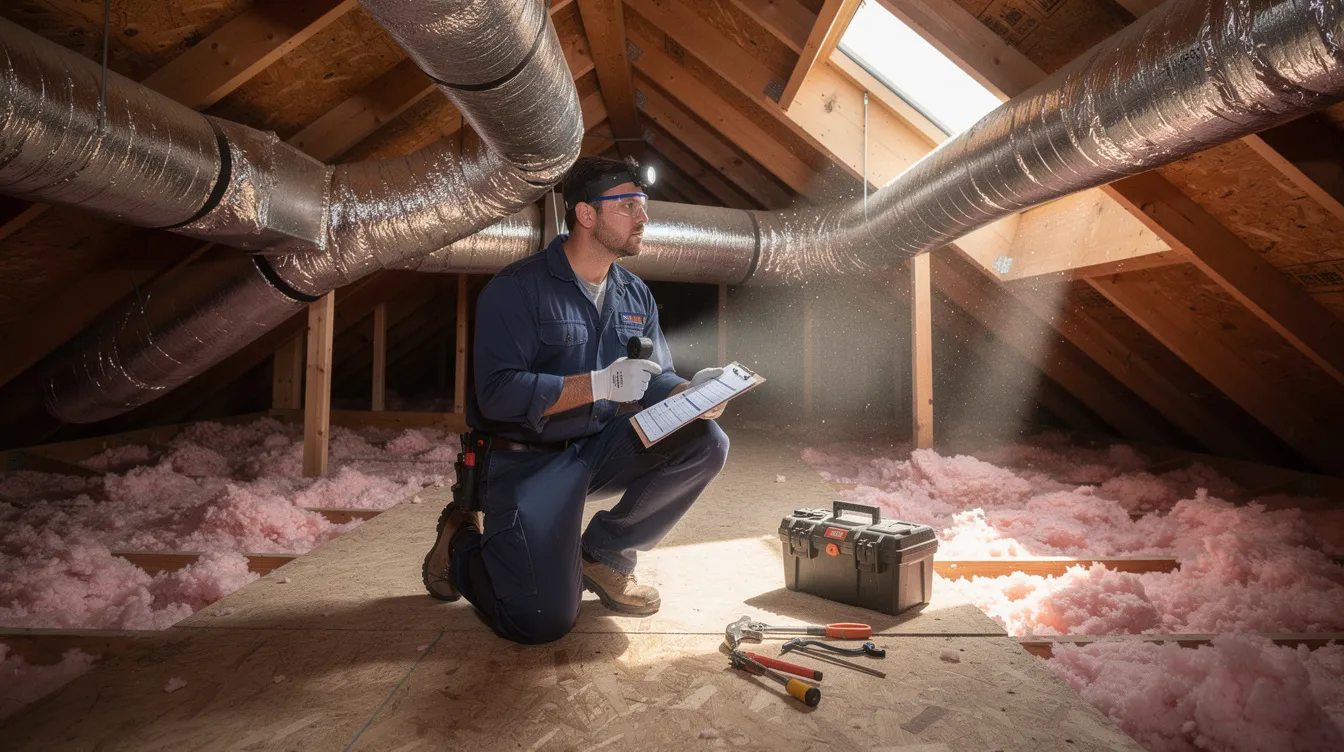
Central ducted heat pumps work best if your home already has reasonably good air ducts. Most 1500 sq ft homes with existing ductwork can be served by a single central unit in the 2–3 ton range. Existing ductwork must be inspected for leaks and compatibility with heat pump airflow requirements before installation.
Ductless mini-split systems suit older homes without ducts, additions, or spaces with uneven comfort. A mini-split heat pump, also known as a ductless heat pump, is designed for spaces without ductwork, making it ideal for garages, attics, or enclosed porches. Multiple indoor heads can serve different zones of a 1500 sq ft layout, allowing independent temperature control in each area, and homeowners may pair these with a 2.5 ton 15.2 SEER2 single-stage heat pump system with pro installation when central capacity is also needed.
Dual-fuel systems combine a heat pump with a gas furnace, allowing for efficient heating in colder climates by using the heat pump for moderate temperatures and the furnace for extreme cold. This dual fuel system option appeals to homeowners in regions where sub-freezing temperatures are common and who want backup heating capacity, sometimes at larger capacities similar to a 5 ton 15.2 SEER2 single-stage heat pump system with pro installation. The heat pump portion is still sized via Manual J based on heating load requirements.
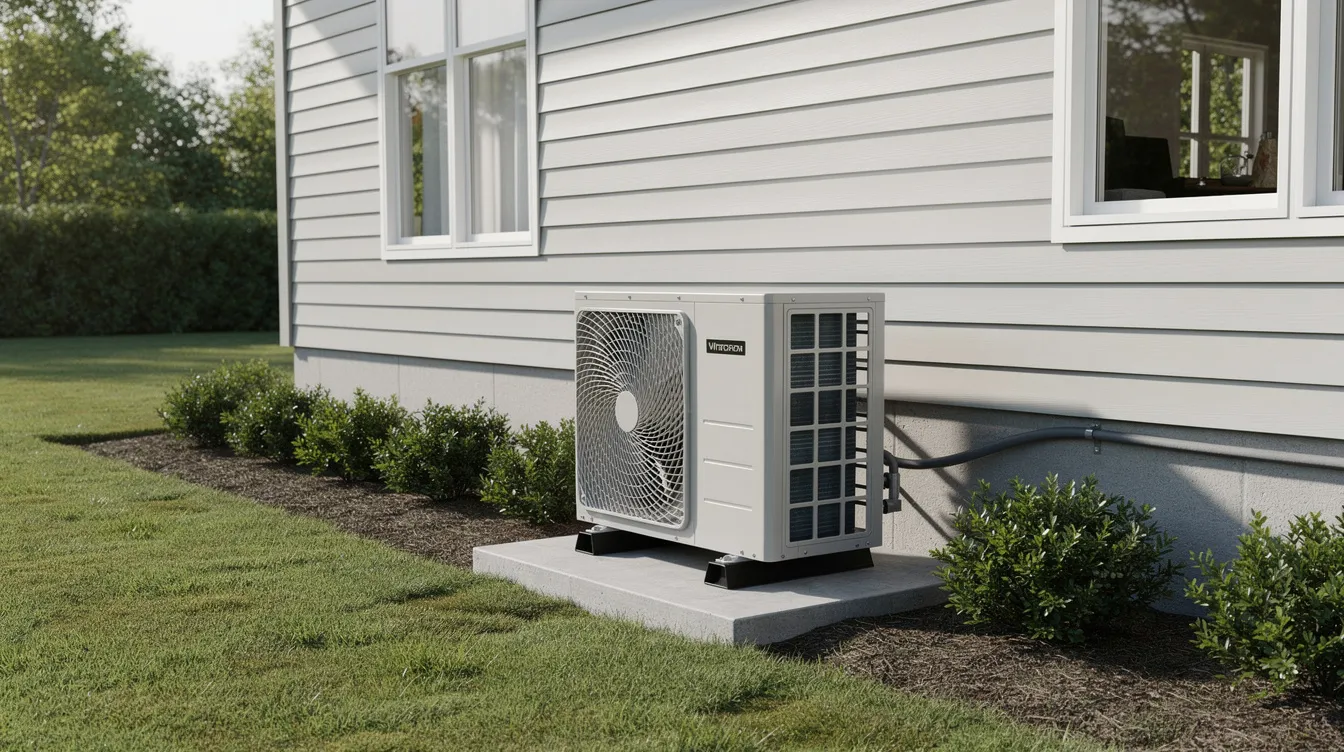
System choice interacts with sizing—several smaller ductless heads can be sized cumulatively to meet total loads, whereas a central unit must be selected as a single capacity, such as a 2 ton high-efficiency Trane heat pump for smaller load scenarios. The outdoor heat pump unit needs a level, stable surface with at least 12 inches of clearance for airflow, and should be elevated 6–12 inches off the ground in snowy regions to prevent ice buildup.
Cost Expectations for Heat Pumps in a 1500 Sq Ft House (2026)
Installed heat pump cost varies widely by region, efficiency ratings, and system type. For a typical 2.5–3 ton central ducted air-source heat pump in 2026, expect installed costs in the mid-to-high four figures to low five figures, though exact pricing depends on local labor rates and equipment efficiency, as shown in many local HVAC system price estimates and installation overviews.
The cost of installing a heat pump is generally higher than that of a standard system with an outdoor AC unit and an indoor furnace, but the increased energy efficiency can lead to significant savings on heating and cooling bills over time, which you can estimate with an HVAC energy savings calculator. Higher-efficiency variable-speed units cost more upfront but reduce annual energy bills, especially in climates with long heating and cooling seasons.
Ductwork condition significantly impacts total project cost. Existing, well-sealed ducts keep costs lower, while replacing or resizing air ducts in a 1500 sq ft home can add substantially to the total budget, especially in regions where HVAC installation cost guides for homeowners show how labor and duct changes drive pricing.
2026 incentives matter. The ENERGY STAR label often qualifies for federal tax credits of 30% (up to $2,000) or local utility rebates under the Inflation Reduction Act. Most heat pumps require a dedicated 220-240V circuit; an outdated electrical panel may require an upgrade to 200-amp, adding to the installation process costs. Check current local rebates, as incentive programs vary by geography.
Homeowners can often see a near-immediate decrease in their utility bills after installing a new heat pump system, which can last for the life of the system due to its energy efficiency.
How to Work with a Contractor to Size a Heat Pump for Your 1500 Sq Ft Home
Choose an experienced HVAC contractor specifically trained with heat pump installation, not just traditional AC and furnaces. HVAC professionals familiar with current technology will understand variable-speed equipment, cold-climate models, and proper load calculation methods.
A quality HVAC contractor should perform an in-home assessment that includes:
- Measuring room dimensions and ceiling heights
- Inspecting insulation levels and attic conditions
- Evaluating window types, age, and orientation
- Checking existing ductwork for leaks and proper sizing
- Discussing comfort issues, hot and cold spots, and previous energy bills
Ask explicitly for a Manual J calculation and be wary of contractors who recommend a system size after only a quick walk-through or by simply matching your existing equipment. Air conditioning contractors following industry standards will provide documentation showing total BTU loads and recommended tonnage, which also drives the installed cost of a new AC unit in regions like DFW.
Get at least two or three quotes and compare recommended sizes. If two separate contractors both suggest the same size heat pump for your 1500 sq ft square foot home, that’s a good sign of correct sizing. Before scheduling visits, prepare basic home data: year built, insulation upgrades, window replacements, and previous bills.
Practical Steps Before You Choose a Heat Pump
Before signing a contract for a new heat pump system, work through this checklist to ensure you get the right heat pump for your situation.
Make efficiency improvements first. Simple upgrades may change the required size. Sealing obvious air leakage around windows, doors, and penetrations, upgrading attic insulation, or adding window shading can reduce thermal loads. Complete these before final sizing calculations if they’re planned, as they affect Manual J results.
Clarify your comfort priorities. Do you want very tight temperature control, quiet operation, or the lowest possible upfront cost? These preferences influence whether you choose a variable-speed, two-stage, or single-stage heat pump at a given capacity, such as a 2 ton 15.2 SEER2 single-stage Trane heat pump.
Research electricity rates. Gather information on local rates and any available time-of-use plans. A correctly sized heat pump can unlock more long term cost savings under favorable rate structures.
Time your planning. These pre-install steps should happen several weeks before planned heat pump installation to allow time for load calculation performed by contractors and quote comparisons. Choosing a heat pump with a higher energy efficiency rating, such as a 3 ton 15.2 SEER2 Trane heat pump or even a larger-capacity 4 ton 14.3 SEER2 Trane heat pump, can lead to significant savings on heating costs over time, despite potentially higher upfront costs.

FAQ: Heat Pumps for a 1500 Sq Ft House
Can I just replace my old 3-ton system with another 3-ton in my 1500 sq ft house?
Simply matching your old equipment’s same size is risky. The original system may have been oversized (older sizing practices were less precise), and your home may have changed substantially since installation—new windows, added insulation, sealed leaks. Always perform a fresh Manual J calculation before replacing an existing heat pump or AC unit, even if square footage is unchanged. Many homeowners discover they can step down by half a ton with today’s more efficient building envelopes and selected heat pump technologies that efficiently heat modern homes.
Is a 2-ton heat pump ever enough for a 1500 sq ft home?
Yes, in some well-insulated, newer 1500 sq ft homes in mild or moderate climates, a 2-ton system can be sufficient for your cooling needs, especially if it’s a high-efficiency, variable-speed model. This scenario is more common in regions with gentle summers and winters. However, most accurate sizing requires proper load calculations before selecting 2 tons for this size house. Don’t choose smaller capacity purely to save money if the Manual J shows higher loads are needed.
Do I need a separate heat pump for each floor in a two-story 1500 sq ft home?
Many two-story homes can be comfortably served by a single, correctly sized central heat pump with a well-designed duct system and possibly zoned controls. In some layouts with comfort problems upstairs—often because heat rises—homeowners may opt for a small ductless unit on the second floor rather than selecting larger heat pumps for the main system. The decision should follow a professional assessment of duct design, airflow, and load distribution between floors by HVAC professionals.
How do cold-climate heat pumps change sizing for a 1500 sq ft house?
Cold climate heat pumps are designed to maintain more of their rated heat pump capacity at low outdoor temperatures, crucial where winter lows frequently drop below 10°F. Sizing still follows Manual J results, but contractors must carefully examine capacity curves at specific outdoor temperatures (for example, at 5°F) to ensure the unit can carry the heating load during extreme temperatures. In very cold regions, some homeowners still pair a properly sized cold-climate heat pump with a backup heat source through a dual fuel system for the coldest days, which can help operate efficiently year-round.
Will choosing a higher SEER2 or HSPF2 rating change the size I need?
The Seasonal Energy Efficiency Rating (SEER2) measures the cooling efficiency of heat pumps, with higher ratings indicating greater energy efficiency, and the latest standards took effect in 2023. Similarly, the Heating Seasonal Performance Factor (HSPF2) measures how effectively a heat pump can heat a home during colder months, with higher ratings signifying better efficiency, and this standard also took effect in 2023. However, these efficiency ratings don’t change the BTU load of your house—they affect how much electricity the unit uses to meet that load. A more efficient unit of the same tonnage will cost more upfront but operate at lower monthly cost. Select the correct capacity first via Manual J, then compare efficiency levels within that size to balance budget and long-term savings.
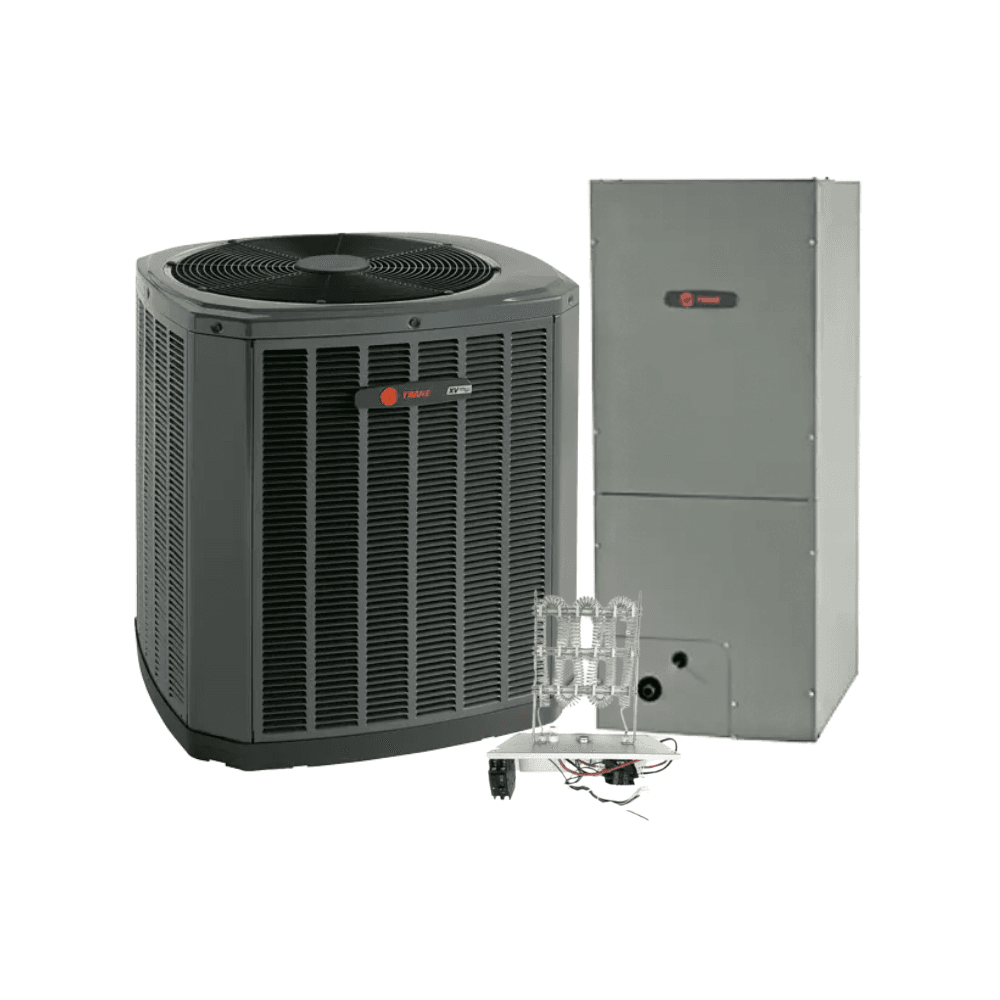
Trane Heat Pump System Installed
Heating and cooling in one system with energy-efficient comfort, quiet operation, and professional installation.
