





2026 Installed Price Guide
AC Replacement Cost in Carrollton, TX
Quick answer: A complete AC replacement in Carrollton can cost about $6,000 to $18,000+, depending on whether the job is AC-only, a heat-pump system, or an AC paired with a gas furnace. Equipment size, efficiency, attic access, duct condition, electrical work, controls, permits, and the written installation scope determine the final price.
Compare planning ranges, what a quote should include, and transparent online prices for three linked 3-ton Trane systems. Final equipment sizing requires an on-site evaluation and load calculation.
Compare Installed Trane Systems for Carrollton Homes
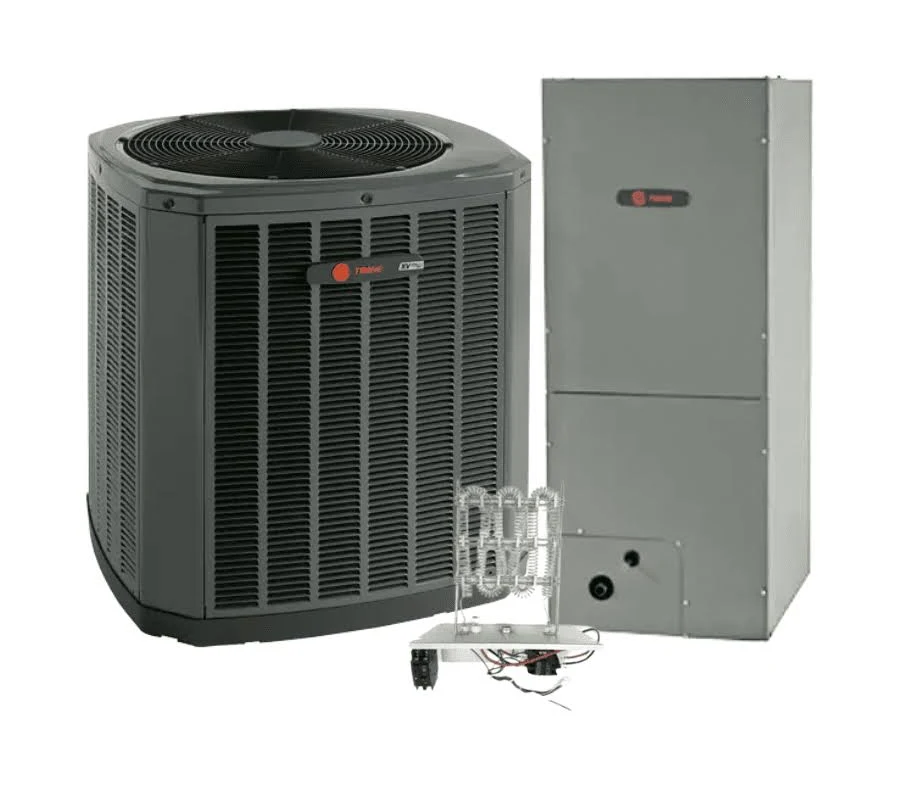
14.3 SEER2
3 Ton Trane Electric System
$6,999
16 SEER2
3 Ton Trane Gas System
$7,999
17 SEER2
3 Ton Trane Two-Stage Gas System
$9,700
Prices shown are the current online prices displayed for the linked 3-ton system packages. Confirm included equipment, home compatibility, availability, installation conditions, permits, and any additional work before purchase.
2026 Carrollton AC Replacement Price Guide
The most useful way to compare AC replacement cost is by project scope. An AC-only changeout is not the same job as replacing both cooling and heating equipment. The planning ranges below use one consistent framework throughout this guide.
| Replacement scope | 2026 planning range | What the scope generally means |
|---|---|---|
| AC-only replacement | $6,000–$11,500+ | Outdoor AC and compatible indoor coil when the retained furnace is suitable and compatible. |
| Heat-pump system | $7,500–$15,000+ | Outdoor heat pump with compatible indoor equipment and the appropriate backup-heat strategy. |
| AC + gas furnace | $8,500–$16,000+ | Cooling equipment, indoor coil, and matched gas furnace for a whole-system replacement. |
These are early planning estimates, not property-specific offers. A larger or higher-efficiency system, difficult access, duct corrections, electrical changes, zoning, specialty controls, or a more complex installation can push a project above the range. A straightforward scope may be lower. For a wider regional comparison, review the DFW HVAC installation cost guide and the Trane HVAC price guide for DFW.
What Changes the Cost of a New AC System?
System type: Keeping a compatible furnace and replacing only the cooling side generally costs less than replacing the entire AC and gas-furnace system. A heat pump uses the outdoor unit for both heating and cooling and requires a matched indoor configuration. Compare the Trane electric-system options, Trane heat-pump systems, and Trane gas systems before deciding which category fits the home.
Capacity and load: Tonnage should not be selected from square footage alone. Insulation, windows, ceiling height, orientation, air leakage, occupancy, and duct design all affect the cooling load. An oversized system may short-cycle and struggle with humidity; an undersized system may run continuously during design conditions. Ask how the proposed capacity was determined.
Efficiency and staging: Higher SEER2 ratings and two-stage or variable-capacity operation may increase the purchase price. Their value depends on runtime, utility rates, comfort goals, duct capacity, controls, and installation quality. Compare complete matched combinations rather than judging only the outdoor-unit label. The Trane HVAC system overview explains the major equipment families.
Installation conditions: Attic or closet access, platform work, line-set condition, drain routing, return-air capacity, electrical requirements, gas venting, and thermostat wiring can change labor and material needs. These items should be inspected and listed, not assumed.
Carrollton Permit and Inspection Planning
Permit handling should be discussed before work begins. A clear proposal identifies the equipment, scope, permit responsibility, inspection responsibility, and exclusions. Do not compare a bid that includes those obligations with one that leaves them undefined.
What a Complete Carrollton Replacement Quote Should Include
A useful estimate should make the work easy to compare line by line. Depending on the selected scope, it should identify:
- Outdoor condenser or heat pump, indoor coil or air handler, and furnace when included
- Manufacturer, model family, capacity, efficiency tier, and matched-system documentation
- Thermostat and control requirements
- Refrigerant-line plan, including reuse, flushing, testing, or replacement
- Condensate drain, pan, and safety-switch work
- Electrical disconnect, whip, breaker, conductors, and grounding work
- Duct transitions, plenums, return-air work, sealing, balancing, and exclusions
- Equipment delivery, removal, haul-away, startup, commissioning, and homeowner walkthrough
- Permit and inspection responsibility
- Parts coverage, labor coverage, registration steps, payment terms, and financing cost
For more detail on the installation process, visit AC installation services. You can also see the broader HVAC services available through HVAC Services Pro.
AC-Only vs Heat Pump vs AC + Gas Furnace
AC-only replacement
This scope replaces the outdoor air conditioner and compatible indoor coil while retaining a suitable furnace or air-moving section. It can be the lowest-cost path, but only when the retained equipment is in good condition and compatible with the new components. Ask for the exact retained model, the proposed matched combination, and an explanation of how the retained equipment affects efficiency and coverage.
Heat-pump replacement
A heat pump provides cooling and heating through the refrigeration cycle. The final configuration may include electric backup heat or another approved strategy. Compare equipment, controls, electrical needs, and cold-weather operation—not just the outdoor unit price. See the Trane heat-pump price guide for regional planning information.
AC paired with a gas furnace
This option combines an air conditioner, indoor coil, and gas furnace. It is a whole-system comparison and should include furnace efficiency, blower compatibility, venting, gas connections, controls, and the cooling-system rating. A low advertised condenser price is not the same as an installed matched system.
How to Compare the Three Online Trane Examples
The three shopping cards at the top provide direct links to specific 3-ton packages. Use them as concrete product examples, not as a substitute for sizing. Confirm the model numbers and included components on the product page, then compare the system with the home’s fuel type, load calculation, duct capacity, electrical service, and installation conditions.
- 14.3 SEER2 electric system: A value-focused example for homes that need an electric configuration.
- 16 SEER2 gas system: A mid-efficiency example paired with gas heat.
- 17 SEER2 two-stage gas system: A higher-feature example intended for homeowners comparing staging and comfort performance.
Browse additional equipment in the HVAC shop. Availability and product pricing can change, so use the linked product page as the source for the current package details.
Repair or Replace?
Replacement is not automatically the right answer because a system is older. A repair may be reasonable when the failure is isolated, the remaining components are in sound condition, the system still meets the home’s comfort needs, and the repair does not create an obvious chain of near-term risks. Start with professional AC repair diagnostics when the cause is uncertain.
Replacement deserves closer comparison when a major component has failed, service calls are becoming frequent, the current equipment is mismatched, comfort problems remain unresolved, or the project already requires meaningful duct, drainage, electrical, or control corrections. Ask for both paths in writing when both are technically reasonable.
Questions to Ask Before Signing
- How was the recommended system type and capacity selected?
- Which exact indoor and outdoor components are included?
- Are the components documented as a matched combination?
- What work is included for ducts, return air, drains, electrical service, gas venting, and controls?
- Who obtains the Carrollton permit and schedules inspection?
- What is excluded from the price?
- What startup and commissioning measurements will be recorded?
- Who removes the old equipment and restores the work area?
- What parts and labor coverage applies, and who handles registration?
- What is the total financed cost compared with the cash price?
Use the local installation cost calculator for early planning, then request a written property-specific scope before making a decision.
How to Read a Carrollton AC Quote Line by Line
A replacement proposal is easier to judge when each line answers a specific question. Start with the equipment schedule. It should identify the outdoor unit, indoor coil or air handler, furnace when applicable, thermostat or communicating control, and any field-installed accessories. Model numbers are more useful than broad labels such as “high efficiency” because they allow the indoor and outdoor combination to be checked.
Next, review the scope of labor and materials. Look for the refrigerant-line plan, new or reused electrical components, drain and overflow protection, equipment supports, sheet-metal transitions, filter arrangement, return-air work, gas and venting work when applicable, and removal of the old system. If a line item is described only as “standard installation,” ask the contractor to define what standard means for your property.
Then review exclusions and allowances. An allowance is not necessarily a problem, but it should state the amount and the condition that could change it. Examples include concealed duct damage, an electrical panel issue, a line set that fails testing, or framing that limits access. Clear allowances reduce surprises because the homeowner knows which conditions are included and which would require written approval.
Finally, compare closeout requirements. The contractor should explain startup testing, thermostat setup, filter size, maintenance needs, permit closeout, registration steps, and the documents the homeowner receives. Two totals that look similar can represent very different levels of work when one includes commissioning and administrative responsibilities and the other does not.
Ductwork and Return Air: Check Before Buying Equipment
New equipment cannot correct every airflow problem by itself. Before selecting a system, ask whether the existing supply and return paths can support the proposed airflow. The evaluation should consider filter resistance, return-grille area, duct size and condition, visible leakage, damaged insulation, restrictive transitions, and rooms that already have persistent comfort problems.
Duct replacement should not be added automatically to every project. It should be connected to an observed condition and a written correction. If the existing ducts are serviceable, the proposal may need only a transition, sealing, or a targeted return-air improvement. If major changes are recommended, ask for the affected areas, materials, access plan, and testing method.
Airflow matters for both comfort and equipment performance. Too little airflow can contribute to noise, temperature imbalance, coil problems, and poor dehumidification. A system that is larger on paper may perform worse if the duct network cannot move the required air. This is why equipment capacity and duct capacity should be evaluated together rather than treated as separate purchases.
Electrical, Drainage, and Control Items That Affect Price
The outdoor unit and indoor equipment must match the available electrical service and the manufacturer’s requirements. A proposal should identify whether the existing breaker, conductors, disconnect, whip, grounding, and service capacity are suitable. Do not assume that an older electrical setup is automatically reusable just because the previous equipment operated on it.
Drainage is equally important for an attic or elevated installation. The plan should address the primary drain, any secondary drain, overflow protection, pan condition, termination points, and access for future maintenance. The required work depends on the property and equipment location, so it should be inspected rather than priced from a generic checklist.
Controls can also change the scope. A basic single-stage thermostat may not support staged or communicating equipment. New thermostat cable, equipment interfaces, sensors, zoning components, or network setup may be required. Ask which control is included and which functions would be unavailable with a different control.
What Happens During an AC Replacement?
1. Property evaluation: The contractor reviews the existing system, fuel type, electrical service, thermostat wiring, accessible ductwork, drains, equipment locations, comfort concerns, and installation access. The recommended capacity should be supported by a load calculation or documented sizing process.
2. Written options: The homeowner receives comparable scopes showing system type, capacity, efficiency, included components, installation work, permit responsibility, exclusions, coverage terms, and total price. Options should be different for a clear reason—not simply different model names.
3. Scheduling and permit preparation: Equipment availability and the work schedule are confirmed. The responsible party prepares the Carrollton permit and inspection steps for the approved scope.
4. Removal and installation: The old equipment is made safe and removed. The crew installs the selected components, completes approved duct, drain, electrical, gas, venting, line-set, and control work, and protects the work area.
5. Startup and commissioning: The system is started and checked under the available conditions. Depending on the equipment and weather, commissioning can include airflow verification, temperature measurements, refrigerant checks, drain testing, control verification, heating operation, and confirmation of programmed settings.
6. Walkthrough and closeout: The homeowner receives operating instructions, filter information, maintenance guidance, documentation, coverage and registration information, and the plan for inspection closeout. Any remaining item should be written down with an owner and expected completion step.
Efficiency, Comfort, and the Total Cost of Ownership
Higher efficiency does not automatically produce the best financial outcome for every house. Compare the installed price difference with realistic operating conditions, not a generic savings promise. Runtime, thermostat settings, utility rates, duct leakage, insulation, shade, occupancy, maintenance, and installation quality influence actual energy use.
Staging and variable-capacity operation may provide value through longer low-capacity cycles, reduced temperature swings, quieter operation, and improved humidity management when the equipment is correctly sized and the ducts and controls support it. Those comfort benefits can be important even when simple payback is not the homeowner’s only goal.
Ask the estimator to separate three decisions: required scope, optional comfort features, and optional indoor-air-quality accessories. This keeps the base replacement comparable and prevents filters, purifiers, zoning, surge protection, or monitoring products from hiding the price of the core system. Each accessory should have a purpose, installed cost, maintenance requirement, and replacement schedule.
When to Plan the Project
A failed system during hot weather can reduce the time available to compare equipment and scopes. If the current system is operating but showing repeated failures, unusual noise, refrigerant loss, comfort problems, or major component risk, begin collecting information before an emergency. Early planning allows time for load review, product availability, permit preparation, financing comparison, and questions about duct or electrical work.
Do not replace a working system only because of its age. Use condition, performance, repair history, comfort, safety, compatibility, and the cost of realistic repair and replacement paths. If repair is still reasonable, ask how long the repair is expected to address the documented failure and what other known issues remain.
Frequently Asked Questions
How much does AC replacement cost in Carrollton, TX?
A practical 2026 planning range is about $6,000 to $18,000 or more. AC-only projects generally occupy the lower portion of the range, while whole-system, higher-efficiency, larger, or installation-intensive projects can cost more.
Does Carrollton require an HVAC permit?
The City of Carrollton states that a permit is required when any part of an HVAC system is repaired or replaced, including the inside or outside unit. Confirm permit and inspection responsibility in the written proposal.
Can I replace only the outside AC unit?
Sometimes, but compatibility must be verified. Ask the contractor to document the proposed indoor-outdoor combination and explain how retained equipment affects performance, efficiency, reliability, and coverage.
What size AC does a 2,000-square-foot Carrollton home need?
Square footage alone cannot determine capacity. Insulation, windows, orientation, air leakage, ceiling height, occupancy, and duct design all affect the load. Request a professional load calculation before selecting tonnage.
What should an installed price include?
The proposal should identify equipment, labor, materials, refrigerant-line work, duct transitions, drainage, electrical work, controls, startup testing, removal, permit responsibility, coverage terms, exclusions, and payment terms.
How should I compare two replacement quotes?
Make sure both quotes cover the same system type, capacity basis, efficiency tier, components, controls, duct and return-air work, electrical and drain work, permit handling, startup testing, closeout documents, and exclusions.
Ready to Compare Carrollton AC Replacement Options?
Get a property-specific estimate that clearly lists the equipment, installation scope, permit responsibility, options, and exclusions.
Book an EstimateView the DFW Cost Guide
HVAC Services Pro · 866-879-8122
Editorial note: Pricing is for early planning and comparison. It is not a proposal, offer, guarantee, or substitute for a property-specific evaluation. Product availability and project requirements can change.