


In the DFW Metroplex, a 1,200 to 1,800 sq ft home typically requires a system between 2.0 and 3.0 tons, delivering 24,000 to 36,000 BTUs. I have seen too many homeowners buy based on square footage alone, only to suffer through sticky humidity or huge electric bills.
The North Texas heat is a relentless opponent that basic national charts simply fail to handle. I know it is quite challenging to understand the AC size. That is why I come up with how local insulation, sun exposure, and professional sizing standards ensure your HVAC Tonnage actually beats the heat.
Key Takeaways
|
What Are Perfect AC Sizing Chart for North Texas Homes?
In my years of balancing systems across the DFW Metroplex, I have found that a standard sizing chart usually fails our local homeowners. While many properties utilize a 2-ton and 3-ton AC in typical DFW homes, North Texas units have to fight a 102°F design temperature that most national charts do not account for. You need a system that removes heat faster than the Texas sun can pour it in.
| Home Size | Typical AC Tonnage | BTU Capacity |
| 1,200 Sq Ft | 2.0 Tons | 24,000 BTUs |
| 1,500 Sq Ft | 2.5 Tons | 30,000 BTUs |
| 1,800 Sq Ft | 3.0 Tons | 36,000 BTUs |
While the national average is 20 BTUs per square foot, I recommend DFW homeowners plan for 25–30 BTUs per square foot. This extra headroom ensures your home stays at 75°C even when the Dallas pavement is melting.
I usually use these local metrics to ensure your system doesn’t just run, but actually keeps you comfortable.
| Pro tip: Check your current unit’s data plate to see if your tonnage matches your square footage. |
Right Size for 1,200 Sq Ft Homes
A 2-ton unit is the most reliable baseline for a 1,200 sq ft North Texas home. If you have a 1,200 sq ft home, you might see 1.5-ton units recommended online, but I rarely suggest them for our area.
It provides the 24,000 BTUs needed to overcome the heat soak common in smaller Dallas cottages and bungalows. I once helped a Plano homeowner whose 1.5-ton unit couldn’t get the house below 28°C in August; upgrading to a 2-ton unit solved the problem instantly.
I specialize in retrofitting older 1,200 sq ft Dallas homes with 2-ton high-efficiency units that fit your existing footprint. This precise AC installation ensures your new system isn’t just a replacement, but a performance upgrade tailored to the local climate.


Right Size for 1,500 Sq Ft Homes
Most 1,500 sq ft homes in DFW perform best with a 2.5-ton system (30,000 BTUs). The Department of Energy typically suggests a baseline of 20 BTUs for each square foot of living space, which lands exactly at 30,000 BTUs for this home size. However, this is just the starting point before we add Texas-specific adjustments for west-facing windows or vaulted ceilings.
If you go too small, the unit never stops running. If you go too big (like a 3-ton), it turns off before it can remove the humidity, leaving you feeling sticky.I find that a 2.5-ton unit paired with modern insulation is the most comfortable choice for this mid-sized range.
The Right Size for 1,800 Sq Ft Homes
An 1,800 sq ft home in the DFW area typically requires a 3-ton unit (36,000 BTUs) to maintain comfort during peak summer. In 1,800 sq ft Arlington two-stories, I’ve found that a 3-ton unit is the minimum required to keep the upstairs from becoming a sauna.
I have noticed that 1,800 sq ft homes with 2.5-ton units often have one hot room, usually the master bedroom or a west-facing kitchen. A 3-ton unit, when properly ducted, eliminates those hot spots by providing the necessary supply airflow CFM.
I ensure your 3-ton upgrade includes a ductwork check to make sure your system can actually breathe.
What Factors To Consider Determining Your AC Size?
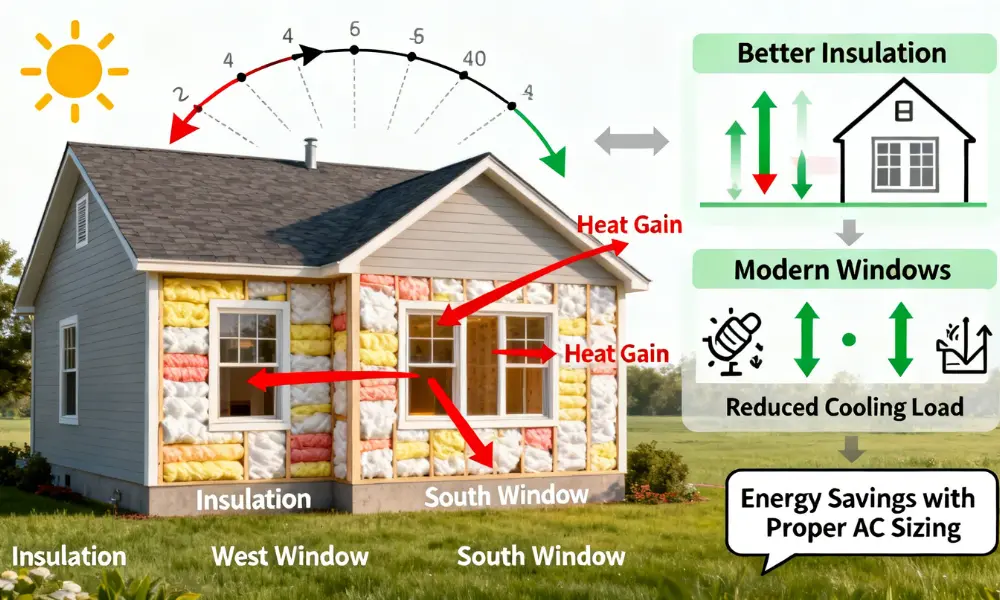
The AC size depends on how well your home’s shell resists heat, not just the floor space. Factors like insulation quality, window types, and air leaks change how many BTUs you need to stay cool.
A home with poor insulation can require up to 20% more cooling capacity than a well-sealed home of the same size. I perform a shell audit during every estimate to see if you are losing money through your attic or walls.
I often see homeowners surprised when two houses with the same floor plan need different AC sizes. This happens because square footage only measures the floor. To find the right fit, I look at your building envelope.
| Pro tip: Check your attic insulation. If you can see the wooden floor joists, you likely need an upgrade before sizing a new AC. |
Role of Windows and Impact on Insulation
High-quality insulation and modern windows lower the heat load, allowing for a smaller, more efficient AC unit. I recently helped a homeowner in McKinney who replaced old windows. We installed a 2.5-ton unit instead of a 3-ton, saving them $1,500 upfront.
I use professional software to give you credit for your energy-efficient upgrades so you do not overpay for a system that is too large.
Solar Impact on Window Heat Gain
Windows facing west or south get the most direct heat, requiring more cooling power to compensate. Unshaded west-facing glass can add as much as 1,000 BTUs of heat per window to your cooling load. In Dallas, the West Wall is the biggest enemy of your thermostat.
Around 4:00 PM, the sun hits those windows directly. Without good glass, those windows become heaters. If your system is constantly struggling to keep up with this specific heat gain, it can lead to premature component failure and a sudden need for AC repair during the hottest months.
If you have large windows facing west, your AC needs more punch to handle that afternoon heat spike. I look for a low SHGC rating on your glass. The lower the number, the better it is for your electric bill.
High Ceilings and Open Floor Plans
High ceilings increase the total volume of air, which requires more cooling power and better airflow to stay comfortable. A 1,500 sq ft home with 12-foot ceilings often needs the same cooling capacity as an 1,800 sq ft home with flat ceilings.
We specialize in high-volume air distribution, ensuring our 3-ton systems provide enough reach for your open-concept layout.
How to Find Your AC Size Professionally?
At HVAC Services Pro, we use three steps: Manual J, S, and D to calculate your heat load, pick the right equipment, and design the ducts.
This method looks at your insulation, windows, local weather, and air duct capacity to find a perfect match. Every installation starts with a full professional audit to ensure your system matches your home’s specific needs.
| Pro tip: Ask any contractor you interview if they provide a written Manual J report with their quote. |
Step 1: Calculate Your Home’s Heat Load (Manual J)
This step determines the exact amount of cooling power (BTUs) your specific home requires. Find the perfect size by looking at your insulation, windows, and home direction. Using a Manual J load calculation checklist helps us account for how many 1,800 sq ft homes in Tarrant County only need a 3-ton unit instead of a 3.5-ton unit after attic upgrades.
I recently helped an Arlington homeowner save $1,200 because their new windows allowed for a smaller, more efficient system.


Step 2: Pick the Right Model for Texas Heat (Manual S)
Once we know your needs, we match them to a specific AC model. Not all 3-ton units perform the same in extreme heat, and checking the EER2 vs SEER2 for 95°F days helps us select equipment that removes moisture and handles 102°F days without failing. Proper selection prevents that sticky feeling caused by a unit that cools too fast but fails to remove humidity.
Step 3: Verify Your Air Ducts (Manual D)
Your AC is the heart, but the ductwork is the circulatory system. I use a pressure test to ensure your ducts are sized correctly for your new unit. Proper sizing prevents high static pressure—like breathing through a straw—which saves your blower motor from burning out.
The EPA notes that a 30% increase in static pressure across a cooling coil can increase operating costs by $200 per 10,000 cfm of air movement, making precision ductwork essential for your wallet.
Even a perfectly sized unit fails if ducts are too small. I verify the system supports the airflow required for optimal EER2 performance for hot afternoons, as restricted ducts spike bills and cause early system failure.
How Efficiency Ratings Impact Your AC Size?
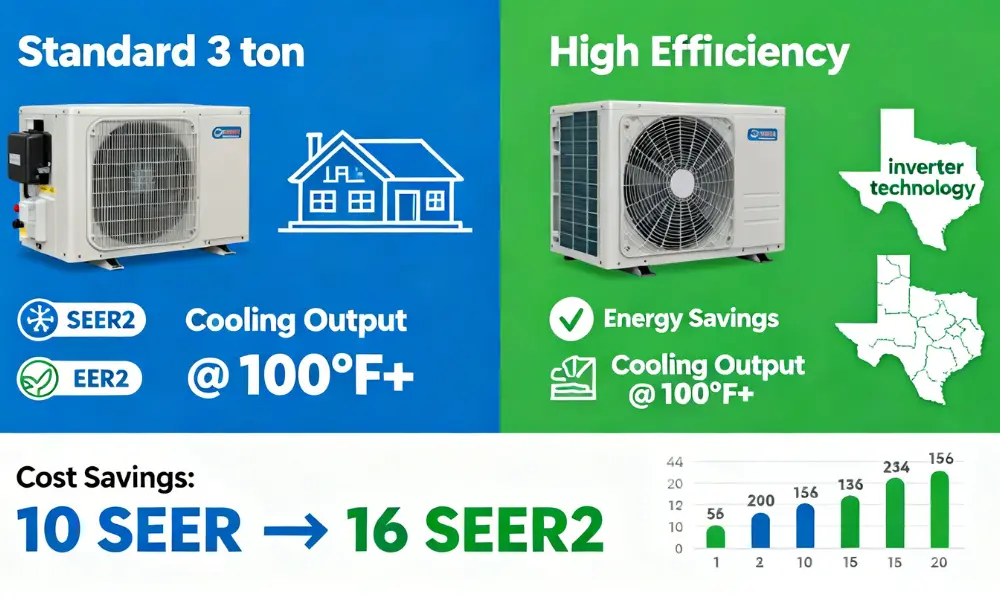
Efficiency ratings like SEER2 and EER2 directly impact your AC size by determining how well a unit maintains its cooling capacity during extreme heat.
While a standard 3-ton unit might lose significant cooling power when temperatures exceed 100°F, a high-efficiency system with a strong EER2 rating is designed to hold its size (cooling output) under stress.
When reviewing a SEER2 rating chart for Texas, you will see that with a higher efficiency rating and better technology, like Inverter Technology, you can often avoid oversizing your equipment, as the unit can adjust its output to handle both high-heat afternoons and humid, milder mornings perfectly.
Upgrading from an old 10 SEER unit to a modern 16 SEER2 system can reduce your cooling costs by over 30% annually while improving comfort in a 1,500 sq ft space. I recommend to choose systems that balance high SEER2 for your wallet and high EER2 for your comfort.
| Pro Tip: Ask your technician for the EER2 rating of the units you are considering for your specific square footage. |
SEER2 vs. EER2: Which One Matters More for Your Tonnage?
SEER2 is a seasonal average, while EER2 measures efficiency during steady, high heat (95°F). In North Texas, a system with an EER2 of 12 or higher is ideal for staying efficient during our hottest months. I only recommend units that meet strict Texas-climate standards for both EER2 and SEER2 performance.
Think of SEER2 as average fuel economy and EER2 as the power needed for a steep climb. When comparing SEER vs SEER2 for homeowners, it becomes clear that in North Texas, a 3-ton unit can fail on a 105°F afternoon if the EER2 rating is too low. I verify both numbers to ensure your HVAC Tonnage actually delivers the cooling power you need.
Matching Inverter Technology to Your Home Size
Inverter-driven ACs provide better humidity control by running longer at lower speeds to pull moisture out of the air.
I recently switched a client in Frisco to an inverter system. They now keep their thermostat at 76°F because the lower humidity makes it feel just as cool as 72°F used to. I specializes in variable-speed inverter installs to help you beat the sticky North Texas summers.
In Dallas, we use both sensible load (temperature) and latent load (humidity). Standard ACs often cool a 1,200 sq ft home so fast they shut down before removing moisture, leaving the air feeling sticky. Inverter Technology acts like a dimmer switch, running at lower capacities for longer periods to pull out significantly more humidity without needing a larger, more expensive unit.

Important Updates for 2026: New Refrigerants and Costs
All new systems now use A2L refrigerants like R-454B. These are eco-friendly but mildly flammable, requiring mandatory leak detection sensors for your safety.
Systems using R-454B are up to 10% more energy-efficient than older models, helping you recoup the slightly higher upfront costs over time.
| Pro Tip: Always ask your contractor if their quote includes the required 2026 safety components and certified A2L installation. |
HVAC Replacement Costs in DFW
Installation costs in the DFW area have shifted due to new refrigerant requirements and inflation. While the initial investment is higher, modern units qualify for more generous savings.
- The Range: For a 1,200 to 1,800 sq ft home, a full system replacement typically costs between $12,000 and $17,000.
- The Savings: You can offset these costs with Federal Tax Credits of up to $2,000 (25C Credit) and local Oncor rebates.
I always recommend flexible financing to help DFW families manage the transition to these high-efficiency 2026 standards.
Critical Signs Your AC Size Is Failing the Texas Heat
In my years inspecting homes across the Metroplex, I have found that most comfort issues are not mechanical failures—they are sizing errors. A system that does not match your home’s unique footprint will fail to combat the relentless DFW heat.
- Oversized: If your AC cools the house quickly but leaves the air feeling sticky, it is likely too large. I recently corrected a Frisco home where a 4-ton unit was installed instead of a 3-ton; the unit shut off so fast it never had time to remove humidity.
- Undersized: If your unit runs 24/7 and the upstairs still feels 10 degrees warmer than the downstairs, the system is too small. It lacks the power to remove heat as fast as the Texas sun pours it through your windows.
- Short-Cycling Damage: An improperly sized AC can shorten the life of your equipment by up to 5 years due to mechanical stress. This also causes your electric bill to skyrocket by up to 40% because the motor consumes the most energy during every startup.
I use variable-speed technology to ensure your system runs at the perfect capacity to balance temperature and humidity for your square footage. While we focus on summer cooling, ensuring your system has the right AFUE ratings for mild winter comfort prevents these same short-cycling issues during our North Texas cold snaps.
Conclusion
Choosing the right AC size for your DFW home requires balancing square footage with local heat loads and 2026 efficiency standards. By utilizing Manual J calculations, EER2 ratings, and Inverter Technology, you ensure your 1,200 to 1,800 sq ft space stays crisp and dry despite the Texas heat. Do not guess on your comfort, invest in a perfectly sized system that lowers bills and lasts longer. At HVAC Services Pro, we provide professional sizing consultations before buying.
Frequently Asked Questions
How Does A Home Office Affect My Ac Sizing?
Computers and servers emit extra heat that adds to your cooling load. You may need an additional 500 to 1,000 BTUs of capacity to keep a high-tech workspace comfortable.
Does Roof Colour Impact The Tonnage I Need?
Yes, dark roofs absorb significant solar heat, raising attic temperatures. Lighter or reflective roofs lower this heat gain, potentially allowing for a smaller, more efficient AC unit.
Can I Keep My Old Indoor Coil When Upgrading In 2026?
No, new R-454B systems require specific, safety-certified coils to operate. Mixing old parts with new 2026 refrigerants is unsafe and will void your equipment warranty.
How Does Static Pressure Affect My Tonnage Choice?
Static pressure is the resistance in your ducts; if it is too high, a large unit will suffocate and fail. Your ductwork must be wide enough to handle the airflow (CFM) of your chosen tonnage.
What Is A Fresh Air Requirement For Sealed Homes?
Tightly sealed, energy-efficient homes can trap indoor pollutants and stale air. We use Energy Recovery Ventilators (ERVs) to bring in fresh air without forcing your AC to work harder.