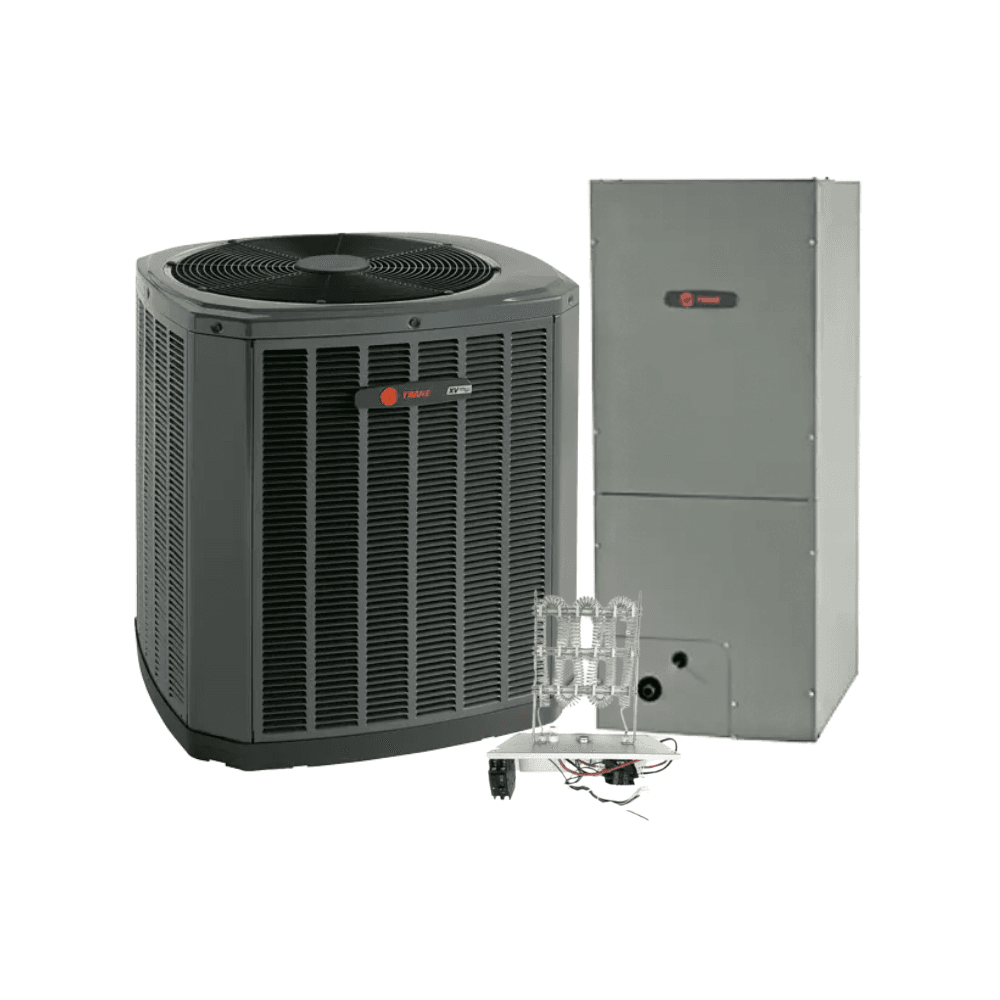


Carrier vs Trane at a Glance
Carrier and Trane are two of the most respected HVAC brands in the United States. Both offer premium air conditioners, heat pumps, and furnaces with strong warranty coverage and high-efficiency options. While Carrier is known for advanced comfort technology and quiet operation, Trane is often chosen for long-term reliability, durability, and overall value.
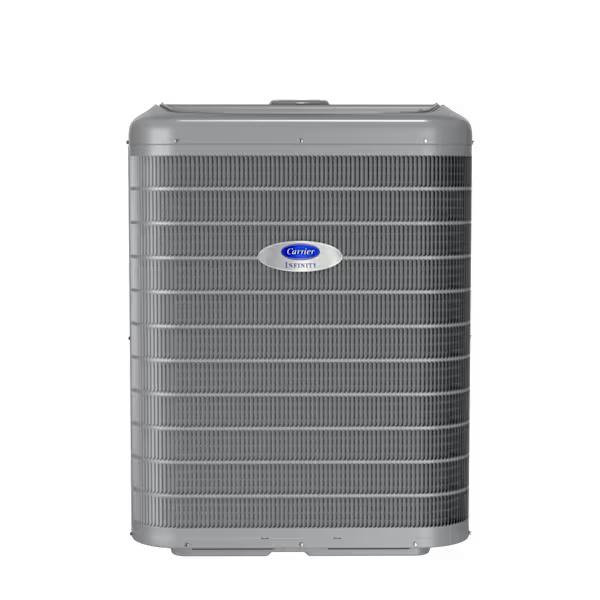
Carrier
✔ Advanced Comfort Technology
✔ Quiet Operation
✔ Infinity Controls
✔ Excellent Humidity Control
✔ Premium Smart Features
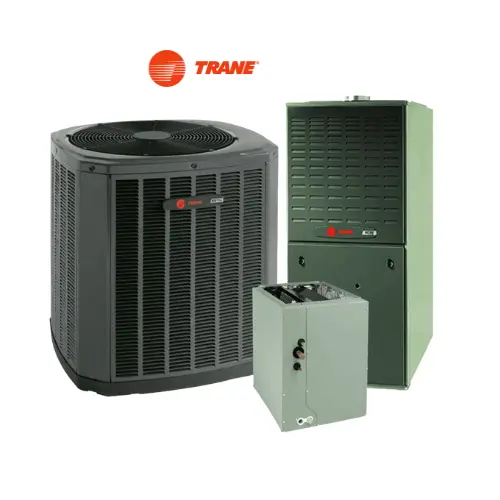
Trane
✔ Proven Reliability
✔ Durable Components
✔ Long-Term Value
✔ Strong Warranty Coverage
✔ Texas-Proven Performance
Carrier vs Trane: Key Takeaway
For most homeowners, the right choice comes down to reliability, comfort features, energy efficiency, warranty coverage, repair costs, and installation quality. A properly installed Carrier system can outperform a poorly installed Trane system—and vice versa.
What Matters More Than Choosing Carrier or Trane?
While Carrier and Trane are both excellent HVAC brands, the quality of the installation often has a bigger impact on comfort, efficiency, and system lifespan than the brand itself.
✔ Proper System Sizing
A Manual J load calculation ensures your system is neither oversized nor undersized.
✔ Ductwork Design
Poor airflow can reduce comfort and efficiency regardless of the equipment brand.
✔ Refrigerant Charge
Incorrect refrigerant levels can shorten system life and increase energy costs.
✔ Installation Quality
A properly installed Carrier system can outperform a poorly installed Trane system.
HVAC Contractor Recommendation:
For most homeowners, choosing a qualified HVAC contractor is more important than choosing between Carrier and Trane. Both brands can deliver 15–20+ years of reliable service when installed correctly.
Choosing between Carrier and Trane affects reliability, energy efficiency, installation costs and long-term maintenance requirements. Both Carrier and Trane are top-tier HVAC brands with decades of engineering behind them, but they take different approaches to performance and durability. The right brand depends on your budget, climate conditions and how much you prioritize proven longevity versus advanced comfort technology.
Below is a practical comparison of Carrier vs Trane air conditioning systems for Dallas area homeowners, based on real-world installation experience with both brands.
`
Carrier vs Trane: Quick Comparison
| Feature | Carrier | Trane |
|---|---|---|
| Predicted Reliability | 4 out of 5 | 5 out of 5 |
| Owner Satisfaction | 5 out of 5 | 5 out of 5 |
| Warranty (Registered) | 10-year parts | 10-year parts, up to 12-year compressor |
| Registration Deadline | 90 days | 60 days |
| SEER2 Range | 14–21+ | 14.3–21.5 |
| 4-Ton Installed Price (Dallas) | $6,500–$13,000 | $7,599–$14,000 |
| Noise (Premium Models) | As low as 55 dB | 55–57 dB |
| Best For | Smart home integration, quiet operation | Long-term durability, harsh environments |
| Trane systems consistently earn higher predicted reliability scores, while Carrier systems are noted for their variable-speed technology, refined humidity control and ultra-quiet operation. Both brands deliver excellent equipment across their product lines, but they serve slightly different homeowner priorities. |
Carrier vs Trane AC Prices
Installation costs vary significantly between equipment tiers and system complexity. Here are typical fully installed price ranges for the Dallas area in 2026, including equipment, labor, permits, refrigerant and standard connections.
| System Size | Carrier (Installed) | Trane (Installed) |
|---|---|---|
| 2 Ton | $4,800–$7,200 | $5,200–$7,800 |
| 3 Ton | $5,200–$8,500 | $5,800–$9,200 |
| For more detailed 3-ton pricing, including installation factors and real Dallas examples, see our guide to 3 ton air conditioner unit replacement cost. | ||
| 4 Ton | $6,500–$13,000 | $7,599–$14,000 |
| Homeowners comparing Carrier vs Trane at this size can review our dedicated breakdown of 4 ton AC replacement cost for current 2026 installed prices in DFW. | ||
| 5 Ton | $7,800–$14,500 | $8,500–$15,500 |
| Several factors affect your total installation cost in the Dallas area: |
- Equipment cost: The condenser and evaporator coil account for roughly 40–50% of total project cost. Premium variable speed compressors and communicating controls push equipment costs higher.
- Labor: Professional installation by a licensed HVAC contractor typically runs $2,000–$4,000 depending on system complexity and accessibility.
- Permits: Dallas area municipalities require permits for HVAC replacement, generally $150–$400.
- Refrigerant: Carrier has completed the transition to R-454B refrigerant for its residential product line as of May 2026. Trane’s adoption of new refrigerants is more gradual, with some premium Trane units still using R-410A.
- Duct modifications: If existing ductwork needs repair or resizing for proper airflow, expect an additional $500–$2,500.
Trane typically costs 10–15% more upfront than comparable Carrier units. However, Trane’s durability and fewer repairs over the system’s lifespan can offset that premium, particularly for homeowners planning to stay in their home for 10 or more years.
Carrier Air Conditioners Overview
Carrier offers three main product lines with varying features and price points.
Carrier Comfort Series
Carrier’s entry-level line provides single-stage cooling with SEER2 ratings in the 14–16 range. These systems deliver dependable performance for budget-conscious homeowners who need a straightforward air conditioner without advanced features.
Carrier Performance Series
The mid-tier Performance Series includes two-stage and select variable speed models with SEER2 ratings in the mid-to-high teens. Better acoustics, improved humidity control and enhanced energy efficiency make this line a strong value choice for most homes.
Carrier Infinity Series
Carrier’s flagship Infinity Series features variable-speed inverter compressors powered by Greenspeed Intelligence technology. Carrier’s Greenspeed Intelligence adjusts operation in 1% increments, delivering precise temperature and humidity control. The Infinity Series operates as low as 55 dB for quiet comfort, and SEER2 ratings reach into the low 20s. Carrier’s Infinity Touch Control monitors temperature and humidity remotely, integrating with smart thermostats and home automation systems.
Pros:
- Advanced comfort control with precise humidity management
- Ultra-quiet operation, especially in the Infinity line
- Strong smart home integration and innovative technology
- Carrier systems can provide better price-to-performance value
- Wider dealer network for carrier parts availability
Cons:
- Premium Infinity models carry higher repair costs for inverter electronics and communicating boards
- Carrier systems can require more maintenance in humid areas
- 4 out of 5 predicted reliability rating versus Trane’s perfect score
Best for: Homeowners who value quiet operation, smart technology integration and advanced comfort features at a competitive price point.
Trane Air Conditioners Overview
Trane focuses on durability and reliability across its product lines. As an established hvac brand in the HVAC industry, Trane tests its systems in extreme conditions, and the brand’s engineering philosophy prioritizes long-term performance above all else.
Trane XR14
The XR14 delivers 14.3 SEER2 single-stage cooling and represents Trane’s most affordable entry point. Built with the same robust cabinet construction and quality components that define the brand, the XR14 suits homeowners who want Trane’s durability at a lower price. A 4-ton XR14 installs for approximately $7,999 in the Dallas area.
Trane XR15
The XR15 steps up efficiency to the 15–16 SEER2 range with improved two-stage cooling capability. Two-stage operation means the system runs at a lower capacity during milder conditions, reducing energy costs and improving humidity control compared to single-stage models.
Trane XR16
The XR16 reaches 16.2 SEER2 with two-stage or multi-stage cooling. Variable speed technology in the air handler allows for better comfort, quieter performance and more consistent temperatures. A 4-ton XR16 installs for approximately $9,840 in the Dallas area, fitting within the broader range of Trane air conditioning prices in DFW.
Trane XV18
The XV18 is a premium variable speed system reaching 18+ SEER2. Trane’s XV Series features communicating controls through ComfortLink II and delivers superior humidity control during long Texas cooling seasons. A 4-ton XV18 installs for $11,000–$12,500 in Dallas, while larger homes may lean toward higher-capacity systems covered in our 5 ton Trane AC installed price guide.
The top-tier XV20i reaches up to 21.5 SEER2 and 8.7 HSPF2 in heat pump configuration, representing the peak of Trane’s efficiency lineup with strong heating performance as well as cooling efficiency. A 4-ton XV20i installs for $12,500–$14,000.
Pros:
- Superior durability with Trane scored 4.7/5 for durability in a 2024 survey
- Perfect 5/5 predicted reliability rating from Consumer Reports
- Robust Climatuff compressor and Spine Fin coil construction
- Up to 12-year compressor warranty on premium models
- Trane units typically last longer with fewer repairs than Carrier
Cons:
- Higher upfront cost across all product lines
- Less refined smart home integration compared to Carrier
- 60-day warranty registration window is shorter than Carrier’s 90-day deadline
Best for: Homeowners who prioritize maximum reliability, plan to stay in their home long-term, and want excellent equipment built for harsh environments.
Carrier vs Trane Reliability and Durability
Long-term performance differs based on compressor design, component quality and construction philosophy.
Consumer Reports member survey data gives Trane a perfect 5 out of 5 predicted reliability score, while Carrier earns 4 out of 5. Both brands receive 5 out of 5 for owner satisfaction, meaning homeowners of both Trane and Carrier systems report high levels of contentment with their purchase.
Compressor Design
Trane’s Climatuff compressor optimizes energy use effectively and has earned a reputation for exceptional longevity under sustained heavy loads. Carrier counters with durable scroll compressors that deliver reliable performance, though field experience suggests Trane’s compressor design holds up slightly better over 15–20 year lifespans.
Component Quality
Trane’s Spine Fin coils enhance heat transfer and corrosion resistance, using an all-aluminum design that outperforms traditional copper-aluminum coils in corrosive or high-humidity environments. Carrier’s WeatherArmor Ultra cabinet protection provides solid defense against the elements but may trail all-aluminum coils in severe conditions.
Typical Lifespan
Both brands last 15–20+ years with proper installation and maintenance. Trane units in premium lines frequently reach the upper end of that range. Some HVAC contractors report Carrier units averaging 12–18 years depending on model tier and maintenance consistency.
Parts Availability and Serviceability
Carrier parts are generally more widely available due to a larger dealer network and more modular component design, which can reduce repair lead times. Trane parts are dependable but often route through branded distribution channels, which in some markets can slow urgent repairs.
Expert Perspective
Carrier and Trane are two leading companies in residential HVAC, but most experienced technicians agree that installation quality impacts system performance significantly—often as much as the brand itself and sometimes more than the differences buyers see with other brands. Correct sizing through Manual J load calculations, accurate refrigerant charge, sealed ductwork and proper airflow calibration determine whether any new HVAC system reaches its full potential. Even a top-tier Trane or Carrier unit will underperform if the installation is rushed or improperly executed.
Carrier vs Trane Energy Efficiency
Both Carrier and Trane offer high-efficiency options for energy savings, but they use different technological approaches to achieve peak performance. Seasonal Energy Efficiency Ratio (SEER) ratings indicate the energy efficiency of HVAC systems, measuring cooling output relative to energy use over a typical cooling season.
SEER2 Ratings Across Product Lines
| Tier | Carrier SEER2 | Trane SEER2 |
|---|---|---|
| Entry Level | 14–16 | 14.3 (XR14) |
| Mid-Range | Mid-to-high teens | 15–17 (XR15, XR16) |
| Premium | Low 20s | 18–21.5 (XV18, XV20i) |
| Trane systems often have higher SEER ratings than Carrier at the top tier, though the difference narrows to roughly half a SEER2 point at the premium level. |
Variable Speed Technology
Both brands use variable speed compressors in their flagship lines. Heat pumps with variable-speed compressors show up to 25% greater efficiency compared to single-stage units, delivering significant energy savings and improved comfort.. Carrier’s Greenspeed technology allows 1% operational adjustments for extremely precise comfort control. Trane’s variable speed models prioritize sustained efficiency under heavy cooling loads.
Communicating Systems
Trane’s ComfortLink II enables real-time communication between HVAC components, optimizing system performance automatically. Carrier’s Infinity Control system offers similar capabilities with arguably more refined humidity control integration.
Long-Term Utility Savings
In the Dallas area, upgrading from a minimum-rated system (15.2 SEER2) to an 18–19 SEER2 unit generally costs $500–$1,000 more upfront but saves $160–$250 per year in energy costs; our pricing guide on how much a new AC unit costs in DFW shows where these systems typically land in 2026 budgets. That translates to a payback period of about 4–6 years-well within the system’s expected lifespan.
Energy Star models from both brands can reduce carbon footprints by 30%, making high SEER ratings both an environmental and financial advantage. Given Dallas’s 7–9 month cooling season, efficiency premiums pay off faster here than in cooler climates.
Carrier Infinity vs Trane XV Series Direct Comparison
Premium models showcase each brand’s most advanced technology and capabilities. This direct Trane vs Carrier comparison of the Carrier Infinity vs Trane XV Series helps homeowners decide which flagship system fits their needs.
| Feature | Carrier Infinity Series | Trane XV Series |
|---|---|---|
| Top SEER2 | ~21 | ~21.5 (XV20i) |
| Compressor | Variable-speed inverter (Greenspeed) | Variable-speed (Climatuff) |
| Noise Level | As low as 55 dB | 55–57 dB (XV20i at 54–76 dB range) |
| Smart Controls | Infinity Touch, Cor Wi-Fi | ComfortLink II, Nexia |
| Compressor Warranty | 10 years (registered) | 12 years (registered) |
| Refrigerant | R-454B (as of 2026) | R-410A (some models) |
Smart Thermostat Integration
Carrier’s Infinity Touch Control monitors temperature and humidity remotely with a polished interface. Trane’s Nexia system allows remote control via smartphone and integrates with a broad range of smart home platforms. Both systems support communicating technology between indoor and outdoor components.
Noise Levels
Carrier’s Infinity Series operates as low as 55 dB, making it one of the quietest systems on the market. Trane’s XV20i operates at 57 dB under full load, though Trane systems can operate at noise levels as low as 55 dB at part-load. Both brands incorporate sound-dampening technology, with Carrier’s Silencer System II providing a slight edge in quiet operation at lower speeds.
Installation Complexity
Both premium lines require precise installation by an experienced HVAC contractor. Variable speed models demand accurate refrigerant charge, matched indoor and outdoor coils, static pressure verification and proper airflow calibration. Carrier’s transition to R-454B refrigerant in 2026 adds a consideration-matching new outdoor units with existing indoor coils requires careful compatibility checks.
Who Should Buy Each
Choose Carrier Infinity if you prioritize the quietest possible operation, advanced humidity control, smart home integration and want a premium system at a potentially lower installed cost than comparable Trane units.
Choose Trane’s XV Series if your Carrier vs Trane decision comes down to a Trane vs Carrier preference for maximum compressor warranty coverage (12 years), proven durability in extreme conditions, and a system engineered to deliver fewer breakdowns over a 15–20 year lifespan.
Carrier vs Trane Repair Costs and Maintenance
Ongoing maintenance requirements and common repair expenses affect total ownership costs across the life of your HVAC system.
Common Repairs
Both brands share similar failure points over their lifespan:
- Capacitors and contactors: $200–$600 per replacement
- Fan motors: $300–$800 depending on model and motor type
- Control boards: $400–$1,200, with communicating boards on premium models costing more
- Compressors: $1,500–$3,500+ including labor (often covered under warranty for newer systems; see our full guide to AC compressor replacement cost in DFW for more specifics)
- Refrigerant leak repair: $500–$1,500 depending on location and severity, similar to other common AC repair costs in DFW
Variable-speed inverter electronics in both Carrier Infinity and Trane XV models carry higher repair costs when failures occur. However, Trane’s focus on reliability means fewer warranty repairs are needed overall.
Parts Availability
Carrier parts tend to be more widely available through a larger dealer network and more modular component designs, which can reduce wait times for repairs. Trane parts are reliable and well-built but may take longer to source in certain markets due to branded distribution requirements.
Maintenance Requirements
Both brands benefit from annual professional maintenance: cleaning coils, checking refrigerant charge, verifying proper airflow, and inspecting electrical connections. Variable speed units demand more precise commissioning and ongoing attention to control systems, especially when paired with compatible Trane multi-speed air handlers that must be configured correctly for airflow and efficiency.
Proper installation reduces repair frequency for both brands. A correctly sized and installed system-regardless of whether it’s Carrier or Trane-will experience fewer breakdowns and lower lifetime maintenance costs than a poorly installed unit of either brand.
Climate Considerations for Dallas Area Homeowners
Texas heat and long cooling seasons create specific performance demands that separate good HVAC systems from great ones, and local prices for new HVAC systems and installation reflect the need for properly sized, efficient equipment.
Dallas summers regularly exceed 100°F for extended stretches, with high humidity and a cooling season that often spans 7–9 months. These extreme conditions place heavy demand on compressor durability, coil corrosion resistance and sustained energy efficiency.
Why Reliability Matters in Texas
When outdoor temperatures hit triple digits, an air conditioner failure isn’t just uncomfortable-it can be dangerous, which is why fast, reliable air conditioning repair in Dallas is essential during peak season. Systems running at full capacity for months on end need robust construction and dependable components. Trane’s durability advantages, including the corrosion-resistant Spine Fin coil and the heavy-duty Climatuff compressor, make Trane units particularly well-suited for harsh environments like the DFW area.
How Both Brands Handle Extreme Heat
Both Trane and Carrier engineer their systems for high-ambient-temperature performance. However, Trane’s all-aluminum Spine Fin coil design provides superior corrosion resistance in humid conditions, while Carrier’s WeatherArmor Ultra offers solid but potentially less robust protection over extended timeframes.
Proper Sizing for Long Cooling Seasons
In Dallas, Plano, McKinney, Garland, Irving and surrounding cities, proper sizing through Manual J air conditioner calculations is critical. Oversizing leads to short cycling and poor humidity control. Undersizing causes excessive runtime and component strain. Both brands perform best with variable-speed or two-stage models that run longer, more efficient cycles-matching the sustained cooling demands of North Texas.
Carrier vs Trane: Which Should You Choose?
Is Trane better than Carrier? The honest answer depends on what matters most to you.
Choose Trane if you prioritize maximum reliability, plan to stay in your home long-term, and want proven durability in harsh Texas climate conditions. Trane’s 5/5 predicted reliability score, 12-year compressor warranty on premium models, and robust construction make it the stronger choice for homeowners who view their HVAC system as a long-term investment. We recommend Trane for most Dallas area homeowners who want fewer repairs and lower total cost of ownership over 15–20 years.
Choose Carrier if you value advanced comfort control, smart home integration, quiet operation and the best price-to-performance ratio. Carrier systems deliver comparable efficiency at a potentially lower upfront cost, with a wider dealer network for convenient parts and service.
Both brands produce excellent equipment. However, installation quality matters more than brand choice in many cases. The HVAC installation process should be completed by licensed contractors who follow manufacturer specifications for sizing, refrigerant charge and proper airflow. A well-installed mid-range system will outperform a poorly installed premium unit every time.
Why Many DFW Homeowners Choose Trane
Local climate conditions and reliability requirements make Trane particularly suitable for Dallas area homes. Homeowners across Dallas, Plano, McKinney, Allen, Frisco, Richardson, Garland, Irving, Lewisville, Grapevine and Fort Worth consistently choose Trane for the same reasons: proven performance during punishing Texas summers and fewer breakdowns when you need your system most.
HVAC Services Pro has extensive experience installing both Carrier and Trane systems throughout the DFW metroplex. Our team has seen firsthand how Trane units hold up under the sustained 100°F+ heat that defines North Texas summers. That real-world experience is why we recommend Trane for most homeowners in our service area.
What sets HVAC Services Pro apart:
- Transparent online pricing so you know your cost before scheduling
- 5-year labor warranty on qualifying installations-covering what the manufacturer warranty does not
- Free installation on qualifying Trane systems
- Licensed technicians with years of hands-on experience installing and servicing Trane systems
- Specialization in Trane installations, including 4-ton systems that serve most Dallas area homes
Frequently Asked Questions
Is Carrier better than Trane?
Carrier offers advantages in quiet operation, smart home integration and upfront pricing. However, Trane earns higher reliability ratings (5/5 vs Carrier’s 4/5) and offers longer compressor warranties on premium models. For most homeowners prioritizing long-term value, Trane is the stronger choice.
Is Trane more expensive than Carrier?
Yes, Trane typically costs 10–15% more than comparable Carrier units. For example, a 4-ton Trane XR14 installs for approximately $7,599 in Dallas, while comparable Carrier Comfort Series units may come in several hundred to a couple thousand dollars less.
Which brand lasts longer?
Trane units generally last longer. Both brands can reach 15–20+ years with proper maintenance, but Trane’s robust construction and higher reliability ratings give it an edge in longevity, particularly in extreme heat climates like Dallas.
Does Trane have better warranties?
Trane offers a 10-year limited warranty on parts with registration and up to a 12-year compressor warranty on premium XV models. Carrier’s warranties are comparable but generally shorter than Trane’s, with a standard 10-year parts warranty. Carrier and Trane require product registration within 60 days (Trane) or 90 days (Carrier) for full warranty coverage. Neither brand includes labor in the manufacturer warranty.
Is Carrier Infinity better than Trane XV18?
The Carrier Infinity Series edges ahead in quiet operation (as low as 55 dB) and smart thermostat integration. The Trane XV18 vs Carrier Infinity comparison favors Trane for compressor warranty length and long-term durability. Both deliver high SEER ratings and variable speed performance. Your decision should depend on whether you prioritize comfort features or reliability.
Which AC brand is best for Texas?
Trane is widely considered the best AC brand for Texas due to its corrosion-resistant Spine Fin coils, durable Climatuff compressor and proven performance in extreme heat. Carrier is also a strong option, particularly for homeowners who value quiet operation and advanced comfort technology.
Which system has lower repair costs?
Both brands have similar repair cost ranges for common components ($200–$600 for capacitors and contactors, $1,500–$3,500+ for compressors). However, Trane units typically require fewer repairs over their lifespan, which can result in lower total repair expenses. Carrier parts availability is generally better, which can reduce labor costs for individual repairs.
Is Trane worth the extra money?
For Dallas area homeowners planning to stay in their home 10+ years, Trane’s higher upfront cost is typically justified by fewer repairs, longer lifespan and stronger warranty coverage. The total cost of ownership over 15–20 years often favors Trane despite the initial premium.
Compare Real Trane Prices Online
Get transparent pricing and professional installation for your Dallas area home.
✓ Free Installation Available on Qualifying Systems ✓ Financing Options to Fit Your Budget ✓ Transparent Online Pricing – No Surprises ✓ Fast, Professional Installation by Licensed Technicians ✓ 5-Year Labor Warranty Coverage
HVAC Services Pro specializes in Trane installations across the DFW metroplex, with particular expertise in 4-ton system installations that serve most Dallas area homes. Our real installation pricing, local experience and manufacturer-backed warranty coverage give you confidence in every project.
Many homeowners who compare Carrier and Trane ultimately choose Trane for its durability, warranty coverage, and long-term value. Browse some of our most popular systems below.
Popular Trane Systems Installed in DFW
Serving Dallas • Plano • McKinney • Allen • Frisco • Richardson • Garland • Irving