

Summer in the DFW Metroplex brings extreme heat. You need a reliable air conditioning system to stay safe and comfortable. When planning a new AC installation, one crucial step ensure your home remains safe and efficient. That is obtaining a mechanical permit.
We see many homeowners skip this step in a rush to get cool air. However, this document is your proof of quality work. It protects your home from issues like shifting clay soil conditions that damage ductwork. This guide explains residential HVAC permit basics in Dallas-Fort Worth. We will cover costs, safety rules, and the specific steps for Dallas, Fort Worth, and nearby cities.
Key Takeaways
|
Do You Actually Need a Permit?
For most DFW homeowners, the answer is YES.
Cities like Dallas, Fort Worth, Plano, and Frisco follow the International Mechanical Code (IMC) and the International Residential Code (IRC). These rules exist to keep your family safe. A licensed HVAC contractor knows these rules and handles the paperwork for you.
When You Must Have a Permit
We find that AC installation projects involving these tasks require a permit for AC installation:
- The “Simple Swap” Reality
You might think swapping an old 3-ton unit for a new one is simple. Actually, a mechanical permit for a new AC unit in DFW is still required. Even for a standard permit for AC changeout in Dallas-Fort Worth, you must verify that:
- The electrical connections handle the power safely.
- The breaker size matches the new machine.
- The refrigerant lines hold pressure without leaking.
- Gas Furnaces and Heating
A common question we hear is about furnaces. Replacing a furnace always requires a permit for furnace and AC combo in DFW. Gas lines and exhaust vents carry risks like carbon monoxide. A city inspection ensures these dangerous parts are installed perfectly.
- AC Lines (Line Sets)
Your refrigerant lines carry high-pressure chemicals. Inspectors check them to ensure they have proper insulation and support. This keeps your system running efficiently in our hot attics.
- Ductless Mini-Splits
Be careful here. A plug-in portable AC is fine on its own. However, ductless mini split systems require hardwiring into your home’s electricity. This permanent change requires a mini split AC installation permit in DFW. Always use a professional AC installation team for this.
- Major Repairs and Changes
Major Replacements: Changing the AC condenser or evaporator coil counts as a major job. A permit for air handler replacement DFW is standard.
Moving Equipment: In Fort Worth, moving a unit even a few feet requires a permit.
Ductwork: Installing new ductwork requires an HVAC permit for ductwork replacement DFW. This ensures proper airflow and sealing.
- Attic and Rooftop Units
Attics: A permit for attic HVAC replacement in DFW ensures the unit has proper decking, lighting, and access for future service technicians.
Rooftops: If you live in a condo or townhome, a permit for a rooftop AC unit in DFW or a mechanical permit for townhome AC is often required to ensure the roof structure can support the weight of the new unit.
When You Can Skip the Permit
- Parts Only: Swapping small parts like a capacitor or fan motor is usually fine.
- Cleaning: Standard AC maintenance, like washing coils, needs no permit.
- Cosmetics: Painting pipes or adding hail guards is exempt.
The “Why”: Benefits of Permitted Work

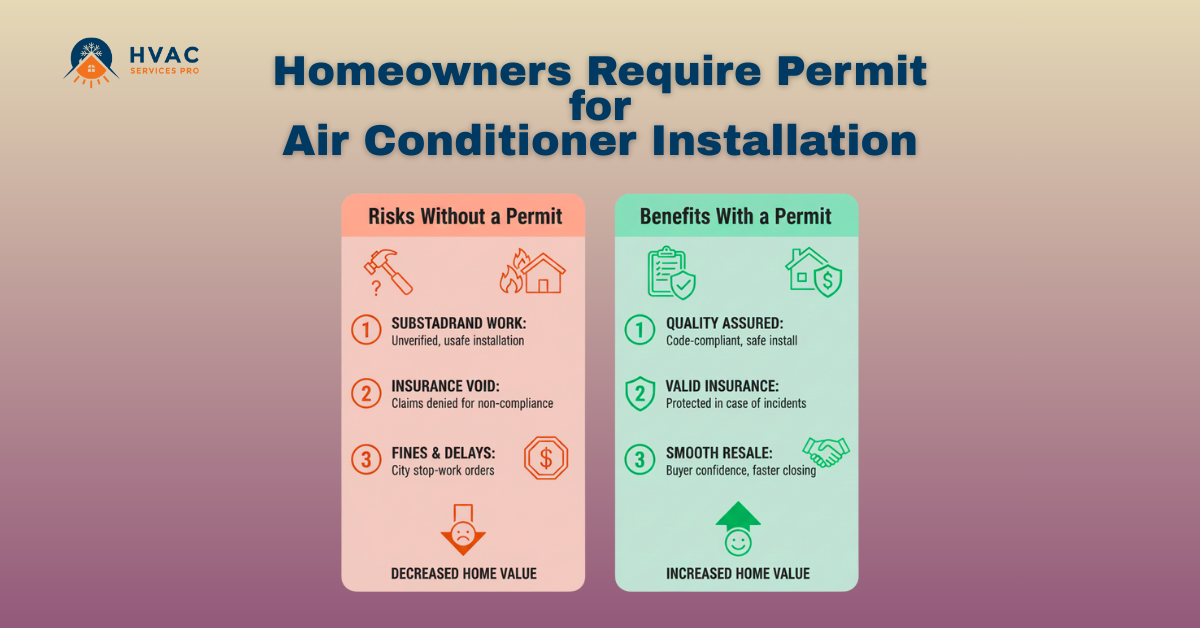
Getting an air conditioner installation permit in DFW protects your wallet and your future. The unpermitted AC installation consequences that DFW homeowners face can be serious.
Protect Your Wallet from Scams
Bad contractors exist. They might promise you a high-efficiency system with a SEER2 rating of 20, but install a cheaper unit instead. An AC unit inspection by a city inspector verifies that you got the exact equipment you paid for. Since your air conditioning system uses so much electricity, the right efficiency saves you money every month.
Keep Your Insurance Valid
Imagine an electrical fire starts at the AC unit. Your home insurance policy will ask for the permit records. A documented history of code-compliant work gives you the best chance of a successful claim.
Avoid the “Red Tag”
Code enforcement officers look for construction trucks. If they see work happening without a permit, they issue a stop work order for unpermitted AC in DFW. This stops the job immediately and leads to fines.
Protect Your Home Value
An AC permit and home resale in DFW go together. When you sell your house, the buyer’s inspector looks for permit stickers. Having them ready speeds up the real estate transaction and builds buyer trust.


City-Specific Rules: Dallas, Fort Worth & Suburbs
Every city has slightly different rules. DFW residential HVAC permit requirements change depending on where you live.
Dallas
- Speed: The process is fast. We usually see a 1-3 business day turnaround.
- Code: We follow the Dallas city code, HVAC section 51A.
- How: Most pros use the online AC permit application Dallas system.
- In-Person: You can visit Dallas Development Services’ mechanical permits at the Oak Cliff Municipal Center.
Fort Worth
- Online: We use the online AC permit application at the Fort Worth portal.
- Homeowner Rule: Fort Worth residential HVAC building codes are strict. To pull your own permit, you must own the home AND live there as your primary residence. Landlords must hire a pro.
McKinney, Flower Mound, Carrollton & Prosper
- McKinney: AC installation in McKinney focuses heavily on correct system sizing and McKinney climate-specific loads.
- Flower Mound: Check the specific permit requirements for Flower Mound AC installation, specifically regarding outdoor unit noise and placement.
- Prosper: Watch out for the timeline. AC permit requirements for Prosper, Texas, often include a review period of up to 10 days. Plan your AC replacement early.
- Carrollton: Check local noise rules before placing your outdoor unit near a neighbor’s fence.
Planning helps avoid delays. A clear understanding of the HVAC install day timeline for DFW projects ensures your home stays cool during the process.


The Permitting Process: Steps We Take
Understanding the AC installation process helps you feel confident. Here is what we, HVAC Services Pro, do for central air conditioning systems and heat pump systems.
Step 1: The Math (Load Calculation)
We perform a Manual J load calculation. This math tells us exactly what size unit your home needs. It is mandatory. Guessing the size leads to uneven cooling and high humidity.
Step 2: The Application
We submit the HVAC load calculation as a permit submittal and equipment details to the city.
Step 3: Installation Day
We install your system. We handle everything from electrical upgrades to ductwork modifications in accordance with your New AC or Heat Pump in DFW.
Step 4: The Inspection
Once running, we schedule the air conditioner installation inspection. The inspector checks for safety and compliance.
Red Flag: “My Installer Won’t Show the Permit”
You should feel safe asking for proof. A reputable AC installation company happily shows you the permit. It protects them, too. Typically, the HVAC contractor pulls a permit for Dallas-Fort Worth.
What You Can Do:
- Check Online: Go to your city’s building department website and search your address.
- Wait to Pay: Hold the final payment until you see the “Green Tag” (the passed inspection sticker) on your unit.
- Verify the License: Only hire licensed HVAC contractors. You can check their status on the Texas Department of Licensing and Regulation (TDLR) website.

Cost Guide: What to Expect
Permit fees are a standard part of your quote. Reviewing a comprehensive HVAC installation cost guide for DFW helps you budget appropriately.
- Dallas: AC permit cost in Dallas depends on the value of the job.
- Fort Worth: AC permit cost in Fort Worth includes a base fee plus trade fees.
- Average: It generally results in a cost between $50 – $300.
If you are unsure about the specific charges, understanding how to read a HVAC line item quote without confusion will clarify the permit fees.
DIY vs. Hiring a Pro
Can you do this yourself? Yes, a homeowner’s AC installation permit in Texas exists. You can apply for an AC permit for owner-builder at DFW if it is your homestead.
However, DIY air conditioner installation permit rules in Texas are tough. You take on all the liability. Also, buying refrigerant requires a federal EPA certification. Most homeowners find it safer and easier to hire a registered mechanical contractor in Dallas. If budget constraints are an issue, understanding how financing works for HVAC projects often makes a professional, permitted install feasible.
The Inspection Checklist
When the inspector visits, they look at these key items to ensure your family is safe:
- Electrical Safety: Is there a proper electrical disconnect for the condenser within sight of the unit?
- Water Safety: Is there condensate drain code compliance? We check for a secondary drain pan requirement with a float switch to prevent ceiling leaks.
- Locking Caps: Are locking refrigerant caps installed? This prevents dangerous tampering.
- Insulation: Are the refrigerant lines and ducts properly insulated for our heat?
- Placement: Does the unit meet the AC condenser placement code, Dallas, rules for distance from the property line?
Final Thoughts
Obtaining a building permit for AC installation in DFW gives you peace of mind. It proves your HVAC systems are safe, efficient, and ready for our Texas weather.
Always insist on a permit. It protects your home value and keeps your insurance valid. Whether you need a same-day HVAC permit DFW for an emergency or are utilizing our scheduling process for next-day installation, HVAC Services Pro ensures every job is code-compliant. Ready to schedule your compliant installation? Contact us today and let us handle the permits for you.
FAQs
Can I sell my house if I installed my AC without a permit?
You can, but it complicates things. Buyers often ask for permit records, and you might have to pay for a retroactive permit and inspection to close the deal.
Does the city inspector check my old ductwork?
Inspectors focus on the new equipment. However, if they see dangerous issues with old ducts, like major leaks or fire hazards, they will ask for repairs.
How long is a mechanical permit valid?
Generally, a permit remains active for 180 days. If you don’t call for an inspection within that time, it expires, and you may have to pay a renewal fee.
My HOA has strict rules. Does the city-permit cover that?
No. The city checks for safety codes. Your HOA (Homeowners Association) checks for appearance and noise. You must satisfy both sets of rules.
Do portable AC or mini split units need electrical permits?
Plug-in portables do not, but mini-splits do. Window AC units are exempt from permits in DFW.