

I remember a call from a family in peak July heat. Their AC died at 3 PM. A tech could not reach them for three hours. The parents looked worried. Their little girl had asthma.
The indoor temperature rose fast. I gave them step-by-step cooling instructions over the phone. They stayed safe until the tech arrived. That moment shaped how I teach emergency cooling now.
Heat rises fast inside homes. A study from the National Weather Service (NWS) shows that indoor temperature can rise 10–20°F in 1 hour when the AC fails during a heatwave. That rise can cause dehydration, heat exhaustion, and even heat stroke.This guide gives you simple, safe, and fast ways to stay cool until help comes. You do not need special tools. You can do every tip on your own, following the AC repair checklist. And if you need emergency service, you can reach a pro team at HVAC Services Pro for fast support.
|
Key Takeaways:
|

Immediate Safety First (Protect People, Pets & Property)
Heat becomes dangerous faster than most people expect. A home without AC can hit dangerous temperatures in less than one hour. The CDC reports that over 700 people die from heat-related illness each year, and many cases happen indoors.
Recognize Unsafe Indoor Temperatures
When your AC stops working, indoor heat can become dangerous within hours. I have measured homes reaching unsafe levels fast during summer outages.
During an AC outage, indoor temperature should stay below 78°F.
That range keeps most healthy adults safe. Once temperatures cross 82°F, the body struggles to cool itself. The CDC confirms heat risk rises quickly without cooling and airflow.
Make sure to keep indoor temperatures cool, because temperatures above 85°F become unsafe for children, seniors, and pets.
At 90°F, heat illness risk increases sharply. I have measured homes hitting 95°F within hours. The EPA warns that indoor heat builds faster during power or AC failures.


Watch for Heat-Related Illness
Heat illness often starts quietly. I always tell homeowners to watch people closely during AC failure.
Look for heavy sweating, weakness, headache, nausea, and dizziness. People may feel tired or confused. According to the CDC, untreated heat exhaustion can quickly progress to heat stroke. Act early and cool the person immediately.
Heat stroke shows up with high body temperature, confusion, slurred speech, and hot skin. Sweating may stop. This becomes a medical emergency. Call emergency services right away.
When You Should Leave the House
You should leave if indoor temperatures stay above 90°F for several hours. Leave immediately if anyone feels confused, dizzy, or weak. NIH studies show heat exposure during outages increases death risk by over 60 percent.
Go to a cooling center when you lack air conditioning or safe cooling options. Cities open centers during dangerous heat levels. These centers save lives every year. I have directed many families there while waiting for emergency HVAC repairs.
Keep Vulnerable Family Members Safe
Keep elderly family members in the lowest, coolest room. Use fans with frozen water bottles for airflow. Offer water often. Light clothing helps. The CDC reports adults over 65 suffer the highest heat-related death rates annually.
Dress babies and kids in light cotton clothes.
Offer fluids frequently. Use cool baths or damp clothes. Never cover infants with heavy blankets. Children heat up faster than adults, even indoors, especially during AC breakdowns.
Move pets to shaded indoor areas. Provide cool water at all times. Use cooling mats or damp towels. Never leave pets alone in hot rooms. The ASPCA reports thousands of heat-related pet emergencies every summer.
Quick Troubleshooting Before Calling the HVAC Technician
Before I grab my tools, I always ask homeowners to check a few simple things. Over the years, these quick checks have solved many no-cooling calls. These steps help you stay safe, prevent damage, and sometimes restore cooling without waiting for a technician.
Thermostat & Electrical Check
Thermostat troubleshooting when the AC is not cooling starts with the thermostat. Set it to Cool mode and lower the temperature at least five degrees below room temperature. Make sure the screen works. I have seen many service calls caused by incorrect settings after power flickers or accidental button presses.
To put an end to this, keep the Fan Only mode on the thermostat.
This mode blows air without cooling it. Homeowners often mistake airflow for cooling. Switch the fan setting to Auto. This allows the system to cool only when the compressor runs properly.


Replace Thermostat Batteries, No Cooling
Dead thermostat batteries stop cooling commands. Replace batteries even if the screen looks dim. I always keep spare batteries in my service bag. Weak batteries cause communication failure between the thermostat and the system, preventing the AC from turning on fully.
Check the electrical panel for a tripped AC breaker. Reset it once only. If it trips again, stop immediately. Repeated tripping signals electrical or motor issues.
According to the U.S. Fire Administration, electrical faults cause thousands of home fires yearly.
Airflow & Filter Inspection
A dirty air filter blocks airflow and traps heat. Replace it immediately if it looks dusty. I find clogged filters in nearly half of no-cooling calls. Clean airflow helps the system breathe and prevents overheating and coil freezing.
If the AC runs but does not cool, check vents and filters first. Make sure furniture does not block airflow. Close windows and doors. These simple steps often stabilize indoor temperature while you wait for professional service.
‘Ok, but suddenly my AC is blowing warm air. What can I do right now?’ I often get these questions from my clients.
Switch the system off to prevent damage. Check thermostat settings and air filter. Warm air often indicates a refrigerant or compressor problem. Running the system worsens the issue. I always advise homeowners to stop the operation immediately.
Outdoor Unit Quick Checks
Look at the outdoor unit. Listen for the sound and check if the fan spins. Clear leaves and debris around it. Maintain at least two feet of clearance. Blocked airflow causes shutdowns and overheating, which I see frequently during summer storms.
A clogged condensate drain causes water pooling, musty smells, or system shutdowns. Algae often blocks the drain line.
EPA data shows excess moisture increases indoor mold risk. Early detection prevents health and property issues.
Many systems include a float switch that shuts off AC during water buildup. This protects your home from flooding. If cooling stops suddenly, the float switch may have activated. Do not bypass it. Call a technician for safe clearing.
Then, turn off the system if you see leaks. Place towels or a bucket under the drip.
Water damage spreads fast. Insurance data shows HVAC leaks cause thousands in repair costs yearly. Quick action limits structural and flooring damage.

Frozen AC Coil Protocol
If you see ice on the indoor unit or refrigerant lines, turn the system off immediately. Frozen coils restrict airflow and damage compressors. I always treat frozen coils as urgent issues that require airflow restoration and professional inspection.
You need to allow the coil to thaw naturally with the system off.
Turn the fan to On to speed airflow if possible. Never chip ice with tools. That damages fins and tubing. Safe thawing prevents expensive coil replacements.
A frozen coil usually takes 2\4 hours to thaw completely. Severe icing may take longer. Place towels to catch water. Once thawed, do not restart cooling until a technician checks airflow and refrigerant levels.
Fan Setups for One-Room Cooling
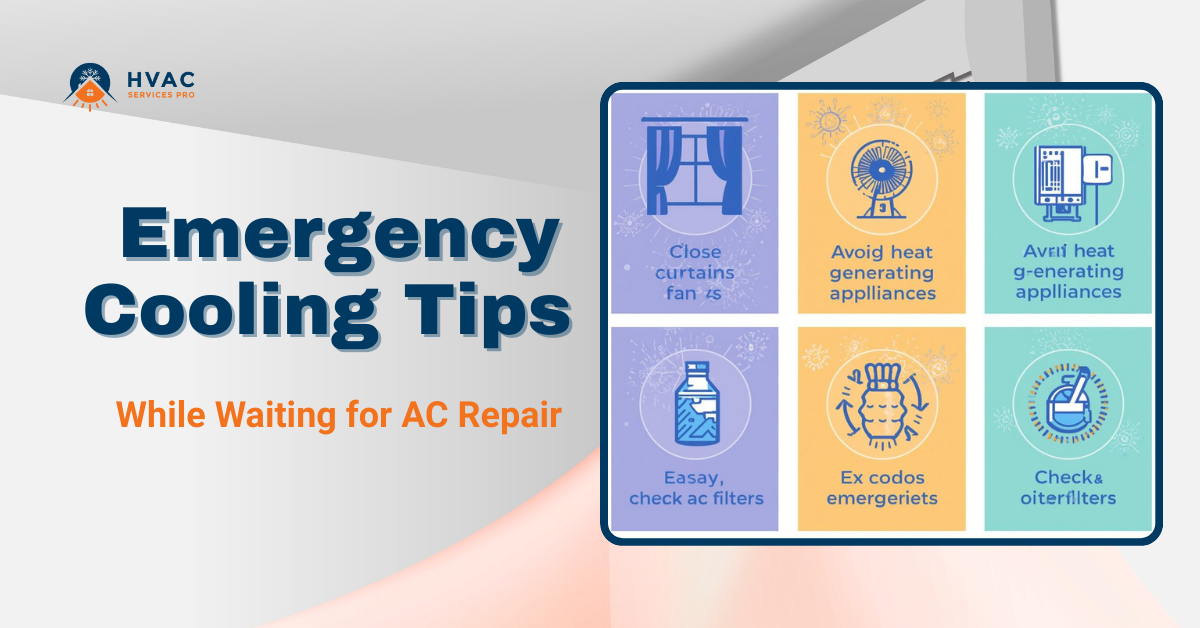
Choose one room for cooling. Close the door tightly. Use fans only in that space. Block sunlight completely. This strategy concentrates cooling where needed. I recommend bedrooms or living rooms. Focused cooling works faster than spreading airflow across the house.
Remove heat sources first. Close blinds.
Place a fan near the window facing out. Add a second fan near you. This removes hot air quickly. Combining airflow and shade cools faster than fans alone.
Cooling With Water & Evaporation
Evaporative cooling uses moisture to reduce body heat. Air passes over water and feels cooler. This works best in dry climates. Fans improve the effect. High humidity reduces results. This method offers short-term relief during AC downtime.
Create a DIY swamp cooler using a fan and ice water.
Place frozen bottles before the fan. Air cools as it passes over ice. This lowers perceived temperature. It helps briefly. It does not replace proper air conditioning.
Reduce Heat Generated Inside the Home
Do not use the oven or stove. Cooking adds intense heat. Use cold meals instead. Microwaves create less heat. Avoid baking completely. Kitchens raise indoor temperature quickly during outages.
Turn off unused electronics. Unplug devices that generate heat. Avoid running dryers and dishwashers. Appliances release warmth even when idle.
Reducing appliance use lowers indoor temperatures and helps fans work more effectively.
Emergency Cooling Tips for Specific Home Types
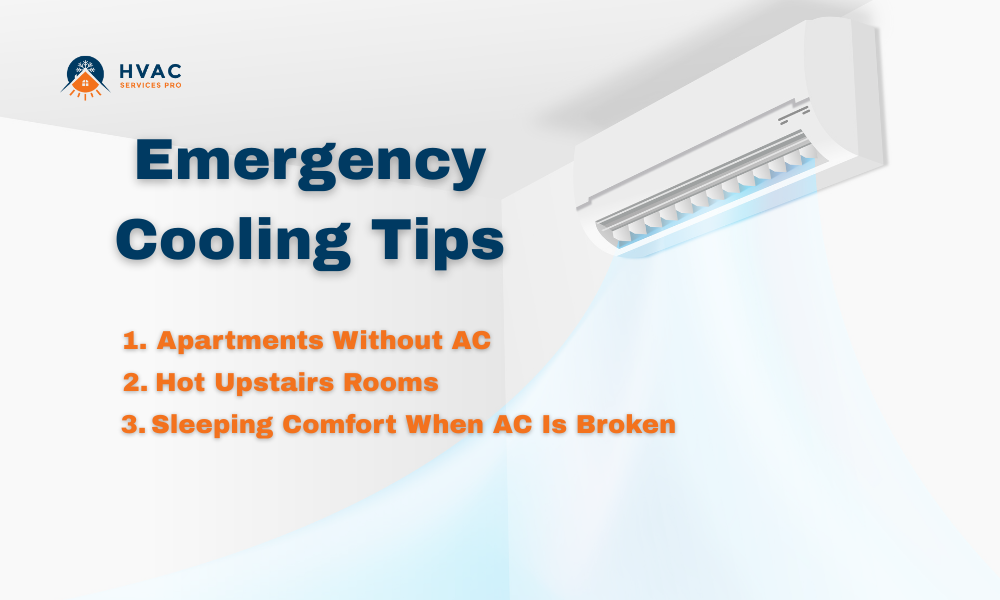
Different homes trap heat in different ways. I have worked in apartments, multi-story homes, and small houses during outages. Each space needs a slightly different approach. These emergency cooling tips focus on common problem areas. They help reduce heat stress and improve comfort fast.
Apartments Without AC
Apartments trap heat easily. Close blinds early. Use box fans in windows to push hot air out. Create cross ventilation when the outdoor air feels cooler. Focus on one room only. According to the CDC, airflow and shade reduce indoor heat risk significantly.
Block sunlight completely. Use fans for airflow, not cooling. Cool your body with water. Lower humidity if possible. Avoid heat-producing activities.
These steps reduce the indoor temperature by several degrees. I have seen homes stay safer using these basics during short outages.
Hot Upstairs Rooms
Heat rises and traps upstairs. Close doors to unused upper rooms. Use fans to push hot air down stairwells. Open upstairs windows only at night. Focus cooling on lower levels. This strategy helps balance temperature during AC failure.
Close off unused bedrooms, bathrooms, and storage rooms.
Seal doors tightly. This reduces the total space needing cooling. I always recommend isolating one living area. Smaller spaces stay cooler faster. This method improves comfort and saves energy during outages.
Sleeping Comfort When AC Is Broken
Sleep in the coolest room. Use cotton sheets only. Place a fan near the bed for airflow. Take a cool shower before sleeping. Hydrate well. According to sleep studies, airflow and lower humidity improve sleep quality during heat.
Close blinds during the day.
Open windows at night if the outdoor air cools. Use a box fan to exhaust hot air. Remove electronics from the room. These steps lower the bedroom temperature and improve sleep during AC breakdowns.
Conclusion:
AC emergencies can be stressful, especially during extreme heat. Acting quickly protects your family, pets, and home. Use temporary cooling tips, monitor indoor temperatures, and follow safety steps while waiting for professional help. Regular maintenance and early warning signs prevent future breakdowns. Trust HVAC Services Pro for fast, reliable, and certified emergency support. Stay safe, stay cool, and take action early.
Frequently Asked Questions
1. Is it a legal emergency if my AC goes out?
According to the Department of Energy, extreme heat is a significant health risk. In many jurisdictions, landlords must treat a total AC failure as an emergency if indoor temperatures exceed safe thresholds (usually 80-85°F).
2. What is the $5,000 rule for AC?
Multiply the repair cost by the unit’s age. If the result exceeds 5,000, an AC replacement is usually more cost-effective.
3. Does putting a bowl of ice behind a fan work?
This creates a DIY swamp cooler effect, providing localized cooling, though it won’t lower the overall room temperature.
4. Why did my AC stop working after the breaker tripped?
A tripped circuit breaker is a safety response to an electrical overload. Reset it once; if it trips again, you have a serious electrical short that requires a pro.
5. How long does a frozen AC coil take to thaw?
It can take 12 to 24 hours. Turn the AC “OFF” but leave the “FAN” setting on “ON” to circulate warm air over the ice and speed up the process.
6. Can I leave my windows open if the AC is out?
Only if the outdoor temperature is cooler than the indoor temperature (usually early morning or late night). Keep them closed and shaded during the day.
7. Can I use a generator to run my AC?
Most portable generators cannot handle the “startup surge” of a central AC. Only use whole-home generators designed for HVAC loads.