

Description
R-32 REFRIGERANT
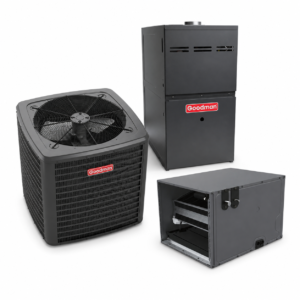
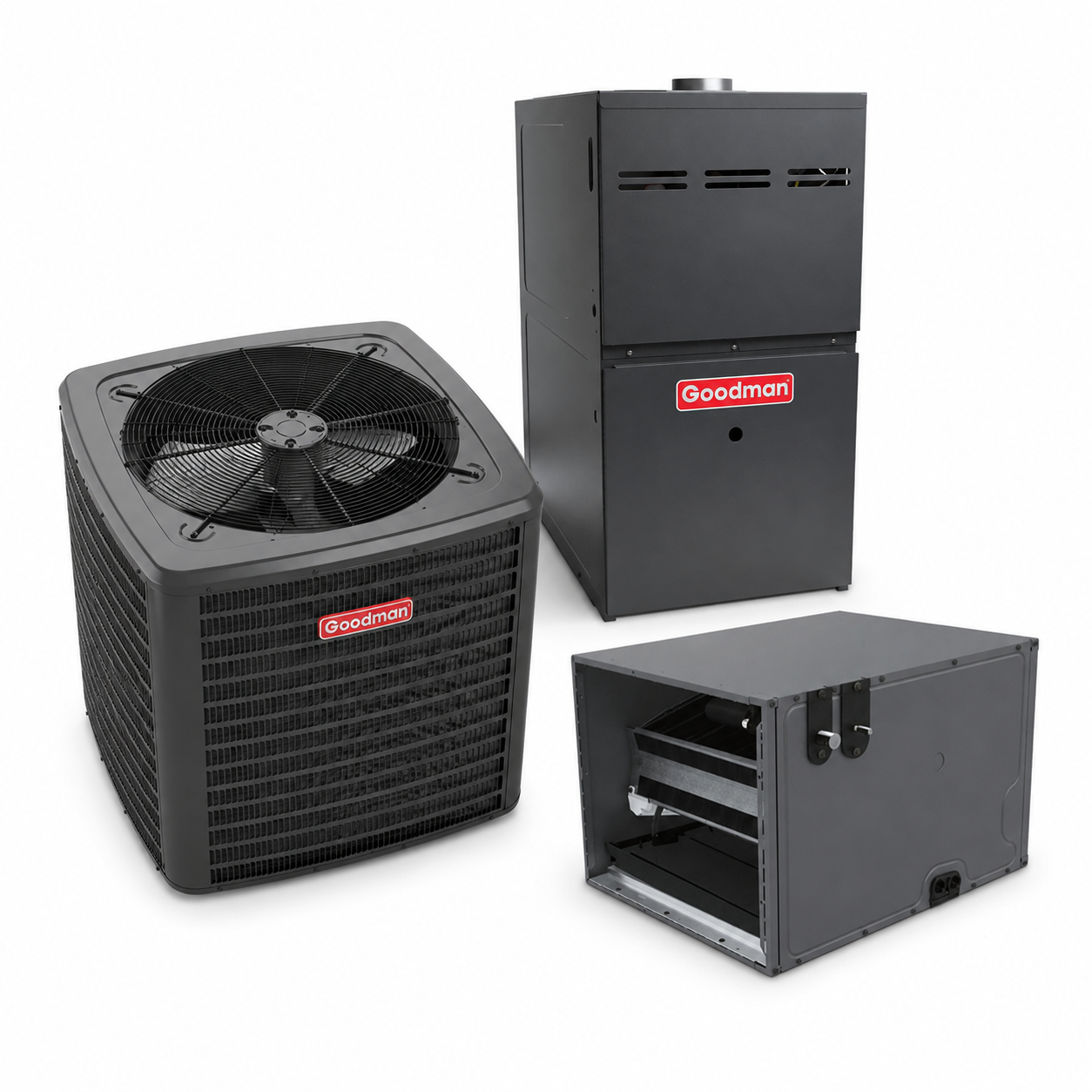
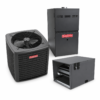
Goodman 4 Ton Horizontal Gas HVAC System
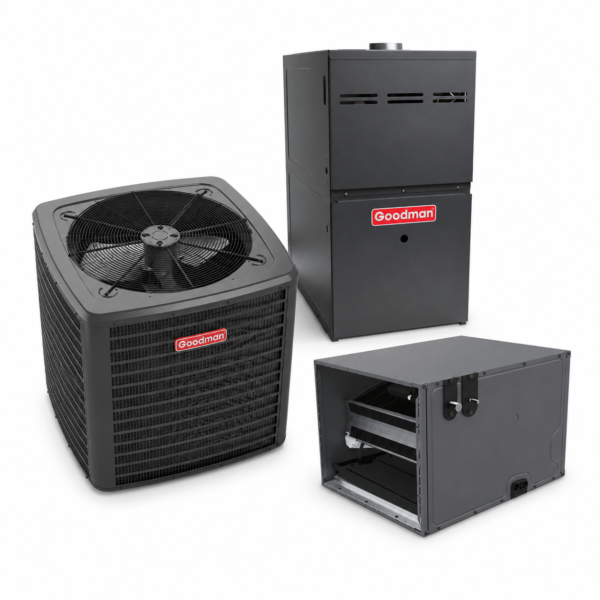
A complete Goodman cooling and heating package configured with a 4-ton condenser, 80,000-BTU 80% AFUE gas furnace, and horizontal evaporator coil.
Final equipment match and installation scope must be confirmed for the home. Site-specific work can change the final written quote.
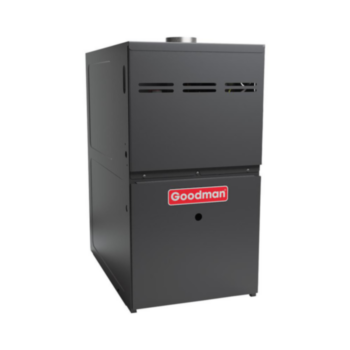
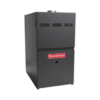
GGR9S800804BN furnace
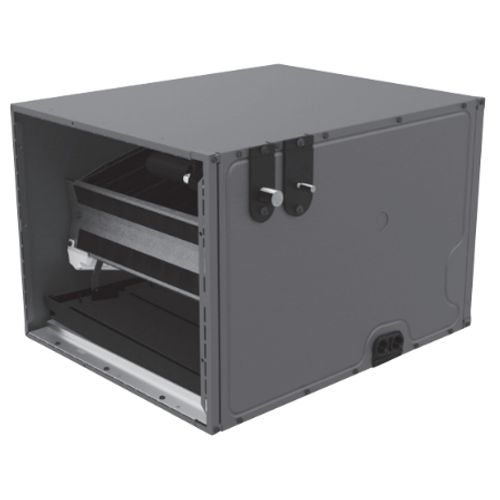
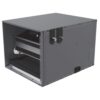
GCHPTA4830C3 coil
Complete System at a Glance
This package combines three Goodman components for homes that need a horizontal or upflow furnace-and-coil arrangement. The outdoor air conditioner provides 4 tons of nominal cooling, while the indoor gas furnace supplies 80,000 BTU of input heating capacity at 80% AFUE. The horizontal cased coil connects the outdoor and indoor equipment into a complete split system.
| Component | Model | Verified description |
|---|---|---|
| Condenser | GLXS4BA4810 | 4-ton nominal, single-stage R-32 air conditioner from the Goodman GLXS4B family |
| Gas furnace | GGR9S800804BN | 80,000-BTU input, 80% AFUE, single-stage gas heat with multi-speed ECM blower; upflow/horizontal |
| Evaporator coil | GCHPTA4830C3 | Horizontal cased coil compatible with the R-32 system configuration |
Why These Three Components Matter
Goodman GLXS4BA4810 R-32 air conditioner
The GLXS4B is Goodman’s current R-32 split-system air-conditioner family. Official Goodman documentation identifies an energy-efficient compressor, a factory-installed filter drier, protective coil guards, service valves, high-pressure protection, and cabinet access designed for service. The 48 model size represents a 4-ton nominal cooling class. Actual delivered capacity varies with indoor equipment, airflow, outdoor temperature, and the certified match.
Goodman GGR9S800804BN gas furnace
This 80,000-BTU-input furnace belongs to Goodman’s GR9S80 family. Goodman describes the family as a single-stage, multi-position furnace with a multi-speed ECM blower and 80% AFUE. It supports upflow and horizontal-left or horizontal-right installation. The equipment layout must still provide required clearances, venting, combustion air, filtration, drainage, and service access.
Goodman GCHPTA4830C3 horizontal coil
The horizontal cased evaporator coil is designed for installations where airflow travels from one side of the cabinet to the other. Correct orientation, metering device, drain-pan arrangement, condensate protection, airflow, and refrigerant piping are critical. A model number alone does not guarantee that an existing attic or mechanical-space layout is ready for the new coil.
How the Installed Price Is Confirmed
The current WooCommerce price shown above applies to the listed Goodman system under a confirmed, compatible installation scope. Before the job is scheduled, HVAC Services Pro must verify the equipment match and inspect the home. The written proposal controls the final scope and price.
Items evaluated before confirming the installation
- Manual J cooling and heating load requirements
- Furnace orientation, cabinet fit, service clearance, and attic or closet access
- Supply and return duct capacity, filter size, and external static pressure
- Existing refrigerant line-set condition, size, routing, and reuse eligibility
- Electrical disconnect, overcurrent protection, wiring, and grounding
- Gas piping, shutoff, sediment trap, vent connector, and combustion-air requirements
- Primary and secondary condensate drainage and overflow protection
- Equipment pad, local permit, inspection, and code-correction requirements
Work that can change the final quote
Major duct replacement, electrical-panel work, gas-line changes, venting corrections, structural or platform reconstruction, difficult access, crane service, asbestos or hazardous-material work, drain rerouting, line-set replacement, zoning modifications, and other site-specific work are not automatically represented by a base installed price. Any required additions should be documented before work begins.
Is a 4-Ton System the Right Size?
Four tons describes nominal cooling capacity; it is not a square-footage rule. Two homes with the same floor area can have very different loads because of insulation, window area, air leakage, ceiling height, orientation, number of stories, shade, occupancy, and duct location. HVAC Services Pro should confirm the design using a room-by-room Manual J calculation and select the equipment using Manual S principles.
| If undersized | If oversized | Correctly selected |
|---|---|---|
| May run continuously and struggle during design conditions | May short-cycle, control humidity poorly, and create uneven temperatures | Balances capacity, runtime, airflow, comfort, and equipment operation |
Horizontal Installation Requirements
Horizontal equipment is common in DFW attics, but “horizontal” does not mean the unit fits every attic. The installer must confirm cabinet dimensions, platform strength, drain-pan protection, walkway and service clearances, filter access, vent slope, flue termination, combustion air, and safe refrigerant and electrical routing. Return-air restrictions must be corrected before commissioning because high static pressure can reduce airflow and system performance.
R-32 Refrigerant: What Homeowners Should Know
This condenser is designed for R-32, an A2L refrigerant used in new-generation residential equipment. The system must use compatible components and be installed with the required A2L procedures, tools, labeling, and safety practices. R-32 cannot simply be substituted into older R-410A equipment. Existing coils, metering devices, and other refrigerant-circuit components must not be assumed compatible.
80% AFUE Gas Heat in DFW
An 80% AFUE furnace is a non-condensing furnace that typically uses a metal venting system rather than the condensate-producing vent arrangement used by high-efficiency condensing furnaces. Whether 80,000 BTU is appropriate depends on the heating load, duct design, and airflow—not the size of the furnace being removed. The furnace input should be verified instead of automatically copied from old equipment.
Single-Stage Cooling and Multi-Speed Airflow
The GLXS4B condenser uses single-stage cooling: the compressor operates at its full available stage when cooling is requested. The furnace uses a multi-speed ECM blower that is set up to deliver the airflow required by the approved equipment match and duct system. This is different from a variable-capacity air conditioner, and it should not be described as variable-speed cooling.
Installation and Commissioning Checklist
- Confirm Manual J load and final AHRI-approved equipment match.
- Verify duct capacity, return-air path, filter arrangement, and target airflow.
- Set and level the outdoor unit and indoor equipment.
- Complete approved refrigerant piping, pressure testing, evacuation, and charging procedures.
- Complete electrical, gas, venting, condensate, thermostat, and safety connections required by the written scope.
- Measure airflow and static pressure and verify heating and cooling operation.
- Document model and serial numbers and explain filter and operating controls to the homeowner.
Frequently Asked Questions
Is the displayed price equipment-only?
No. The current WooCommerce price shown above is the installed price for the listed configuration under a confirmed compatible scope. The site assessment and written proposal determine whether additional work is required.
Is this exact combination certified at 14.3 SEER2?
The product is presented as a 14.3 SEER2 configuration. The exact certified SEER2 and EER2 values must be confirmed from the final AHRI match. We do not publish an AHRI reference until the complete combination is verified.
Does this system use R-32?
Yes. The listed condenser and coil configuration is intended for R-32 equipment. Installation must follow the manufacturer’s A2L refrigerant requirements.
Is the furnace two-stage?
No. The GR9S80 family is a single-stage gas furnace with a multi-speed ECM blower. A two-stage or variable-speed furnace is a different equipment selection.
Can it be installed horizontally in an attic?
The furnace family supports horizontal installation, and the listed coil is a horizontal model. The attic must still be inspected for orientation, clearance, venting, drainage, platform, access, and duct requirements.
How do I know whether I need 4 tons?
A room-by-room Manual J load calculation and duct evaluation should determine the required capacity. Square footage or the old nameplate alone is not enough.
What could increase the installed price?
Examples include duct corrections, line-set replacement, electrical or gas changes, venting work, drainage changes, access limitations, platform reconstruction, permits, and code corrections. Required work should be listed in the written proposal.
Confirm Your Equipment Match and Installation
Starting with the complete installed configuration shown above. Final sizing, AHRI match, and site requirements are confirmed before installation.