

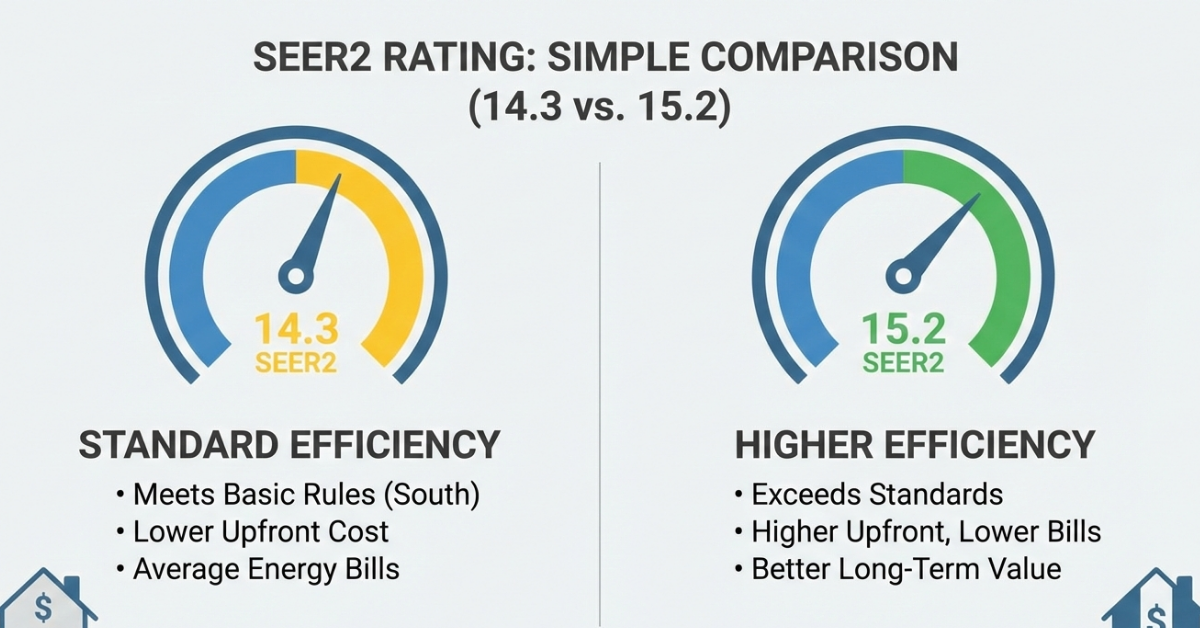
Choosing the right AC efficiency rating in Texas can save hundreds in energy bills and keep your home cool during 100°F+ summers. If you are replacing your unit this year, this baseline is the non-negotiable standard required for the SEER2 South Region.
As a licensed HVAC contractor in Texas with years of experience, I have guided hundreds of homeowners through SEER2 upgrades, ensuring they stay cool while saving money.
I know many homeowners are struggling to update their SEER2 rating. That’s why I have noted down the rating chart you need to use to keep your home cool.
Key Takeaways
|
What is SEER2 Rating?
SEER2 is the current efficiency standard measuring air conditioner performance against the real-world resistance of home ductwork. The Department of Energy (DOE) updated these standards because previous tests failed to account for the pressure required to move air through a house.
Comparing SEER vs SEER2 for homeowners is important because the new M1 Procedure requires units to face higher external static pressure. It provides a more accurate efficiency score. The SEER2 measures AC efficiency under real-world home conditions, accounting for duct resistance and airflow.
I recently showed a homeowner that a 14.3 SEER2 unit is not a downgrade from a 15 SEER system; it is simply a more honest measurement of the same high-efficiency hardware.
- Old SEER: 0.1 inches of water column (Low resistance).
- New SEER2: 0.5 inches of water column (Realistic home resistance).
Because the test is more difficult, SEER2 ratings are roughly 4.5% lower than the original SEER numbers. You receive the same cooling power, but the rating now accounts for the work your fan performs against air filters and vents.


The Minimum SEER2 Requirements for Texas AC Units
As of January 1, 2023, Texas follows updated DOE efficiency standards, requiring residential split-system air conditioners under 45,000 BTU (3.5 tons) to meet at least 14.3 SEER2, while systems 45,000 BTU and above must reach 13.8 SEER2. Residential heat pumps must meet minimum ratings of 14.3 SEER2 and 7.5 HSPF2.
You can figure out the numbers with a single rule-
Texas is part of the South Region, where Department of Energy (DOE) standards are the strictest. Unlike northern states, Texas homeowners must follow regional mandates that prevent the installation of low-efficiency units.
I have seen many people search for deals on older equipment. But if the unit does not meet these current minimums, a licensed professional can not legally install it in your home.
Minimums for Systems Under 45,000 BTU (Small to Mid-Sized Homes)
The minimum requirement for systems under 45,000 BTU is 14.3 SEER2. But 14.3 SEER2 is good enough in Texas for the long, hot summers. This applies to most residential split-system air conditioners with a capacity of 3.5 tons or less.
I often tell my clients that 14.3 SEER2 is essentially the old 15 SEER standard adjusted for modern testing. I once helped a family who found a cheap 13.4 SEER2 unit online.
Then I had to explain that this unit is legal in the North, but it simply isn’t the right SEER2 for 95°F days in North Texas. It is illegal for us to install those lower-rated units here.
Minimums for Systems Over 45,000 BTU (Larger Homes)
The minimum requirement for systems over 45,000 BTU is 13.8 SEER2. If your home requires a larger system, the threshold shifts slightly lower to account for the physics of moving massive volumes of air.
The DOE permits this because a 4-ton or 5-ton system creates naturally higher resistance in the ductwork. I remember a project for a large home where the owner was confused by this number.
But I showed him that 13.8 SEER2 is actually just as efficient as higher-rated, smaller units.
SEER2 Rating Chart for Texas
| System Capacity | Minimum SEER2 Requirement | Efficiency Level |
| Under 45,000 BTU | 14.3 SEER2 | Standard Minimum |
| Over 45,000 BTU | 13.8 SEER2 | Standard Minimum |
| Any Capacity | 15.2 SEER2 or higher | High Efficiency (Tax Credit Eligible) |
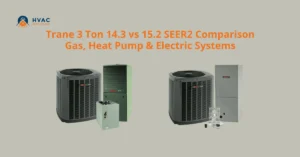
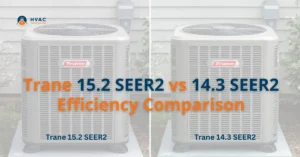
14.3 Vs. 15.2 Seer2 In Texas: Which Should You Choose?
Choosing 15.2 SEER2 is the more direct path to savings because it qualifies for federal tax credits that the 14.3 baseline does not. Under the Inflation Reduction Act, homeowners can claim a 30% federal tax credit on qualifying high-efficiency central AC systems.
The 14.3 is the legal minimum for the South Region; it is a budget-tier standard for modern HVAC systems that offers no additional financial incentives.
I have found that homeowners who choose 15.2 often pay a lower net price because the tax savings immediately offset the equipment upgrade cost.
Efficiency and Value Comparison Between 14.3 vs 15.2 SEER2
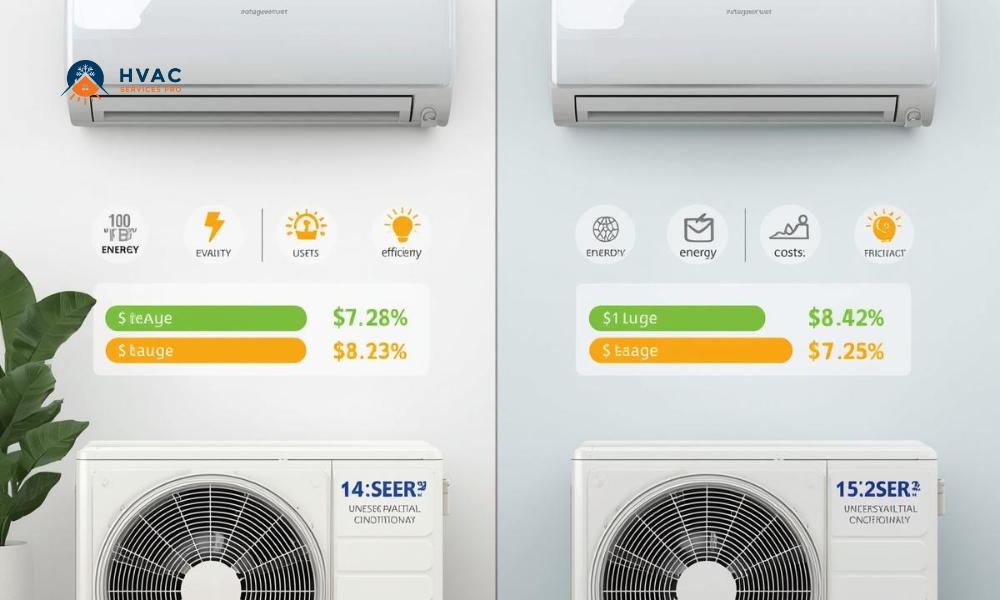
| Feature | 14.3 SEER2 | 15.2 SEER2 |
| Texas Law Status | Minimum Requirement | High-Efficiency Tier |
| Energy Star HVAC | Not always certified | Fully Certified |
| SB 214 Tax Exemption | Ineligible (Standard) | Tax-Free (8.25% Savings) |
| High-Efficiency AC Credit | No Federal Credit | 30% Credit (Up to $600) |
| Annual Energy Savings | 0% (Baseline) | 8% to 10% Lower Bills |
Making the Right Investment for Your Home
Upgrading to high-efficiency AC 15.2 SEER2 is essentially free when you factor in the $600 federal tax credit available through 2026. Because the price gap between these two tiers is usually $300 to $500, the credit offsets the difference while providing superior year-round energy savings.
When you apply the SB 214 tax exemption to an Energy Star HVAC system, the upfront cost often drops below that of a budget-tier unit.
I recently helped a client in San Antonio realize that by following the latest Texas law and choosing a qualifying high-efficiency model, his out-of-pocket cost was lower than the 14.3 baseline unit.
Seer2 Rating Chart For Texas With 14.3 And 15.2 Examples
Choosing between 14.3 and 15.2 SEER2 determines how much you pay the electric company during a triple-digit July. The 14.3 is the legal minimum for the South Region. On the other hand, many homeowners find that 15.2 is the sweet spot for long-term value.
I often see people get stuck on the upfront cost, but in Texas, your AC is an investment that works nearly nine months a year.
I recently helped a homeowner. For once, they realized these rules are a lifesaver. These standards ensure your equipment does not buckle during a 105°F July afternoon. High EER2 performance for hot afternoons is critical in our climate, and understanding M1 testing standards is the first step to choosing a reliable AC.
Energy Savings and Monthly Electric Bills
A 15.2 SEER2 system reduces energy consumption by approximately 6% compared to the baseline 14.3 model. During peak summer demand, that small percentage creates a visible gap in your utility costs.
I recently tracked a 3-ton unit for a client in Houston; the 14.3 SEER2 model cost about $105 per month to run in August. The 15.2 model dropped that to roughly $99. In Dallas, where humidity spikes can drive up run-times, these monthly margins often stretch even further during triple-digit heatwaves.
| Note: Actual savings depend on your home size, insulation, and ductwork quality. |
Payback Period
The SEER2 payback period for an upgrade from 14.3 to 15.2 is typically 6 to 9 years in the South Region. Because Texas winters are short and summers are brutal, the high-efficiency hardware recoups its own cost much faster than it would in the North.
Upgrading to 15.2 SEER2 can immediately reduce summer energy bills while qualifying for federal tax credits, making it a smart investment for most Texas homes
I remember an Austin homeowner who hesitated over a $500 price difference between models. We found that by looking at both the summer savings and AFUE ratings for mild winter comfort. The local utility rebates plus his monthly savings meant the unit actually paid him back by the middle of its sixth summer.
How To Save With The Texas SB 214 Tax Exemption?
As of March 1, 2026, qualifying high-efficiency HVAC systems are officially exempt from the 8.25% Texas sales tax. This legislative change under Texas SB 214 applies to both the equipment price and the installation labor costs.
This creates a significant competitive gap, as the savings are realized immediately at the time of purchase rather than months later through a tax return.
Energy Star Requirements
To bypass the state sales tax, the new unit must be Energy Star HVAC Texas certified. This typically requires a 14.3 SEER2 rating or higher, making high-efficiency hardware more affordable than budget models that still carry the full tax burden.
Primary Residence Rule
The Texas SB 214 holiday applies only to a primary residence and a single-family home; it does not apply to commercial properties or secondary rentals. At HVAC Services Pro, we help you navigate these residency requirements to ensure your installation is fully compliant with state law.
| WarningClaiming this exemption for a non-primary home or a property built within the last 12 months is a third-degree felony if the tax avoided exceeds $750. You are personally liable for the unpaid tax plus mandatory state penalties. |
The Texas Comptroller Mandate
To secure the discount, the Texas Comptroller requires the homeowner to sign an exemption certificate issued by the licensed contractor at the time of the sale.
Financial Example
On a $10,000 project, selecting a qualifying unit saves the homeowner $825 in sales tax. Beyond the tax savings, picking the right HVAC size ensures your system qualifies for these incentives for maintaining peak performance in the Texas heat.
I recently worked with a client who realized that by choosing the 14.3 SEER2 system over a 13.4 model, the tax savings made the better unit cheaper out-of-pocket.
Seer2 Rating Charts By AC Size For 2-Ton To 4-Ton Systems

Matching the right SEER2 to your AC size is the only way to ensure you are not overpaying for cooling capacity you can not actually use. In Texas, the efficiency of a 2-ton unit performs differently than a 4-ton unit because larger systems face higher internal static pressure.
Determining which AC makes sense in typical homes depends largely on your square footage and the quality of your existing insulation.
I have seen many homeowners install a high-SEER 4-ton unit only to realize their ductwork can’t handle the airflow, effectively reducing the unit’s efficiency to baseline levels.


2-Ton and 3-Ton SEER2 Performance
For these common residential sizes, a 15.2 SEER2 rating serves as the ideal “sweet spot.” In a recent comparison of a 3 ton 14.3 SEER2 vs 15.2 setup, the 15.2 model reduced energy consumption by 8%, saving the homeowner roughly $120 annually.
Because these mid-sized units are often optimized for federal tax credits, the 15.2 tier can actually cost less out-of-pocket than the 14.3 baseline offering superior humidity control.
4-Ton and 5-Ton SEER2 Efficiency
While the legal minimum for larger systems drops to 13.8 SEER2, reaching 15.2 is vital for managing the massive cooling loads of larger homes. A SEER2 rating chart by tonnage shows that as system size increases, the real-dollar savings grow exponentially.
For a 5-ton system, the gap between the minimum requirement and a 15.2 unit can represent a $250 difference in yearly operating costs. I always warn clients that on these larger units, every decimal point of efficiency counts significantly more toward your bottom line.
The New 2026 Refrigerant Standards And Repair Costs
As of January 1, 2026, the EPA has prohibited the installation of new R-410A systems to meet stricter environmental mandates. This transition marks the final stage of the R-410A phase-out, replacing older high-pressure gases with more sustainable technology.
You can still repair existing units, the cost of doing so is rising as the industry pivots toward EPA compliance with next-generation cooling.
Understanding the correct central air conditioner size for your home is essential during this transition to ensure these new low-GWP systems function correctly with your existing ductwork.
Modern heat pump technology in 2026 provides 3 to 5 times more heating and cooling energy than the electricity it consumes, making proper sizing and airflow critical.
Low GWP Transition
The industry has moved to Low GWP (Global Warming Potential) refrigerants like R-454B and R-32. These are more efficient at heat transfer but are classified as A2L (mildly flammable), requiring new safety sensors and spark-proof components in every 2026 system.
Surging Repair Costs
As R-410A production is being slashed by 40% this year, the price of topping off an old system has nearly doubled. I recently saw a leak repair where the cost of the phased-out gas alone was $700, making a simple HVAC repair a major financial burden.
The A2L Refrigerant Transition 2026
Servicing new A2L units requires specialized tools and recovery tanks to ensure safety. This A2L refrigerant transition 2026 has resulted in slightly higher labor rates, as technicians must undergo specific certification to handle the new mildly flammable gases.

Avoid the Sunk Cost
Investing $1,000+ into an R-410A system that is over 10 years old is often a “sunk cost” in 2026. Switching to an R-454B or R-32 model not only lowers your monthly bills but also protects you from the skyrocketing price of discontinued refrigerant.
How to Check Your AC’s Rating at Home?
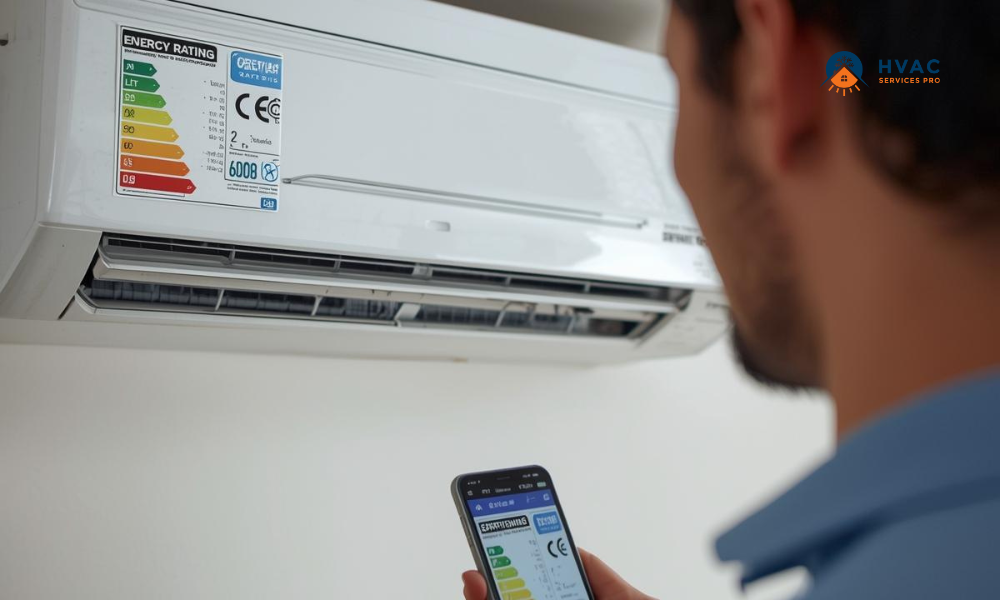
Verifying your system is up to code is a simple process that requires no special tools, just a few minutes to locate the manufacturer’s data. In Texas, knowing your exact SEER2 rating ensures you are not paying for ghost efficiency that your unit is not actually providing.
I have found that many homeowners assume their unit is more efficient than it really is; checking it yourself is the first step toward optimizing your energy costs.
I often tell people that the label is a great start, a professional manual J load calculation checklist is the only way to truly verify if that rating matches your home’s unique layout.
- Step 1: Visual Inspection
Locate the bright yellow EnergyGuide sticker on the side of your outdoor condenser or the indoor air handler; the SEER2 rating is prominently displayed in the center. If you find the sticker is missing or illegible, it might be time for a professional to take a look.
- Step 2: Model Number Identification
If the sticker is missing, find the metal data plate on the outdoor unit and record the model number, where you can often verify the SEER2 rating by looking for digits like 14 or 15 embedded in the code.
- Step 3: Database Verification
Visit the AHRI Directory and enter your model and serial numbers to pull the “matched system” data, which confirms the official efficiency of your specific indoor and outdoor combination.
- Step 4: Certification Capture
Download the PDF certificate to secure your AHRI Certified Reference Number, which is the legal proof required for the Texas SB 214 tax exemption and federal 25C credits.
| Expert Tip: Spot the SEER2 ShiftCheck for the letter H or S in the second half of your model number. These often indicate the newer SEER2-compliant series designed for the 2026 Texas standards. |
Final Thoughts
Choosing the right cooling setup in Texas is no longer just about size; it’s about matching the right efficiency to your home’s unique footprint. Whether you are comparing a 3-ton 14.3 SEER2 vs. 15.2 system, the goal is to balance peak performance with long-term savings for avoiding the rising repair costs of older refrigerants.
HVAC Services Pro can help you understand these rating charts to ensure your home stays cool, compliant, and cost-effective. Contact us today for a professional system efficiency consultation.
Frequently Asked Questions
Can A Contractor Legally Install A System Below 14.3 SEER2 In Texas?
No, Texas law prohibits installing split systems under 45,000 BTU that fall below 14.3 SEER2. Contractors face heavy fines for installing non-compliant equipment that bypasses these regional efficiency mandates.
Do SEER2 Requirements Apply To Replacement Units Or Only New Construction?
SEER2 standards apply to all new installations, including system replacements in existing homes. Any outdoor unit installed today must meet current federal minimums regardless of the home’s age.
What Happens If My Outdoor Unit Meets SEER2 But My Indoor Coil Does Not Meet The Rating?
A mismatched system would not reach its rated efficiency and will likely void your manufacturer’s warranty. This imbalance causes higher energy bills and forces the compressor to work harder, leading to early failure.
Does SEER2 Affect AC Reliability Or System Lifespan In Extreme Texas Heat?
Higher SEER2 units typically use variable-speed parts that handle 100°F+ days with much less mechanical stress. By running more consistent, lower-intensity cycles, these systems stay more reliable and last longer in extreme climates.
Will Texas SEER2 Requirements Change Again After 2026?
While no SEER2 increase is scheduled immediately after 2026, the industry is shifting focus to mandatory A2L refrigerant compliance. Future updates will likely prioritize environmental safety and low-GWP (Global Warming Potential) standards over base efficiency.