

When your home starts feeling warm and heavy, you want one thing: reliable cooling. Many homeowners choose Trane because of its long-standing reputation for durability and consistent performance.
But before moving forward, the first question is simple: how much will it cost? In 2026, pricing can vary widely. Some DFW homeowners pay $6,000–$9,000 for a standard installation, while premium systems can reach $15,000–$24,000+, depending on system size, features, and installation requirements.The wide range creates confusion. Most installation quotes follow predictable cost factors. Understanding these price ranges makes planning your budget much easier.
Key Takeaways
|
Average Trane AC Installation Cost in 2026
Most homeowners in 2026 pay between $6,000 and $24,000 for a fully installed Trane AC system.
That’s a wide range, but it isn’t random. The final cost depends mainly on your home’s size, the type of system you choose, and how complex the installation is. Once you understand those three things, the pricing makes sense.
What Do Most Homeowners Pay Based on Home Size?
Here is an overview of Trane AC unit costs, including typical equipment prices and installation expenses for central air systems in the DFW area and surrounding regions.
| System Size | Typical Home Size | Common Series | Estimated Installation Cost |
| 2 Ton | 900–1,200 sq ft | XR (Single-Stage) | $6,000 – $9,000 |
| 3 Ton | 1,200–1,800 sq ft | XR or XL | $8,000 – $12,500 |
| 4 Ton | 1,800–2,500 sq ft | XL (Two-Stage) | $11,000 – $17,000 |
| 5 Ton | 2,500–3,200+ sq ft | XV (Variable-Speed) | $15,000 – $24,000+ |
Smaller, straightforward homes usually fall toward the lower end of the scale. Larger homes, high ceilings, multi-story layouts, or homes that need tighter temperature control naturally move toward the higher end.
As cooling capacity increases, equipment gets larger, installation takes longer, and labor becomes more involved. It’s not about brand markup. It’s about matching the right amount of cooling power to your home.
What About the Equipment Cost?
Some homeowners like to review equipment pricing before factoring in installation. For Trane systems in 2026, equipment-only ranges typically look like this:
- XR Series: $3,200 – $6,500
- XL Series: $5,500 – $10,500
- XV Series: $8,500 – $13,500
These figures generally reflect the outdoor condenser and matching indoor components only. They do not include the professional installation work required to make the system operate correctly.
That distinction is important. A quality system can still underperform if it isn’t installed properly, which is why total installed cost matters more than equipment price alone.


For reference, you can review the different Trane air conditioner condenser models to better understand how equipment options align with the pricing ranges discussed above.
You can find Trane’s best packaged AC systems based on the efficiency level, features, and overall performance that match your comfort needs and budget.
What Is the Difference Between Trane XR, XL, and XV Series?
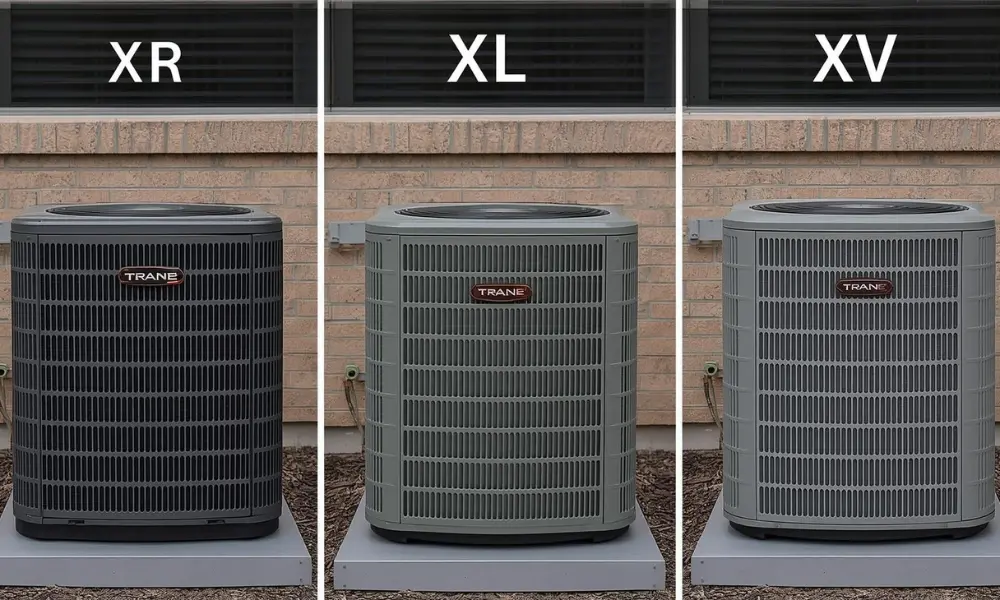
A Trane Series Comparison of Air Conditioners comes down to performance level, technology, comfort control, and overall price range. Here’s a clear breakdown of the XR, XL, and XV series to help you understand the differences and choose the right fit for your home.
XR Series
Choose XR if you want dependable, straightforward cooling. It uses a single-stage operation, meaning it runs at full power when cooling is needed. It’s simple, reliable, and works well for homeowners who want consistent performance without added complexity.
XL Series
Choose XL if you prefer quieter, more even comfort. It uses a two-stage operation, meaning it can run at a lower level during mild weather and increase output during hotter periods. This creates steadier indoor temperatures and reduces noticeable temperature swings.
XV Series
Choose XV if you want top-level precision and smoother performance. It uses variable-speed technology that continuously adjusts output throughout the day. This allows tighter temperature control, improved humidity management, and very consistent airflow from room to room.
Keep in mind that the series you choose determines your comfort level and precision of control. The ‘tonnage’ is what determines the size you need to cool your home. The right choice depends on how much comfort, refinement, and operating smoothness matter to you.
How Does SEER2 Rating Impact Trane AC Cost?
SEER2 measures how efficiently an AC system uses electricity over an entire cooling season. A higher SEER2 rating means the system delivers the same cooling while using less energy.
A good SEER2 rating helps balance upfront cost with long-term energy savings. In simple terms, the SEER2 rating changes the price of a Trane AC system. Higher-efficiency models typically cost more upfront because they use more advanced components and technology.
Here’s what that means in real life.
In the same-sized home, two properly sized AC systems can cool your house equally well. The difference is in how much electricity they consume while doing it. A higher SEER2 unit may cost more upfront, but it can lower your summer electric bills month after month.
Cooling performance does not change. Your home still reaches the same temperature. The difference shows up on your utility statement over time.
If you plan to stay in your home long term or live in a region with long, hot summers, higher efficiency can create noticeable long-term savings. If upfront budget matters more, a moderate SEER2 option still provides solid comfort.
SEER2 is about operating cost over time, not system size or comfort tier.


5 Factors That Affect Your Trane AC Installation Cost
Your final Trane AC installation cost is mostly influenced by ductwork, electrical readiness, labor complexity, optional upgrades, and permits. Focusing on these factors and addressing them early ensures smoother installation, consistent cooling, and predictable expenses.
1. Ductwork Condition
Your ducts are the pathway for cooled air. Leaks, undersized ducts, or poor insulation make your AC work harder and can raise both installation and energy costs. Small repairs may suffice, but some homes need partial or full duct replacement to ensure even airflow and comfort.
2. Electrical Readiness
Modern Trane AC units often require updated breakers, dedicated circuits, or upgraded wiring. Older homes may need electrical work to safely handle a new system.
3. Installation Complexity & Labor
The easier the access, the lower the labor cost. Tight attics, long refrigerant lines, or outdoor unit relocation can increase installation time and expense. Seasonal demand also matters; installing in peak summer may cost more.
4. Optional Upgrades & Accessories
Extra features can improve comfort but add to your upfront cost:
- Trane CleanEffects™ Air Cleaner ($500–$2,500)
- UV Germicidal Lights ($400–$800)
- ComfortLink™ II Zoning System ($2,000–$5,000)
5. Permits, Local Regulations, & Miscellaneous Costs
Municipal permits, inspections, or code requirements can add $100–$1,500, depending on the work. Relocating your outdoor unit or adding a new pad may also increase costs. Confirm permit needs and local regulations with your contractor early to avoid surprises.
Why Choose Trane Over Other Brands?
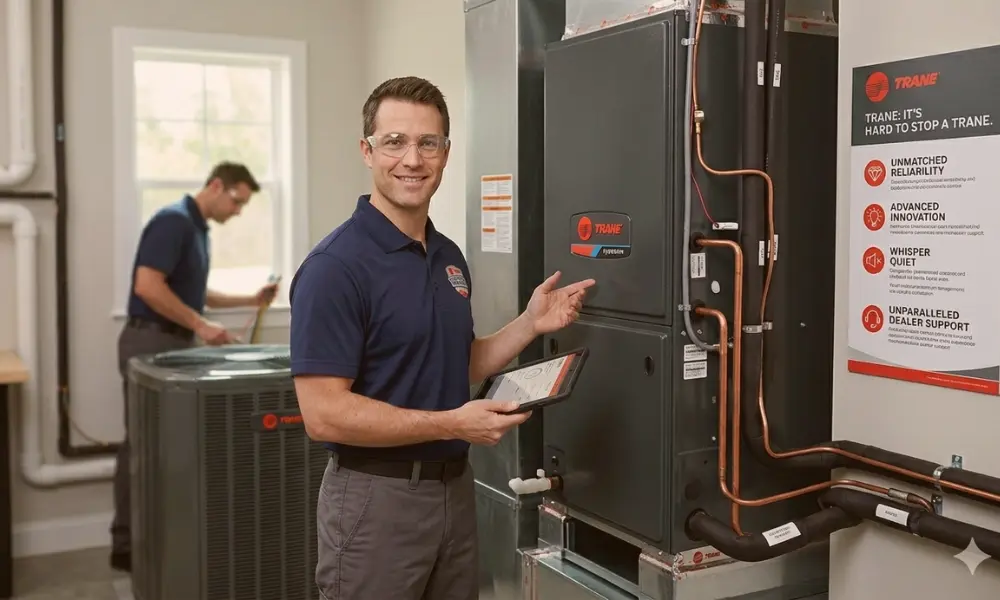
When shopping for a new AC, it’s not just about the unit itself; it’s also about the brand and what fits your priorities. Across Texas, three major brands stand out: Trane, Carrier, and Lennox. Each has unique strengths depending on whether you value durability, smart-home features, or maximum efficiency.
Many homeowners in this area rely on a detailed Lennox vs. Carrier vs. Trane Review to compare pricing, performance, and long-term value before choosing the right AC system for their home.
Here’s a quick snapshot to help you decide:
| Brand | Best For | Key Strengths | Notes |
| Trane | Long-term reliability | Rugged build, corrosion-resistant coils, widely available parts | Slightly higher upfront cost, fewer repairs over time |
| Carrier | Balanced comfort & tech | Quiet operation, smart-home integration, mid-tier efficiency | Ideal for homeowners who want modern features without premium pricing |
| Lennox | Energy efficiency & quiet operation | High SEER efficiency, whisper-quiet performance, advanced tech | Premium upfront cost; parts and repairs may take longer to source |
If you’re planning to stay in your home for years and want dependable performance with minimal hassle, Trane is known for long-term durability.
If you prefer modern features and smart-home integration with balanced comfort, Carrier offers a strong mix of technology and value. And if top-tier energy efficiency and whisper-quiet operation matter most, and you’re comfortable investing more upfront, Lennox is built for premium performance.
By focusing on brand strengths rather than price alone, you can make a nationally relevant, confident choice that fits your comfort, lifestyle, and long-term savings goals.

How to Save on Trane AC Costs
Even premium Trane systems can fit your budget with a little planning. Homeowners in DFW can save smartly through federal tax credits for high-efficiency units, local utility or manufacturer rebates, seasonal promotions and bundled installation packages, and flexible financing options that spread out the investment.
At HVAC Services Pro, we make this process simple. Every AC installation is handled by authorized professionals, includes a free 5-year labor warranty, and comes with full support at no extra cost. We ensure your system is properly sized, efficiently installed, and ready to deliver reliable cooling from day one, all while helping you take advantage of available savings.
Warranty, Lifespan & Long-Term Value
When investing in a Trane AC, understanding the warranty and expected lifespan helps you see the full picture beyond upfront costs. Most Trane systems come with strong standard warranties on parts and compressors, often covering 10 years or more. Some contractors offer extended warranties or maintenance plans to further protect your investment.
A well-maintained Trane AC can last 15–20 years, giving you consistent performance and peace of mind. Regular maintenance, like annual inspections, coil cleaning, and filter replacement, not only keeps the system running efficiently but also helps prevent unexpected repair costs.
Maintenance also improves your ROI. A higher upfront cost for a premium system like the XL or XV series can pay off over time through:
- Lower energy bills from high-efficiency operation
- Fewer emergency repairs
- Extended system lifespan
Investing in maintenance and understanding your warranty ensures your Trane AC delivers maximum comfort and reliability for years to come.
Conclusion
Choosing a Trane AC in 2026 is about making an informed decision that fits your home and long-term plans. Once you understand pricing drivers and system options, the path becomes clearer.
If you’re in DFW and want straightforward guidance, at HVAC Services Pro, we are available to provide a clear evaluation so you can move forward with confidence.
FAQ
How is the correct AC size calculated for my home?
The correct AC size is calculated using a Manual J load calculation, which evaluates insulation, windows, ceiling height, climate, and air leakage — not just square footage. Proper sizing prevents humidity issues, high energy bills, and premature system wear.
How much of the total AC cost is labor?
Labor typically makes up 40% to 60% of your total AC installation cost. It covers system removal, electrical work, refrigerant setup, testing, and calibration — all critical for long-term performance.
What refrigerant do new Trane AC units use in 2026?
Most current systems use R-410A, but the industry is transitioning to lower-impact refrigerants like R-454B. This shift may gradually affect pricing and equipment availability in the coming years.
Should I replace my furnace or air handler at the same time?
Replacing both indoor and outdoor components together often improves efficiency, airflow balance, and system lifespan. While replacing only the AC lowers upfront cost, a full system upgrade usually delivers better long-term value.
How long does a Trane AC installation take?
Most standard AC replacements take one full day. More complex jobs involving duct or electrical changes may require two days to ensure proper testing and calibration.
What are the federal minimum SEER2 requirements?
Minimum SEER2 standards vary by region, with southern states requiring higher efficiency than northern states. These regulations are set by the U.S. Department of Energy and must be met for legal installation.