





Houston Evaporator Coil Replacement Cost at a Glance
If your AC is blowing warm air, freezing up, or leaking refrigerant, the evaporator coil may be failing. Here’s what Houston homeowners typically pay in 2026.
Key Takeaways
- Most Houston evaporator coil replacement costs in 2026 run about $1,500–$3,500, while older R-22 systems, specialty coils, or difficult attic installs can reach $3,000–$5,000+.
- HVAC Services Pro repairs and replaces ac evaporator coils and condenser coils for homes and businesses across Houston, Katy, Sugar Land, Pasadena, The Woodlands, Spring, Pearland, and nearby suburbs.
- Consider full AC unit replacement when the air conditioner is 12–15+ years old, uses R-22, or the hvac coil repair cost is more than 40–50% of a new system.
- Dirty or damaged AC coils cause warm air, ice on lines, high humidity, poor cooling, and higher CenterPoint or Entergy energy bills. Annual coil cleaning plus regular air filter changes prevent many failures.
- Coil work involving ac refrigerant must be handled by an EPA-certified hvac technician. Request a Free Quote or Book Today with HVAC Services Pro Houston.
How AC Coils Work in Your Houston Home or Business
In a split-system central air conditioner, there are two main types of coils: the evaporator coil, which absorbs heat from indoor air, and the condenser coil, which releases that heat outside. Most evaporator and condenser coils are made of copper tubing and aluminum fins, which facilitate efficient heat transfer in the air conditioning process.
The ac evaporator coil is the indoor evaporator coil, often called an A-coil, N-coil, z coils, slab coil, cased coil, or uncased coil. It sits near the air handler or indoor unit, absorbs heat and moisture from return indoor air, and helps send cold air or cool air through your ducts. The outdoor condenser coil works with the compressor and fan in the outdoor unit to reject captured heat into the Texas outdoor air. Together, both ac coils transfer heat through a controlled heat transfer process.
Modern HVAC systems often run on R-410A refrigerant, while older systems may use R-22, which can necessitate complete replacement if leaks occur. Newer equipment is also moving toward R-454B. In Houston’s 95°F+ summers, correct refrigerant charge and proper airflow are what keep your air conditioning system producing refreshing air and efficient operation.
- Residential split systems: common in single-family homes, townhomes, and condos from Cypress to Pearland.
- Commercial systems: Houston strip centers, restaurants, and offices often use rooftop units or larger air handler setups with custom coil type requirements.
Common HVAC Coil Problems in Houston’s Climate
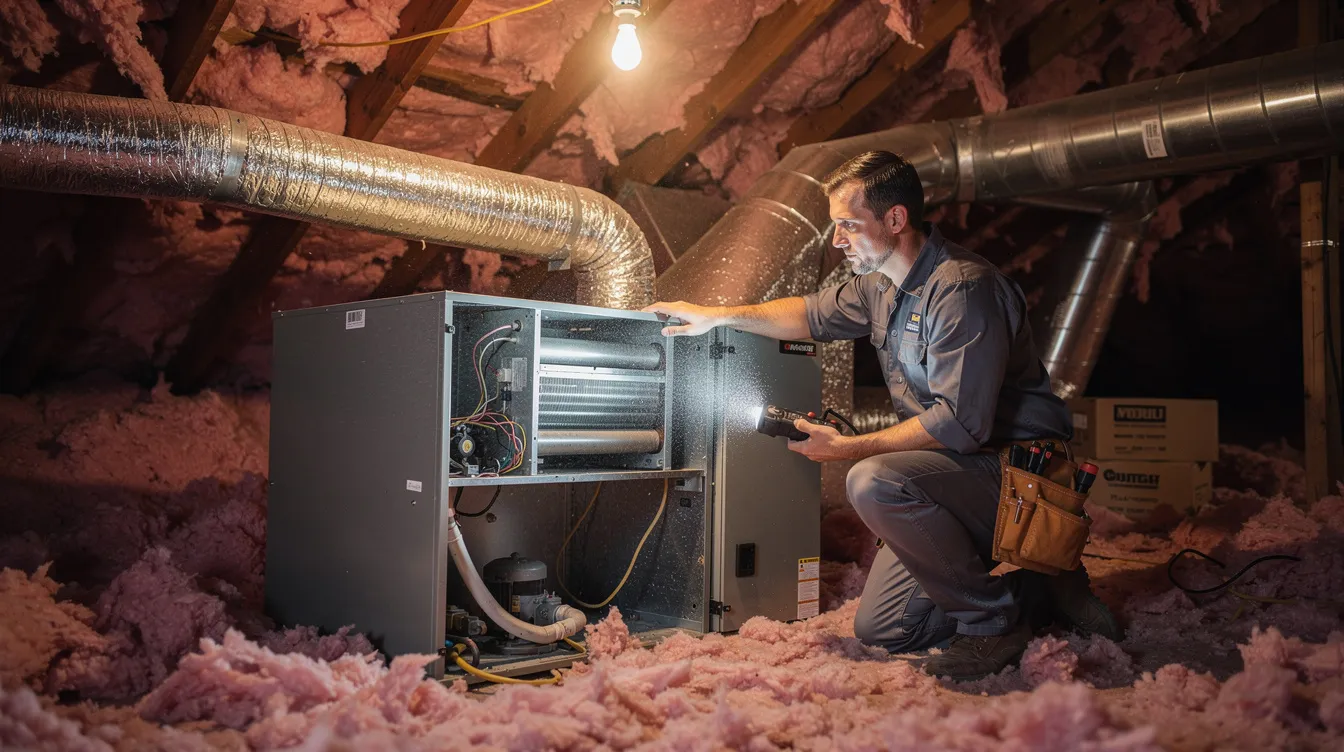
Houston’s long cooling season, high humidity, and hot attic installations in Cypress, League City, Missouri City, Katy, and Friendswood are hard on every hvac system. A dirty evaporator coil, dirty coils, or clogged filter can restrict air, trap moisture, and force internal components to work harder.
Common signs that an HVAC coil needs repair include warm air blowing from vents, reduced airflow, frequent system cycling, and ice formation on the unit. One of the first signs of a failing evaporator coil is reduced cooling or warm air coming from the vents, which forces the system to run longer and increases energy bills. Weak or warm airflow from the HVAC system can suggest cooling system issues.
Watch for:
- warm air from supply vents
- reduced airflow or poor cooling
- hot and cold spots
- short cycling
- ice on refrigerant lines
- water near the air handler
- unusually high CenterPoint or Entergy bills
- strange noises from the air conditioning unit
Dirty ac evaporator coils and condenser coils are the most frequent root cause, often from neglected filters, dusty attics, pollen, grass clippings, and debris. Corrosion and evaporator coil leaks are also common in older R-22 homes around inner-loop Houston, Pasadena, and older suburbs. Formicary corrosion, which leads to microscopic tunnel leaks, can be a reason for replacing rather than repairing an HVAC coil.
Ignoring early evaporator coil issues can burn out a compressor, turning a $1,800 ac coil replacement into an $8,000+ full HVAC replacement or complete system failure.
How to Tell if Your Evaporator Coil or Condenser Coil Is Failing
HVAC coil issues require careful technical diagnostics to avoid systemic inefficiencies or immediate breakdowns. Use this checklist before calling HVAC Services Pro.
Signs of a bad ac evaporator coil:
- low cooling even with a clean air filter
- hissing or bubbling at the indoor unit
- oily residue on or below the ac coil
- ice building on the A-coil or suction line
- leaking refrigerant or reduced ac refrigerant charge
- higher indoor humidity
A common indicator of a failing evaporator coil is the presence of ice or frost on the coil or refrigerant lines, which restricts airflow and leads to poor cooling performance. Hissing or bubbling noises from the air conditioning unit can indicate a refrigerant leak in the evaporator coil, which severely impairs the system’s cooling efficiency. Visible oily residue around the evaporator coil is a telltale sign of a refrigerant leak, which requires immediate attention to prevent further damage to the system.
Signs of condenser coil trouble:
- loud outdoor unit
- very hot discharge air
- cottonwood fluff, dirt, or leaves on fins
- outdoor fan runs constantly while indoor air stays warm
Water leaks around the HVAC system can result from a frozen and thawing coil or a cracked drain pan. In Houston attics and closets, water around the interior air handler can also point to a clogged condensate drain pan or drain line. If you suspect a refrigerant leak, shut the system off and call a licensed hvac technician. Refrigerant handling is regulated under EPA Section 608 rules.
HVAC Coil Repair vs. Coil Replacement in Houston
Coil repair is possible for small, accessible leaks, but many Houston homeowners may need to replace an evaporator coil when corrosion, age, or multiple pinhole leaks make repair impractical. Repairs of HVAC coils may include cleaning dirt and debris, unclogging drain lines, straightening bent fins, and brazing small pinhole leaks.
A common rule of thumb is that if the repair costs less than 30% of a full replacement and the unit is under 10 years old, a fix is usually reasonable. If your HVAC system is less than 10 years old and the repair cost is less than 30% of a full replacement, repairing it could be the most cost-effective option. As systems approach the 10–15-year mark, replacement often becomes the more strategic choice due to potential reliability issues.
Also use the $5,000 Rule: multiply the age of the system by the estimated repair cost; if the cost index exceeds $5,000, replacement is financially smarter. Lean toward full system replacement if the entire ac unit is 12–15+ years old, the coil repair is 40–50% of a new unit, or there are compressor problems too. For systems using R-22 refrigerant, replacing the entire AC unit is often more cost-effective than a costly, temporary repair of the evaporator coil.
HVAC Services Pro gives honest repair vs. replace guidance for residential and light commercial systems throughout Greater Houston, including Katy, Sugar Land, and Pearland.
Average HVAC Coil Repair and Evaporator Coil Replacement Costs in Houston (2026)
These are typical Houston ranges, not guaranteed quotes. Nationally, evaporator coil costs range from $627 to $2,700, with most homeowners spending an average of $1,350, which includes both labor and refrigerant. Houston often runs higher due to attic labor, heat demand, and peak-season scheduling.
- ac evaporator coil replacement in Houston: about $1,500–$3,500 for most 2–5 ton R-410A systems; premium brands or hard attic access can reach $3,800+.
- R-22 or specialty evaporator coils: $3,000–$5,000+ due to refrigerant and parts availability.
- condenser coil replacement: about $1,400–$3,000 depending on brand, tonnage, and whether the entire outdoor coil assembly must be replaced.
- warranty jobs: often $900–$1,500 when the new coil part is covered by a 10-year parts warranty and you pay labor, materials, and refrigerant.
- emergency July–August service: same-day no-cool work can add a premium compared with spring or fall.
Evaporator coil replacement costs vary by type, with A-coils being the most common and typically costing less than N- or Z-coils, which are 15% to 25% more expensive due to their design efficiency. Labor costs for evaporator coil replacement typically range from $75 to $150 per hour, and difficult attic access or a more complex installation can push total pricing higher. Coil size, measured in tonnage, is a major driver of replacement pricing; smaller 2-3 ton units typically range from $550 to $2,350, while 4-5 ton units can cost between $800 and $2,700.
Cost Factors That Affect Coil Repair & Replacement in Greater Houston
Houston coil replacement costs vary by tonnage, brand, refrigerant, access, and local labor time. HVAC Services Pro provides transparent line-item quotes.
- AC size: 2–3 ton systems in smaller homes usually cost less than larger ac units. A 4–5 ton system in The Woodlands or Kingwood needs larger coils and more refrigerant.
- Brand and coil style: Trane, Carrier, Lennox, and American Standard often cost more than Goodman or RunTrun. Trane vs other brands often comes down to OEM part cost, availability, and warranty. Evaporator coils can come in different designs, including A-coils, N- or Z-coils, and slab units, each with varying efficiency and cost characteristics.
- Refrigerant: R-410A is standard in many newer Houston systems; R-22 is costly and often points to system replacement; R-454B compatibility matters for future equipment.
- Access: attic air handlers in two-story homes in Katy, Cypress, and Friendswood take more time than first-floor closets.
- Code items: refrigerant recovery, disposal, and permits may be required for licensed hvac work in the Houston area.
If your old coil repair overlaps with a new AC decision, HVAC Services Pro can also discuss new HVAC system and installation, 2–5 ton central air conditioner installation, heat pump vs AC systems, gas furnace compatibility, SEER2 energy efficiency ratings, indoor air quality upgrades, financing options available, rebates and tax credits, and what’s included in a full HVAC installation: condenser, coil, furnace or air handler, thermostat, startup, and warranty. In Dallas, a 4 ton central air conditioner installation and installed AC unit price can vary by brand and SEER2 level; Houston pricing is quoted locally after load and access checks. Many qualifying installs include warranty options such as 5-year labor plus 10-year parts.
AC Coil Cleaning & Preventive Maintenance in Houston
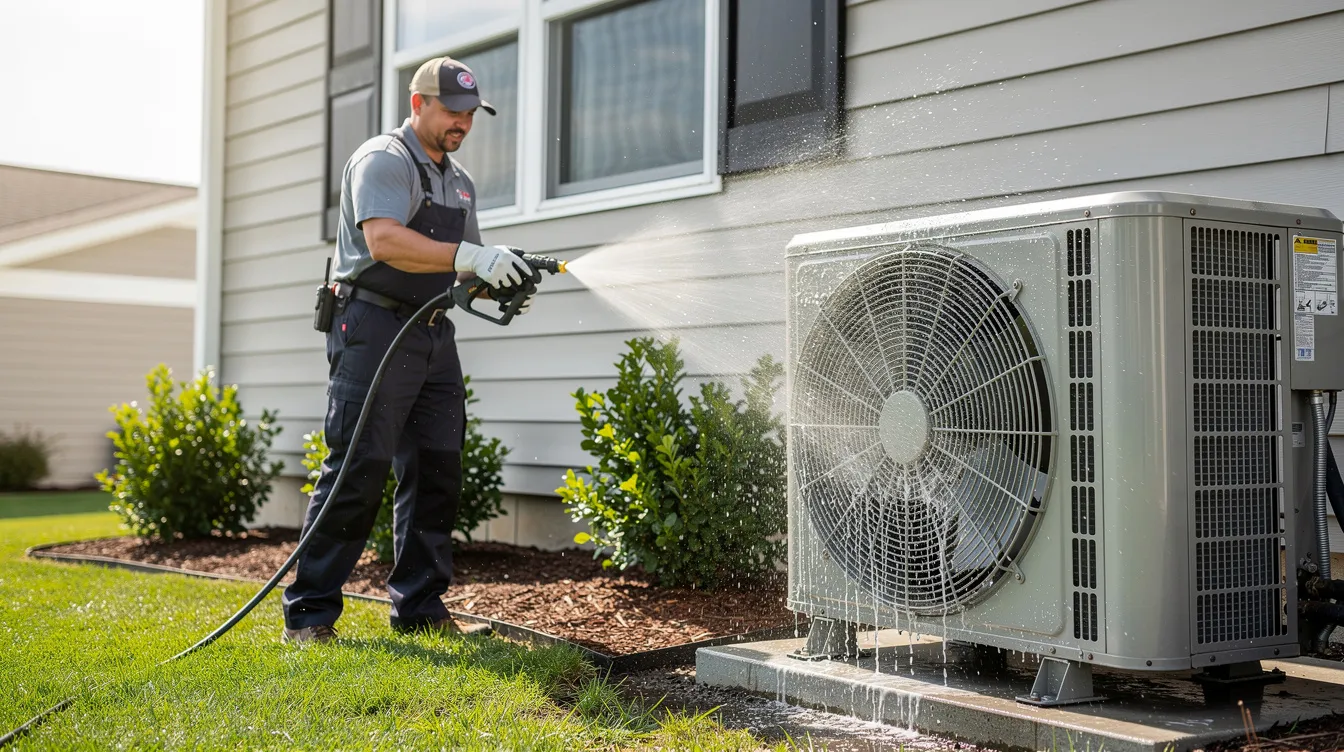
Regular ac coil cleaning and filter changes dramatically reduce hvac coil repair needs in Houston’s humid climate. Regular cleaning of AC coils is essential to maintain the efficiency and longevity of HVAC systems, as dirty coils can lead to reduced heat transfer and increased energy costs.
Replace the air filter every 30–60 days from April through October, especially with pets, construction dust, or heavy pollen. AC coils should ideally be cleaned at least once a year, especially before the summer season when air conditioning usage increases. Using a professional HVAC technician for AC coil cleaning is recommended to ensure proper techniques are used, preventing damage to the delicate coil fins.
Outdoor condenser coils collect pollen, grass clippings, and dust. Homeowners can gently rinse the outdoor condenser coil with a hose, but avoid pressure washers. A tech may use safe cleaner, low-pressure water, fin tools, and sometimes a shop vac; compressed air should be low-pressure only. Proper maintenance supports extended system lifespan, better indoor air quality, lower energy bills, and stronger hvac system efficiency.
HVAC Coil Repair Process: What HVAC Services Pro Does on a Typical Houston Call
When you call for suspected coil problems, a licensed technician follows a structured process. The repair process for a failing coil typically involves system diagnostics, refrigerant evacuation, cleaning, sealing or replacing the coil, and recharging the refrigerant.
Typical steps:
- Check thermostat, airflow, air filter, blower operation, and temperature split.
- Inspect evaporator coils, condenser coils, condensate drain pan, and drain line.
- Use electronic leak detectors, UV dye, or nitrogen pressure testing to find leaks in the ac coil, line set, or connections.
- Present options: hvac coil repair, ac coil replacement, evaporator coil replacement, or full HVAC replacement.
- Recover refrigerant, remove the old coil, install a new matched coil, braze connections, pull a deep vacuum, recharge with correct refrigerant, and test system performance.
Final checks include leak testing, superheat and subcooling, even cooling, condensate drainage, and safe operation of the entire cooling system.
When HVAC Coil Problems Mean It’s Time for a New AC System
Sometimes coil problems reveal an aging or mismatched ac unit where full system replacement is the smarter move. Choose replacement when the air conditioning unit is over 12–15 years old, uses R-22, has multiple major repairs, or has coil and compressor issues at the same time.
A new high-efficiency entire system with a properly matched evaporator coil and condenser coil can cut cooling energy use by 20–40% in Houston’s long season, and tools like an energy savings calculator for HVAC upgrades can help estimate potential bill reductions. HVAC Services Pro installs 2–5 ton central air conditioner and heat pump systems across the Houston metro, including full installs with condenser, coil, furnace or air handler, and thermostat, backed by professional HVAC installation, maintenance, and repair services. If you need emergency AC replacement in Dallas or Houston or are comparing AC repair costs in DFW, ask about financing, utility rebates, and potential federal tax credits for high-efficiency upgrades.
Serving Houston and Surrounding Cities for Coil Repair & Replacement
HVAC Services Pro is bringing the same evaporator coil expertise used in Dallas–Fort Worth into the Houston metro area, backed by experience with average AC repair costs in Fort Worth and transparent pricing. We serve Houston, Katy, Sugar Land, Missouri City, Pearland, Pasadena, Baytown, The Woodlands, Spring, Cypress, League City, Conroe, and nearby communities.
We help homeowners with attic air handlers, townhomes, condos, and single-family homes. We also support light commercial properties, restaurants, offices, retail spaces, and property management portfolios, similar to our HVAC services offered in Plano, TX. For no-cool emergencies and failed coils in peak summer heat, same-day or next-day appointments may be available.
Schedule Your Coil Inspection, Request a Free Quote, or Book Today with HVAC Services Pro Houston.
FAQs: HVAC Coil Repair & Evaporator Coils in Houston
How long should an evaporator coil last in Houston’s climate?
Most ac evaporator coils in Houston last about 10–15 years with proper maintenance, but heavy use and attic heat can shorten that range. Homes near the Gulf, Baytown, or the Ship Channel may see faster corrosion from salty or industrial air. Well-maintained newer systems can sometimes match the 15–18 year life of the entire unit.
Can I use compressed air or coil cleaner to clean my own AC coils?
Light dust can sometimes be removed from an accessible coil with low-pressure compressed air, but DIY cleaning can bend fins or push debris deeper. Chemical cleaners, opening air handlers, and anything near refrigerant should be handled by licensed Houston HVAC technicians. Homeowners should change filters, clear debris around the outdoor unit, and schedule professional coil cleaning yearly.
Is it safe to run my air conditioner if the evaporator coil is frozen?
No. Turn cooling off at the thermostat and switch the fan to “On” to help thaw the coil. Running the system while frozen can damage the compressor and cause water overflow when ice melts, especially in attic installations. Schedule service to find the cause, such as dirty filters, low refrigerant, blower issues, or restricted airflow.
Are coil replacement costs in Houston higher in summer?
Base material prices may be similar, but labor premiums and limited appointment windows in June–August can raise the final replacement cost. If the system is still cooling, schedule tune-ups in February–April or September–October. HVAC Services Pro still offers emergency options for critical summer failures.
How can I reduce the chance of future coil problems in my Houston home?
Replace filters regularly, schedule yearly maintenance, control indoor humidity, avoid harsh chemicals near return vents, and keep the outdoor unit clear. A maintenance plan with HVAC Services Pro can include annual inspections, ac coil cleaning, and early detection of small refrigerant leaks. Proactive care is cheaper than repeated emergency coil repair or early system replacement.
Before You Spend $3,500 on a New Coil…
If your AC is more than 12–15 years old, replacing the evaporator coil may not be the smartest investment. Many Houston homeowners discover a new high-efficiency system costs only a few thousand dollars more and comes with a new warranty.