

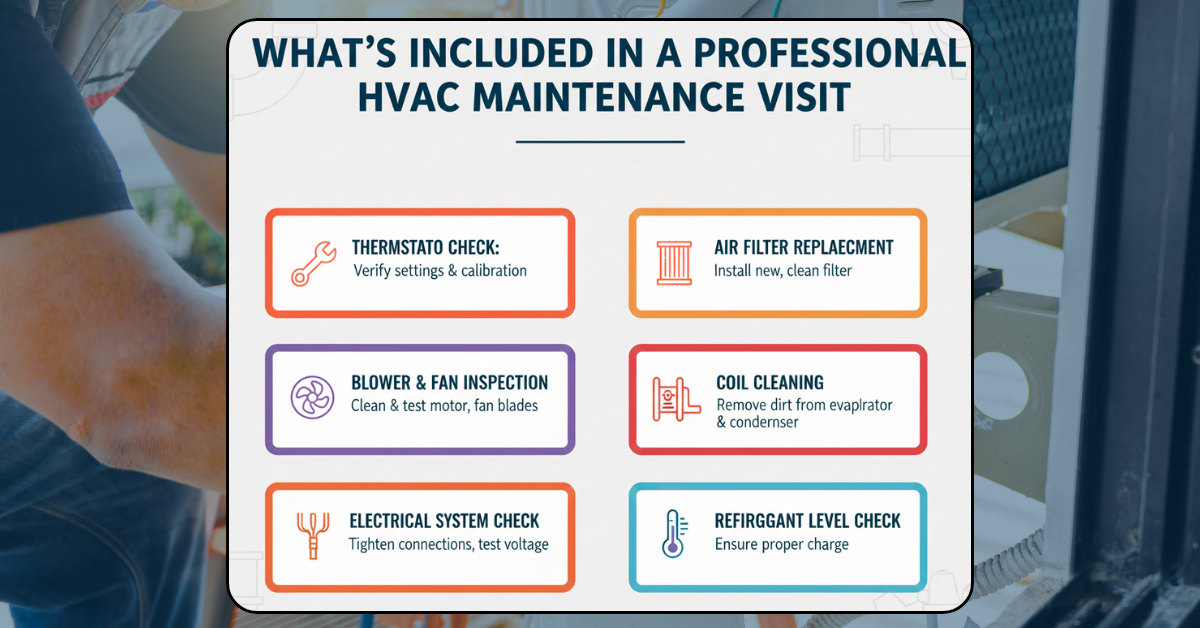
A professional HVAC maintenance visit includes safety inspections, mechanical and electrical checks, refrigerant and airflow testing, thermostat calibration, filter replacement, ductwork review, and a detailed performance report. These steps ensure your heating and cooling system operates safely, efficiently, and reliably throughout the year.
Regular maintenance goes beyond a simple filter change. It prevents costly breakdowns, lowers energy bills, extends equipment life, and maintains healthy indoor air quality (IAQ). By understanding exactly what a technician does during a service visit, you can see the real value of professional care and plan smarter for your home comfort.
Key Takeaways
|
Why Regular HVAC Maintenance Matters
Most service plans recommend a tune-up twice a year once before cooling season and again before heating season. These brief appointments pay off in several ways:
Lower Energy Use: TheU.S. Department of Energy notes that well-maintained systems can reduce heating and cooling costs by as much as 50%, depending on your system and climate.
Fewer Breakdowns: Following the nationally recognized ACCA maintenance standards helps prevent minor problems from turning into major repairs.
Longer Equipment Life & Improved Indoor Air Quality: Clean coils, balanced airflow, and fresh filters reduce strain on motors and trap pollutants, improving IAQ.


Preparing for Your HVAC Maintenance Visit
A professional contractor will contact you ahead of the appointment to confirm timing, discuss recent system behavior, and review any safety concerns. This is your chance to describe:
- Odd noises or vibrations
- Uneven heating or cooling in rooms
- Unexplained spikes in energy bills
Actionable tip: Clear the area around indoor and outdoor units, remove obstructions, and gather past service records. This helps the technician complete the visit efficiently and accurately.
What a Professional HVAC Technician Does
A professional maintenance visit includes several stages to ensure efficiency, safety, and long-term comfort. Here’s a detailed breakdown:
1. Safety Checks: Protecting Your Home and Technician
Before touching anything, technicians ensure the system and work area are safe:
- Power and Gas Isolation: No live voltage or open flame during inspection.
- Carbon-Monoxide (CO) Testing: Confirms emissions remain below health limits.
- Combustion-Air Pathway Check: Ensures vents and flues are unobstructed.
- Secured Panels and Disconnects: Prevents accidental access by children or pets.
These steps align with ASHRAE/ACCA Standard 180, which codifies safe inspection practices.
2. Mechanical Inspection: Moving Parts Matter
Technicians inspect and clean moving components to reduce friction, improve efficiency, and extend system life.
Indoor Air Handler or Furnace:
- Remove blower door, vacuum dust, and wipe housing
- Inspect the blower wheel for buildup and balance
- Lubricate motor bearings where applicable
Outdoor Condensing or Heat-Pump Unit:
- Wash condenser coils with low-pressure water (dirty coils can increase energy use by up to30%)
- Straighten coil fins to restore airflow
- Inspect fan blades for cracks and tighten screws
Actionable tip: Clear leaves and debris around your outdoor unit between visits to maintain airflow and efficiency.
3. Electrical System Testing: Preventing Costly Failures

Technicians check all electrical components:
- Voltage and amperage for blower, fan, and compressor motors
- Capacitor values to ensure smooth startup and prevent damage
- Tightening lugs and terminals to prevent arcing or overheating
- Inspect contactors and relays
Plain-English: Catching small electrical issues early prevents major, expensive repairs.
4. Refrigerant and Airflow Verification: Balanced Comfort
Proper refrigerant levels and airflow are critical for efficiency:
- Static Pressure Readings: Identify duct bottlenecks
- Superheat/Subcool Calculations: Ensure refrigerant is within manufacturer specifications
- Leak Detection: Electronic testing around service valves and brazed joints
- Evaporator Coil Temperature Split: Confirms heat transfer is effective
Tip: Schedule duct cleaning or adjustments if technicians detect restricted airflow.


5. Thermostat and Control Calibration: Your Comfort Command Center
Modern thermostats are smart devices, and technicians check:
- Temperature accuracy (set vs. actual)
- Heating/cooling cycle performance
- Wi-Fi connectivity or smart-home integration
This ensures your system responds precisely to your settings.
6. Filter Replacement and IAQ Improvements
Filters are the first defense against dust and allergens. Professionals:
- Replace or clean primary filters
- Vacuum return grilles and seal gaps
- Recommend upgrades like media filters, UV lights, or in-duct air cleaners for allergy-prone homes
Following these steps improves comfort and supports healthy indoor air.
7. Ductwork and Ventilation Review: Efficient Airflow Matters
Even perfect equipment underperforms with leaky ducts:
- Inspect duct runs for kinks, sags, or damage
- Check insulation in attics or crawl spaces
- Seal small leaks with mastic or UL-181 tape
- Verify exhaust fans vent outdoors, not into the attic
According to EPA estimates, sealing leaks can reduce energy costs by 15% on average.
8. Performance Testing and Efficiency Reporting
Final checks confirm system performance:
- Temperature rise/drop across supply and return
- Static pressure and filter delta-P
- Compressor amperage vs. rated values
- Outdoor and indoor wet-bulb readings for refrigerant confirmation
Homeowners receive a written or digital report documenting results, corrections, and recommendations. Tracking these over time helps plan future upgrades and prevents surprise repairs.

Post-Maintenance Tips for Homeowners
After a professional HVAC visit, there are several steps you can take to protect your investment and keep your system running efficiently between service calls:
Monitor System Performance: Keep an eye on unusual noises, temperature inconsistencies, or higher-than-normal energy bills. Early detection of small issues prevents major repairs.
Maintain Filters and Vents: Replace or clean filters as recommended (usually every 1–3 months) and ensure vents are unblocked. This helps airflow stay optimal and protects indoor air quality.
Check Outdoor Units Regularly: Remove debris, leaves, or grass clippings from around outdoor units. Trim nearby plants and ensure at least 2 feet of clearance for proper airflow.
Track Maintenance Reports: Keep your technician’s reports in a dedicated folder or app. They provide valuable trends, such as refrigerant charge changes, airflow issues, or electrical irregularities, which can guide future maintenance or upgrades.
Schedule Ahead: Plan your next maintenance visit proactively. A spring tune-up for cooling and a fall tune-up for heating ensure peak efficiency during extreme weather.
Our technicians not only handle maintenance but also provide advice tailored to your system, your home, and your lifestyle. Regular professional visits ensure your system runs efficiently and safely for years to come.
Conclusion
Professional HVAC maintenance does much more than change filters. It ensures safety, boosts energy efficiency, prolongs system life, and improves indoor air quality. From safety checks to ductwork inspections, certified technicians catch issues before they become costly problems.
Following post-maintenance tips and sticking to a twice-yearly schedule keeps your system running efficiently, reduces bills, and prevents surprises. At HVAC Services Pro, we provide thorough, expert maintenance visits that protect your comfort, your home, and your wallet while giving you peace of mind all year round.
FAQs
How Often Should I Schedule Professional HVAC Maintenance?
Most experts, including HVAC Services Pro, recommend a tune-up twice a year: once in spring for cooling and once in fall for heating. This keeps your system efficient, prevents breakdowns, and extends equipment life.
Can I Perform Some HVAC Maintenance Myself Between Visits?
Yes. You can replace filters, clear debris around outdoor units, and ensure vents are unobstructed. However, professional inspections and adjustments require certified expertise to safely handle refrigerants, electrical components, and airflow balancing.
What Are the Signs That My HVAC Needs Immediate Attention?
Watch for unusual noises, inconsistent temperatures, rising energy bills, strange odors, or frequent cycling. These indicate issues that could worsen without professional repair.
Does Professional Maintenance Improve Indoor Air Quality?
Absolutely. Maintenance includes cleaning coils, checking airflow, and replacing filters, all of which reduce dust, allergens, and pollutants circulating in your home. IAQ improvements can be especially important for families with allergies or respiratory concerns.
How Can I Track My System’s Performance Over Time?
Ask your technician for a detailed report after each visit, documenting refrigerant levels, static pressure, voltage readings, and airflow measurements. Keeping these records helps you notice trends, plan upgrades, and maintain efficiency long-term.